








Introduction:When netizens collectively unleashed their creativity by turning name remarks into puns, Starbucks quickly seized this social media trend, successfully bridging the gap with consumers. In contrast, Luckin failed to keep up due to system limitations. This article delves into how puns have become a powerful branding and marketing tool, traces their cultural roots, and explores the lifecycle of internet slang—offering insight into this community-based marketing battle in the coffee world.
Modern netizens have mastered the art of using wordplay, from playful name remarks when ordering online to viral content on social platforms. Starbucks keenly captured this creative wave, transforming an ordinary cup of coffee into a social talking point. By encouraging customers to input creative names such as “Ms. World No. 1 Liu” or “Ms. Dry-Fried Beef He,” it not only added fun to the purchasing experience but also unexpectedly sparked a wave of online imitation, helping it turn the tide in market competition against Luckin.
This wave of pun mania began when customers entered whimsical names in the ordering system, and the related creative content quickly spread across social platforms like Xiaohongshu, even propelling the term “Starbucks Puns” to the top of Weibo’s trending searches. Seizing the moment, the brand promptly launched interactive activities, amplifying the social effect and elevating what was once a routine coffee-buying experience into a joyful shared moment—effectively strengthening customer loyalty.
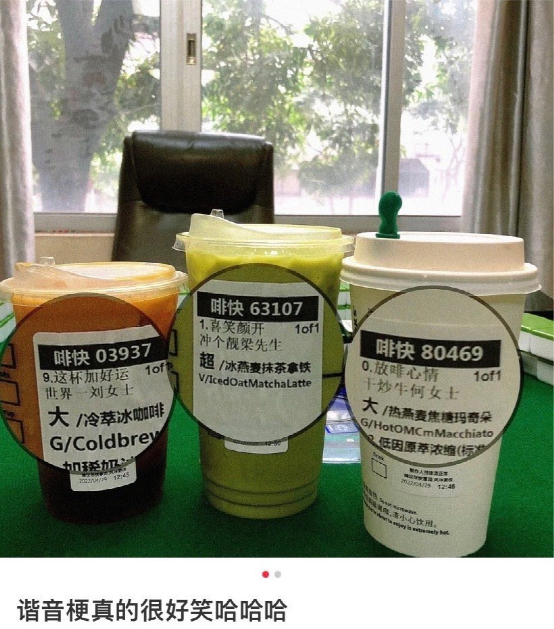
The culture of wordplay has a long history in China. Ancient scholars used homophones to compose couplets and poetry, and even as rhetorical devices for euphemism. In modern life, from pasting the character “Fu” upside down during Chinese New Year to signify “Fortune arriving,” to parents wearing cheongsams during major exams to symbolize “victory at the start,” puns have long been deeply rooted in Chinese culture. In the digital era, such linguistic wit has evolved into an efficient communication tool—for instance, “886” stands for “bye-bye,” while “Ji Mei” is a polite yet affectionate way to refer to female friends.
Under the active guidance of Starbucks’ official account, consumer creativity exploded. A wealth of brilliant works emerged across social platforms, including amusing names such as “Ms. Thank You for Your Patronage” and “Ms. Paris Fashion Week.”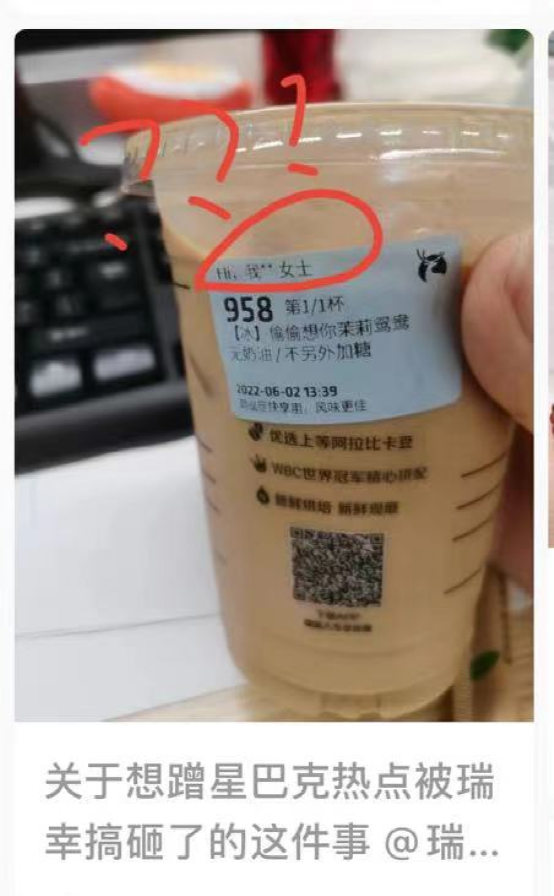 Some customers admitted that although they personally prefer the flavor of Luckin’s coffee, they were drawn to Starbucks by this creative campaign and chose to visit for the wordplay experience.
Notably, Luckin missed out on participating in this wave of community interaction due to system limitations that prevented full display of recipient remarks. Such technical nuances can have a significant impact in modern marketing, where real-time interaction is key.
Like all internet phenomena, the popularity of puns often comes and goes quickly. From “Lan Shou Xiang Gu” to “Shuan Q,” every viral term has its own lifecycle. As consumers gradually lose interest in specific catchphrases, the spotlight naturally shifts to the next creative sensation—which is precisely why brands must continuously monitor community trends.
The above content is compiled by CoffeeHunters, a coffee news website.


