







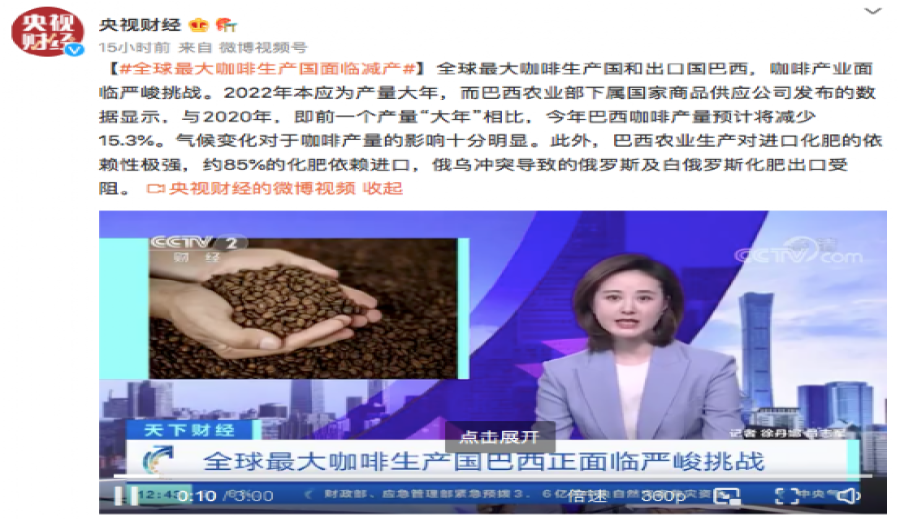
Introduction:Brazil, the world’s largest coffee producer, is facing multiple setbacks—from extreme weather to fertilizer shortages—with production expected to decline by 15.3% in 2022. This article delves into the key reasons behind Brazil’s coffee shortfall, including drought, frost, soaring fertilizer prices, and rising transportation costs, while exploring how these factors are shaking up the international coffee market. It helps readers understand future price trends and supply chain challenges.
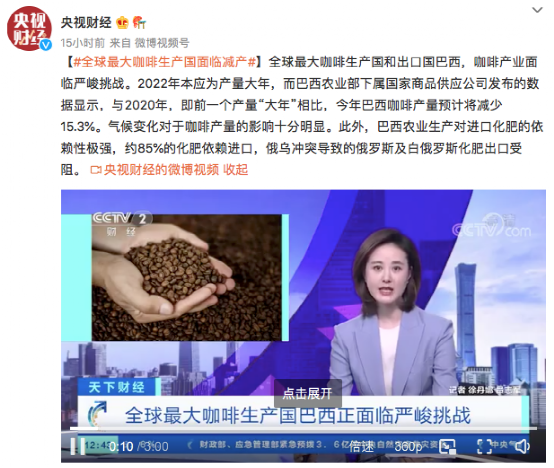
As the leading force in global coffee supply, any move Brazil makes sends ripples through the international market. 2022 was supposed to be a bumper “on-year” harvest for Brazilian coffee. However, according to official Brazilian data, compared to the similarly strong 2020 on-year, this year’s coffee output is projected to drop by 15.3%. Behind this figure lies the combined impact of drought, frost, the fertilizer crisis, and surging shipping costs.
Last year, Brazil endured a once-in-a-century drought and severe frost, causing coffee production in the previous season to plunge by more than 22%. This year, although theoretically in a harvest cycle, it faces renewed threats from extreme weather. Data from meteorological firm Somar Meteorologia shows that Minas Gerais—the key producing region responsible for 30% of Brazil’s Arabica coffee output —received only 9.5 mm of rainfall last week, just 44% of the historical average, severely affecting coffee tree growth and fruit development.
Not only is the weather harsh, but Brazil’s coffee industry is also grappling with an unprecedented fertilizer shortage. Since about 85% of Brazil’s fertilizers are imported, with supplies from Russia and Belarus accounting for up to 28% combined, the outbreak of the Russia-Ukraine war has severely disrupted exports from these two countries. Many coffee growers report that although they stocked up in advance, they remain concerned about supply stability in the coming months. Fertilizer purchases this year began four months earlier than usual, yet even so, many farms’ inventories will last less than six months.
Meanwhile, global fertilizer prices have also skyrocketed. From around $350 per ton last year, prices have surged to $1,300this year, with some items even spiking by as much as 40% in the short term due to intensifying Russia-Ukraine tensions. With sharply higher planting costs, many coffee farmers are adjusting their fertilization strategies—using soil nutrient testing to carefully control fertilizer application or even seeking alternatives.
Beyond traditional chemical fertilizers, some producers are experimenting with organic alternatives, such as compost made from coffee pulp husks and animal manure, as well as quicklime fertilizers that help regulate soil acidity. While these methods are unlikely to fully replace chemical fertilizers in the short term, they offer alternative approaches to maintaining soil health and reducing production costs.
Rising transportation costs are further exacerbating challenges for Brazil’s coffee industry. With international oil prices climbing, container shipping fees have surged three to fivefold, dramatically increasing the overall cost of transporting coffee beans from farms to ports and then to global markets—further squeezing farmers’ profit margins.
The market has reacted swiftly, with coffee futures prices fluctuating accordingly. As of recently, though Arabica coffee futures prices have slightly eased, they remain at high levels. For example, on June 13, the futures closing price was 224.63 cents per pound—down just 1.87% from the previous day—but still far above the average of recent years.
Overall, the decline in Brazil’s coffee output not only affects local farmers’ incomes but also delivers a significant shock to the global coffee supply chain. If the climate continues to worsen and fertilizer supplies fail to stabilize, coffee prices may become even more volatile. Both consumers and industry players need to prepare in advance.
The above content is compiled by CoffeeHunters, a coffee news website.


