







Introduction:Dark roasted coffee beans, with their loose structure and noticeable degassing, are well-suited for extraction using the unique meteor impact brewing method, which can bring out a rich and full-bodied flavor. This article delves into the step-by-step process of this pour over technique, covering grind size, water temperature control, and details of multi-stage pouring, along with practical brew ratio suggestions and precautions to help you master the distinctive expression of medium-dark roasted beans and craft a pour over coffee with layered flavors.
Dark roasted coffee beans, due to their high degree of roasting, have a looser bean structure and faster water absorption. Coupled with their high freshness, they tend to release a large amount of carbon dioxide gas during pouring. These characteristics make the meteor impact brewing method—a special pour over technique—an ideal choice for showcasing their flavors. This technique effectively utilizes the diffusion effect of center-focused pouring, combined with controlled multi-stage water flow, to extract coffee with concentrated aroma and a full-bodied mouthfeel.
The core essence of the meteor impact method lies in continuously pouring water at the center point of the filter cone, allowing the water to naturally spread outward. This not only fully highlights the intense character of dark roasted beans but also creates a unique visual effect of the coffee bed changing over time. Especially when using a conical filter cone, the coffee bed is thicker at the center. Continuous center-focused pouring ensures more coffee grounds participate in extraction, thereby enhancing the overall richness of the flavor.
In practice, it is recommended to use a coarse grind level suitable for pour over, roughly equivalent to a 65% passing rate through a No. 20 sieve. This grind size helps control brew time and avoids over-extraction that could lead to bitterness. For water temperature, maintain it between 86 to 88 degrees Celsius. This temperature range balances the richness of dark roasted beans and the release of impurities. As for the brew ratio, a 1:12 ratio is recommended—12 milliliters of water per gram of coffee grounds—making it easier to control overall concentration and mouthfeel.
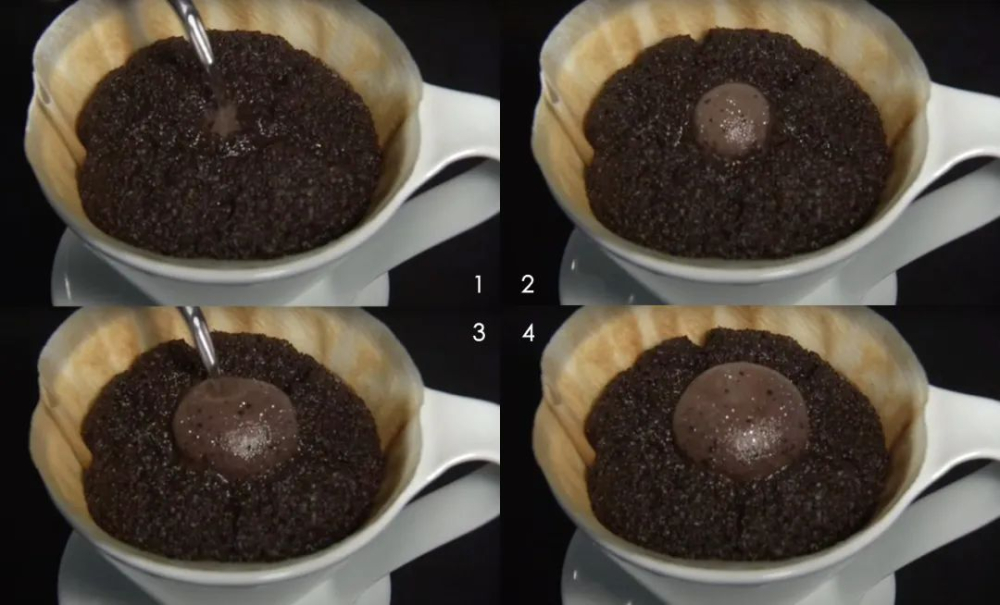
The entire brewing process can be divided into three main stages. The first is the bloom, a crucial step that awakens the coffee grounds and releases initial gases. It is recommended to pour about twice the weight of the coffee grounds in water and let it sit for around 30 seconds, ensuring all the coffee grounds are evenly saturated. During this time, the coffee bed usually expands into a fluffy shape resembling a “hamburger,” which is a normal sign of gas release.
Next comes the point pouring stage, where the focus is on observing and controlling gas release. It is suggested to start by slowly pouring a small amount of water directly at the center of the filter cone, allowing some coffee foam to be released. This helps assess the freshness of the beans. If a significant amount of foam emerges, it indicates the beans are still quite fresh. In this case, a more delicate, segmented pouring method should be used—with slow and steady pouring speed. As the coffee bed gradually sinks, continue adding water in small dots to gently lift the coffee bed again. This action should be repeated until the cumulative water poured reaches approximately six times the weight of the coffee grounds.
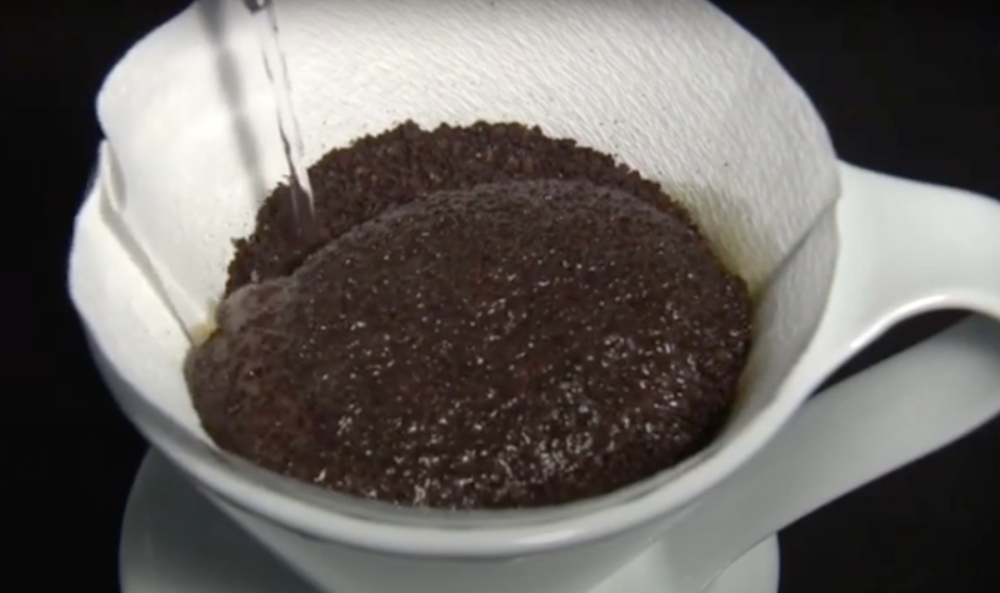
The final stage transitions to small-stream circular pouring. Begin at the center and slowly expand the water flow outward. When the outer foam turns light brown, gradually circle back toward the center. Maintain a small stream and a stable circular path during this stage, with the total water volume controlled to around four times the weight of the coffee grounds. This approach ensures more even extraction while avoiding over-concentration on the central area.
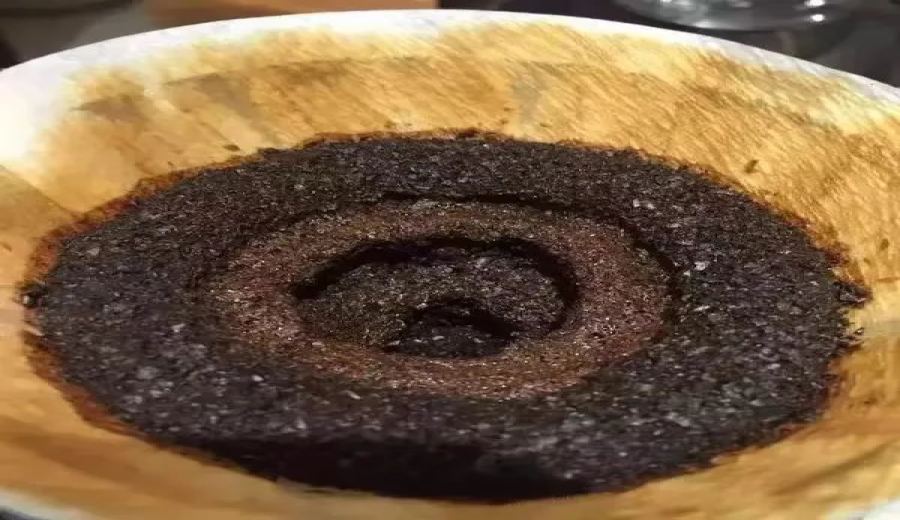
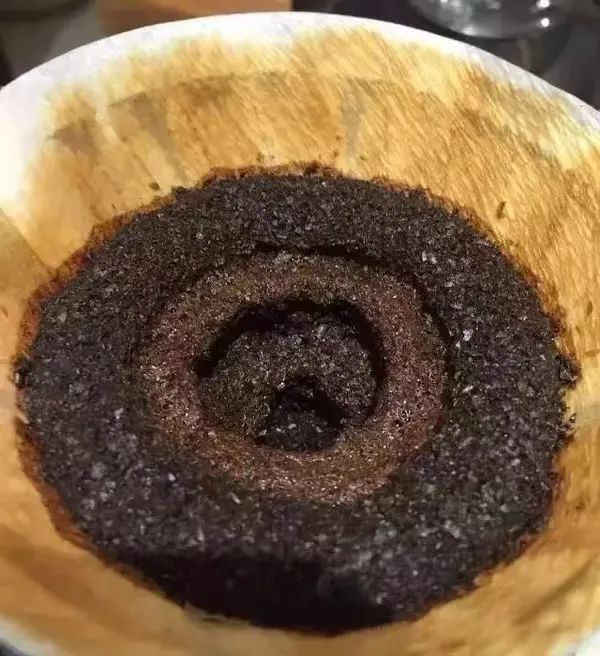
Once all the water has been poured, wait for the coffee liquid to completely drip through. At this point, a noticeable central indentation often remains in the filter cone, resembling a meteor crater—this is also the origin of the technique’s name. This visual feature not only symbolizes a successful brew but also reflects the interaction between water distribution and changes in the coffee bed.
For coffee enthusiasts who enjoy exploring different pour over methods, the meteor impact brewing technique not only presents a technical challenge but also unveils the potential layered flavors of dark roasted beans. By mastering grind size, water temperature, brew ratio, and pouring rhythm, you can use simple tools to brew a coffee experience with distinct flavor characteristics.
The above content is compiled by CoffeeHunters, a coffee news website.


