







Introduction:Manner Coffee’s salary policies during the pandemic sparked widespread debate, with practices such as wage cuts and reduced working hours trending on Weibo. Did the company violate labor laws? What were the considerations behind employees’ choices? This article provides an in-depth analysis of the incident, official responses, and legal perspectives to help readers understand the salary rights of coffee industry workers and the current state of the industry under the pandemic.
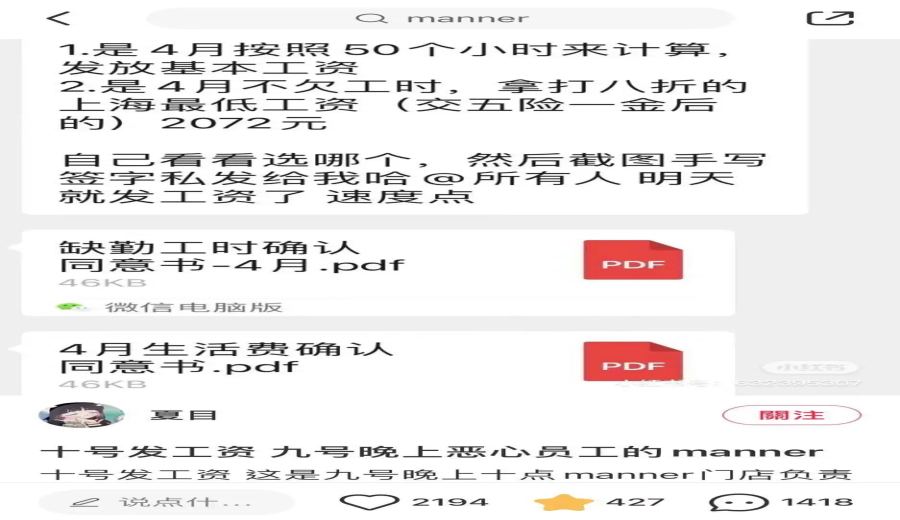
Recently, a post circulating online about Manner, a chain coffee brand, adjusting employee salaries during the pandemic triggered extensive discussion. It was reported that during the pandemic, the company asked employees to choose between two salary options: receiving their base salary based on actual working hours, or opting for 80% of Shanghai’s minimum wage, approximately 2,072 yuan (after deductions for social insurance and housing fund). Once this information was exposed on social media, it quickly went viral and topped Weibo’s trending list.
According to the whistleblower, employees were required to make a decision within a short period of time and confirm their chosen option by hand-signing a screenshot via WeChat. The notice was issued by the store manager at 10 PM on May 9 and demanded a swift response from employees. Additionally, the selection page included an agreement for April’s absent working hours and a confirmation for living allowance. After the incident came to light, many former and current Manner employees, as well as netizens, expressed dissatisfaction, fueling further discussion.
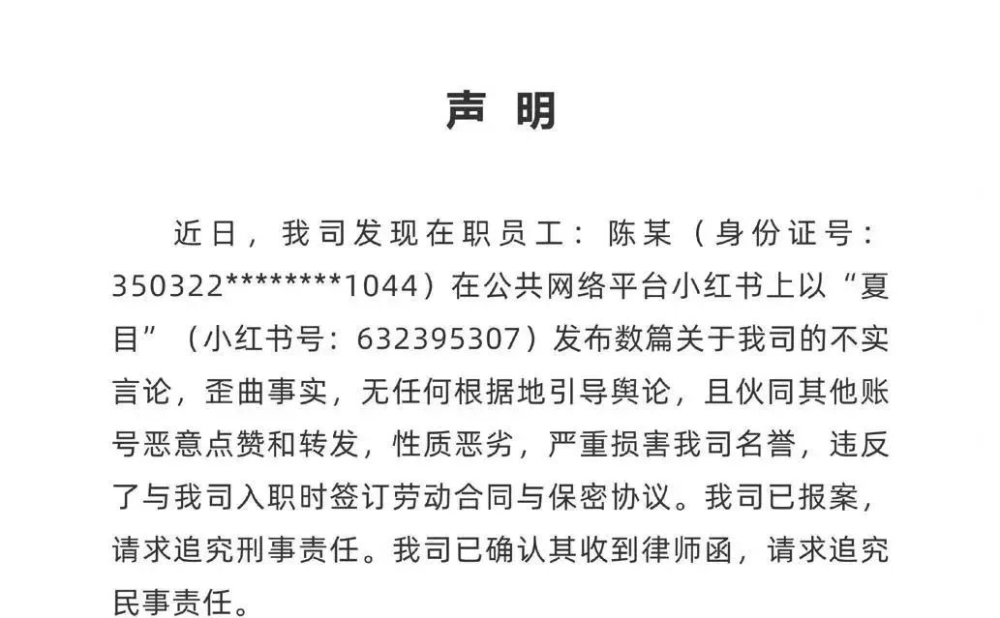
The next day at noon, Manner released an official statement directly accusing a former employee, Chen, who used the Xiaohongshu account “Natsume,” of posting multiple false pieces of information that misled the public and deliberately manipulated public opinion. The company stated that these actions severely damaged its corporate image, violated the labor contract and confidentiality agreement. Manner said it had reported the case to relevant authorities and was pursuing both criminal and civil liabilities against Chen. The statement also mentioned that they had received a lawyer’s letter from the individual and would further pursue legal responsibility for damaging the company’s reputation.
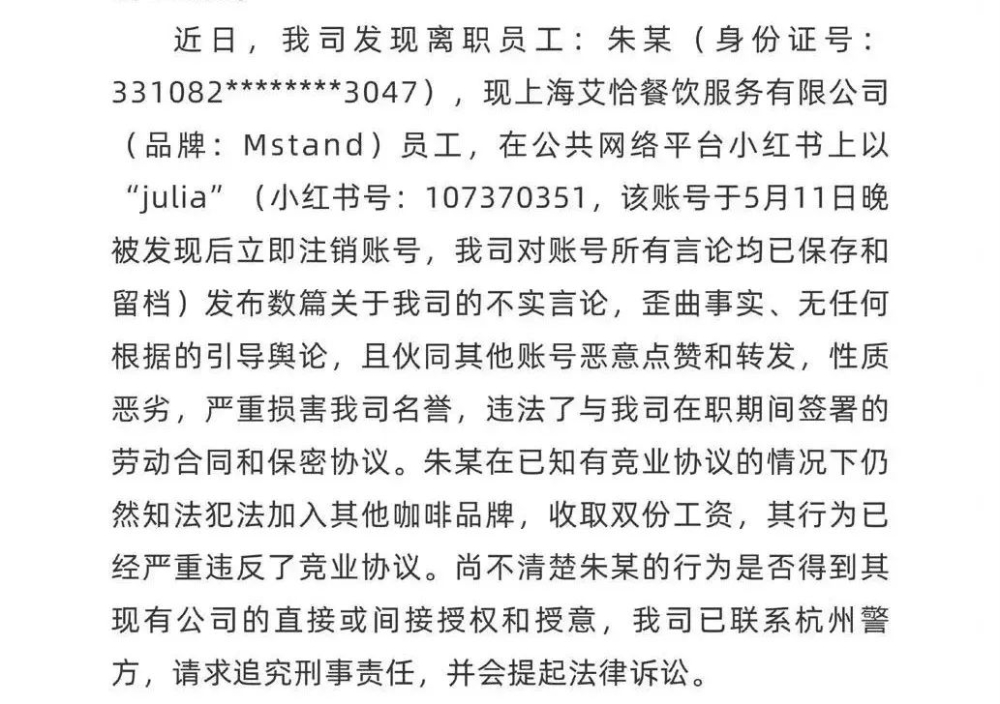
Moreover, Manner also named another former employee, Zhu, currently employed by competitor M Stand (Shanghai Aicha Catering Service Co., Ltd.), accusing them of spreading false statements using a deactivated Xiaohongshu account “julia.” Manner believes that Zhu joined a competing brand while still bound by a non-compete agreement and questioned whether they were instructed by M Stand. The company has also reported the matter to the Hangzhou police, seeking criminal liability and legal action.
Regarding the most concerning issue of salary payments, Manner responded that even though most stores were temporarily closed during the pandemic, the company still paid employees their full salaries within the original salary range (3,600 to 11,300 yuan), and continued to pay social insurance and housing fund as normal. This standard was significantly higher than Shanghai’s minimum wage at the time (2,590 yuan) and also higher than the officially recommended living subsidy standard (2,072 yuan). Manner emphasized that this approach was unprecedented in the industry, demonstrating the company’s commitment to its employees.
In addition, Manner further explained that during the pandemic, employees’ monthly working hours were drastically reduced from the original (167 hours) to just (50 hours), which meant the hourly wage nearly tripled. The company also added that during April, each employee working on a business day could receive an additional (350 yuan) subsidy, described as the “highest standard in the industry.” Manner stated that these measures reflect the company’s view of employees as family, committed to ensuring their basic livelihood and rights.
In response to the online pursuit of accountability regarding certain employees’ statements, Manner also reiterated that Zhu, while working at M Stand, had publicly claimed that Manner’s treatment was inferior to M Stand’s. However, this claim was questioned as contradictory, given that M Stand had not yet issued its 13th-month salary. Manner called on industry brands to set an example by raising their employees’ assessed monthly salaries to the range of (8,000 to 17,900 yuan), and to fully implement social insurance and housing fund contributions, truly taking care of their retail partners.
So, is Manner’s approach legally sound? Legal experts, citing the Interim Provisions on Wage Payment, pointed out that if work is halted due to non-employee factors, employers should still pay the full salary within one wage payment cycle according to the contract; after that period, if the employee does not provide normal labor, they should be given no less than the local minimum wage. If Manner, as stated in its announcement, paid the full base salary and covered insurance, then its approach complies with relevant regulations.
It is worth noting that even if employees did not work full hours during the pandemic, they could still opt to receive a living subsidy of approximately (2,072 yuan) in accordance with the law. This practice is common both legally and in practice, aiming to ensure workers’ basic living needs during special times. The other option was to retain future working hour compensation rights while receiving the normal salary in advance.
Regarding Manner’s consideration of filing criminal and civil lawsuits against certain former employees, legal professionals pointed out that if employees or former employees deliberately spread false information that damages the company’s reputation, they could indeed be charged with crimes such as business reputation damage or defamation. However, they also reminded that labor disputes should be resolved through proper channels such as labor arbitration, rather than escalating into online confrontations, which only add to the distress of both sides.
The above content is compiled by CoffeeHunters, a coffee news website.


