







Introduction:The Canadian national coffee brand Tim Hortons recently sparked widespread controversy due to its summer camp vaccination policy, with the hashtag #BoycottTimHortons quickly trending on Twitter as numerous netizens launched boycotts. What kind of vaccine policy turned this beloved local brand into public enemy number one? This article delves into the full story of the incident, exploring the core issues of the controversy and public reactions.
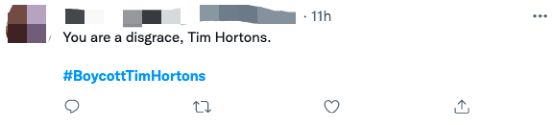
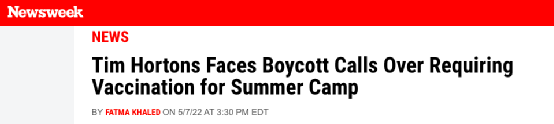
As Canada’s most iconic coffee chain, Tim Hortons has long been a source of national pride and deeply cherished by the public. However, the brand has recently found itself in an unprecedented public relations storm over a summer camp vaccination rule. The hashtag #BoycottTimHortons rapidly rose in popularity on Twitter, prompting a wave of online criticism and calls for boycott.
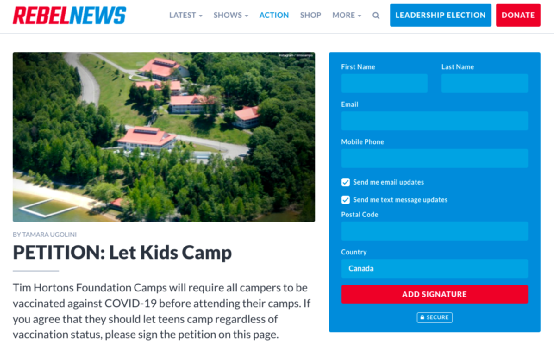
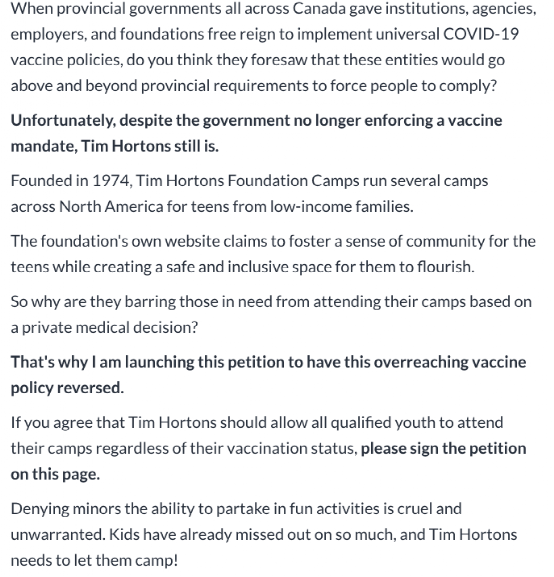
The incident originated when Tim Hortons Camps announced a new policy requiring all staff and campers participating in its programs to be fully vaccinated against COVID-19. While the measure was intended to ensure camp safety, it unexpectedly became the center of controversy. Participant Tamara Ugolini received an email from the camp weeks ago stating that due to ongoing challenges and risks associated with vaccinations,Tims Camps decided that all participants must be fully vaccinated this year in order to attend summer camp.In response, she initiated a petition calling for the withdrawal of this policy.
The petition emphasized that although the Canadian government no longer mandates vaccinations, Tim Hortons Camps insists on this “excessive” rule, urging the brand to reconsider. As of the early hours of May 11, 2022, the petition had garnered over 20,419 signatures, with a goal of reaching 30,000.
Beyond the petition, many users have also voiced their dissatisfaction on social media. Among them, Mark Friesen, who identifies as a Canadian patriot and nationalist, posted a video on Twitter openly expressing strong discontent with what he described as Tim Hortons’ discrimination against unvaccinated children. He stated that if Tims does not revise the relevant rules, he will no longer purchase any Tim Hortons products, and questioned the necessity and potential risks of the vaccine.
Some netizens argued that by only allowing vaccinated children to attend summer camp, Tim Hortons is essentially promoting a form of segregation, which does not effectively prevent the spread of the coronavirus. Others shared their personal acts of protest against Tim Hortons, such as refusing to buy its products, with some even pouring purchased coffee at the entrance of stores as a form of demonstration.
Interestingly, many pointed out that Tim Hortons previously faced controversies such as being acquired by a U.S. company, laying off 40,000 jobs, lobbying against raising the minimum wage, and canceling paid leave—yet none of these triggered such large-scale backlash. In contrast, the brand’s attempt to protect immunocompromised children through its vaccine policy has led to intense resistance, highlighting a stark contrast.
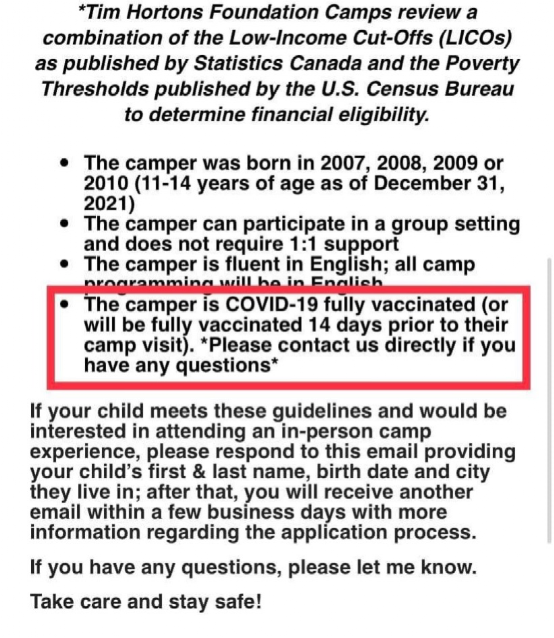 In defense of these criticisms, some netizens spoke up for Tim Hortons, explaining that the Tims Camps primarily serve children and teenagers, and expressed confusion toward those opposing the vaccination rule. They believe that ensuring children’s health should remain a top priority in a context where the pandemic is not yet fully over.
As of now, neither Tim Hortons nor Tim Hortons Camps have issued an official response regarding the boycott or the petition.This incident not only highlights the tension between public health policies and individual freedoms during the pandemic era but also presents an unprecedented image challenge for this Canadian national brand.
The above content is compiled by CoffeeHunters, a coffee news website.


