







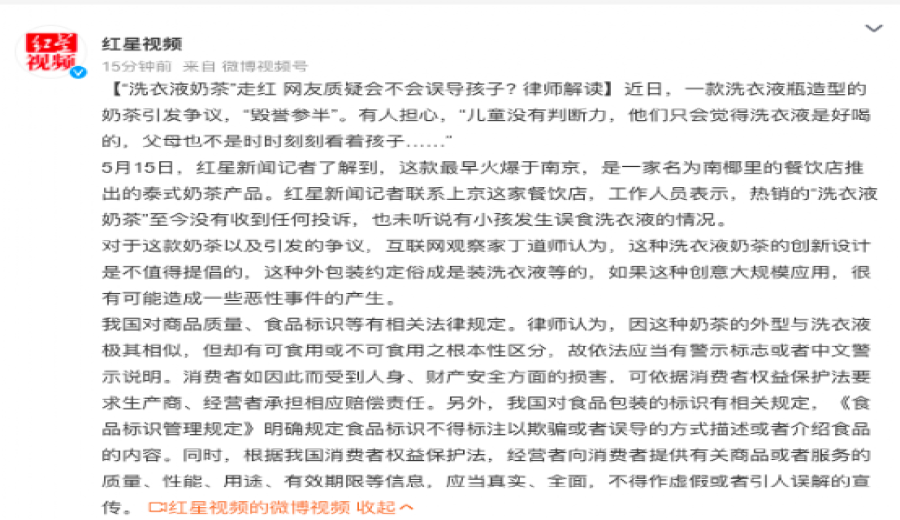
Introduction:When a milk tea product packaged to resemble a laundry detergent bottle sparked heated online discussions, a creative offering from a Nanjing restaurant briefly went viral but was soon investigated by regulators due to potential risks of accidental ingestion by children and subsequently taken off the market entirely. This article delves into the full story of the incident, examining the compliance and risk management of food packaging design, and provides practical advice for consumers to identify safe packaging—helping both businesses and parents avoid similar controversies.
Recently, a creatively designed milk tea that closely mimicked the appearance of a laundry detergent bottle created a buzz in Nanjing. Launched by a local eatery called "Nanyeli Restaurant," the product quickly gained attention on social media platforms due to its unique packaging, but also raised safety concerns for potentially misleading children. As public discourse intensified, local market regulatory authorities stepped in to investigate, ultimately leading to the complete removal of the product from shelves, prompting widespread reflection on the balance between food packaging innovation and safety.
It has been reported that the controversial milk tea adopted an almost identical bottle design to common household laundry detergents, including similar label color schemes and cap shapes. While the design successfully captured attention, it also triggered potential hazards. The restaurant had previously told the media that the product was selling well, with no complaints or reports of children ingesting it. Nevertheless, consumer and online reactions quickly polarized.
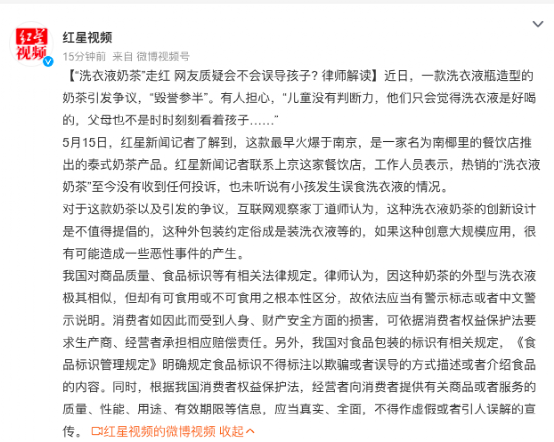
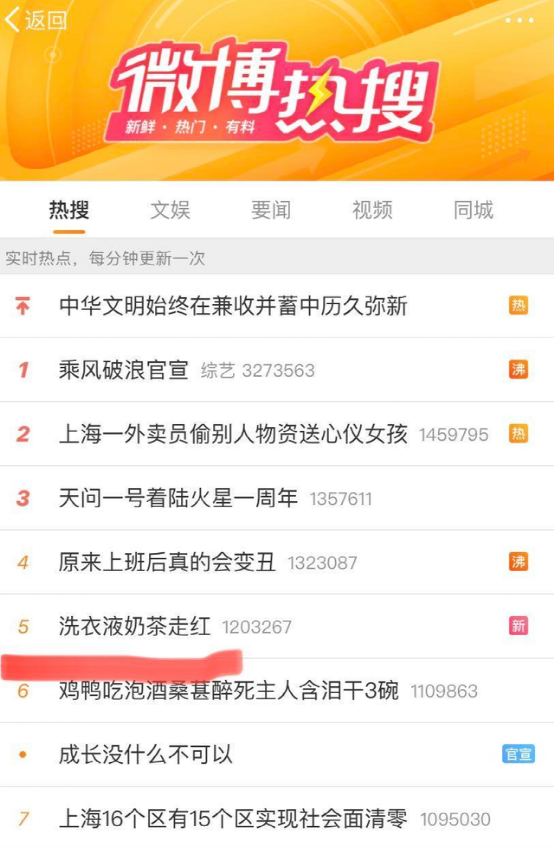
On social media, many users expressed particular concern that children might mistake such packaging for laundry detergent and attempt to drink from it, which could lead to serious consequences. A 65-year-old interviewee recalled being impressed by the novelty of the packaging when they first saw the milk tea, but felt slightly disappointed upon a later visit when they found it had been replaced by a regular plastic cup. However, more voices emphasized that even without any accidents occurring, such a packaging design had already crossed a safety line.
On May 16, the Jianye District Market Supervision Administration in Nanjing confirmed that it had received related complaints and announced the initiation of an investigation process, promising to release preliminary findings within 15 days. On the same day, reporters on-site observed that the promotional images on the involved restaurant’s mini-program had not yet been updated—even though the physical store had urgently switched to using common plastic cups for the packaging, the product content and pricing remained unchanged, with only the appearance modified.
The original price of the milk tea was 18 yuan per bucket, with a volume of about 500 milliliters. The packaging change ended up affecting customer purchase intent. Notably, Nanyeli Restaurant in Nanjing operates three outlets, all of which had completely stopped selling this “laundry detergent milk tea” by May 17, with all sales channels, including delivery platforms, having removed the product. Store staff revealed that the decision was made uniformly by the head office, and no similar products would be launched in the future.
This incident is not the first case where packaging design has led to consumer confusion. Previously, in Suzhou, Jiangsu, there was an incident where an elderly person mistook a cleaning agent—packaged to resemble orange juice—for a beverage and gave it to a child, resulting in the child needing emergency medical treatment. The cleaning agent bottle was transparent, filled with an orange-yellow semi-liquid, emitted a strong orange scent, featured fruit patterns, and included Japanese text, all of which increased the difficulty of identification. This highlights the real harm that can result if packaging design overlooks safety warnings.
When pursuing market differentiation, food and beverage businesses must not only consider visual appeal and target audience preferences but also strictly adhere to packaging regulations and safety guidelines. Experts recommend that innovative packaging should clearly distinguish everyday household items from food products, avoiding the use of similar shapes, colors, or materials. Clear consumption labels should be added where necessary, especially implementing additional safety measures for children. Consumers should also develop the habit of checking packaging instructions and ingredient labels when making purchases to reduce the risk of accidental ingestion.
The above content is compiled by CoffeeHunters, a coffee news website.


