







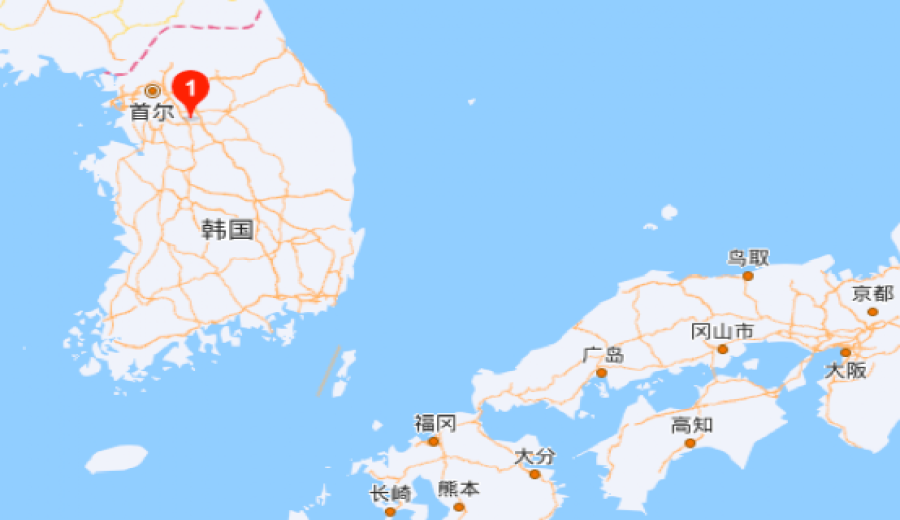
Introduction:Did you know? Coffee cultivation is no longer confined to traditional tropical regions. A coffee farm in South Korea’s Ichon City has successfully grown Arabica Bourbon variety beans and achieved its first harvest, pushing the latitude for global coffee farming to new heights. This article will take you behind the scenes of this agricultural breakthrough — exploring the techniques, varietal choices, and the future potential of domestically grown Korean coffee in the market.
The vast majority of global coffee production is concentrated between the Tropic of Cancer and the Tropic of Capricorn — the so-called "coffee belt." However, in recent years, more and more regions have been challenging the limits by successfully cultivating coffee in non-traditional areas. Among them, a coffee experience farm in Ichon City, South Korea, has successfully grown the Arabica Bourbon variety and has recently entered its harvest season, marking a new milestone in high-latitude coffee cultivation.
This coffee farm, located in Ichon, South Korea, covers a total area of 2,000 pyeong (approximately 6,600 square meters), with about 800 pyeong dedicated to coffee tree cultivation. Around 2,000 coffee trees are planted here, including both Yellow Bourbon and Red Bourbon varieties. Both of these cultivars belong to the Arabica species and are widely praised for their mild acidity and diverse flavor profiles, making them staples in the specialty coffee market.
Surprisingly, this coffee plantation is not situated near the equator but rather in the climate-challenged, four-season country of South Korea. To overcome the challenges of cold winters and hot summers, the farm employs various temperature control measures, including the use of plastic greenhouses and shade nets. During the hot summer months, the farm lowers temperatures inside the greenhouse by opening the plastic structure and covering it with shade cloths. In the cold winter, additional insulation layers are added to maintain an ideal internal temperature of around 15°C year-round, providing a stable environment for the coffee trees to thrive.
According to a visit by Korean media, the origin story of this farm is quite remarkable. The land was taken over by the farm owner in 1999, originally intended for growing foliage plants. However, with the decline in demand for indoor plants in the mid-2000s, he decided to pivot to coffee cultivation. After years of effort, the first harvest was finally achieved in 2021, after which the farm was officially named the “Ichon Coffee Experience Farm.”

Compared to traditional coffee-growing regions such as Central and South America, Africa, or Southeast Asia, South Korea’s climate is vastly different. Taking neighboring Yunnan, China, as an example, its coffee harvest season typically runs from November to February each year, while Ichon’s coffee is harvested between March and July, showcasing clear regional differences. The 800 pyeong cultivation area is expected to yield approximately 5 to 7 tons of coffee cherries per year, which, after processing, will result in about 500 to 700 kilograms of green coffee beans. While the yield may not be high, it is still a remarkable achievement for a high-latitude region.
Coffee cultivation is an agricultural activity that demands great patience and meticulous care. Every step — from site selection and seedling cultivation to pruning, harvesting, and post-harvest processing — influences the final flavor profile of the coffee. The coffee farmers at the Ichon farm hope that through continuous refinement of planting and processing techniques, domestically grown Korean coffee beans can one day become one of the country’s representative specialty coffees, earning recognition and affection from consumers.
According to statistics from relevant South Korean government departments, in 2021, South Korea’s coffee import value increased by 24.2% compared to the previous year, reaching $916.48 million, setting a historical record. Meanwhile, the number of cafes in South Korea has exceeded 83,000, far outnumbering convenience stores, indicating that coffee culture has deeply rooted itself in the local society. Against this market backdrop, whether domestically grown Korean coffee beans can gradually carve out a market niche and become a new choice for consumers eager to try something new is worth continued observation.
So, is it possible for these Korean-grown coffee beans to enter international or Taiwanese markets through specific channels in the future, allowing coffee enthusiasts to personally taste the unique flavors of high-latitude coffee? This will be a key development to watch moving forward.
The above content is compiled by CoffeeHunters, a coffee news website.


