








Introduction:Many beginners who have just started trying pour over coffee often wonder why it's necessary to draw circles while pouring water instead of just pouring it directly in the center. This seemingly simple action actually serves the dual purpose of improving extraction efficiency and stabilizing the water flow. This article will explore the principles of extraction and delve into the advantages of circular pouring, while also providing practical pour over techniques to help beginners avoid common mistakes and achieve more even flavor extraction.
A common question among many beginners to pour over coffee is: why is it essential to pour in circles? Can’t you just pour the water directly in the middle? In reality, this seemingly straightforward pouring method hides considerations for both extraction efficiency and the stability of the pour. This article will take a deep dive into the reasons behind it, starting with the scientific principles that enhance extraction rates, and further explain why circular pouring is the most suitable stirring method in a pour over setup. Additionally, we’ll share practical and easy-to-master pouring techniques to help reduce uneven extraction and avoid brewing mishaps.

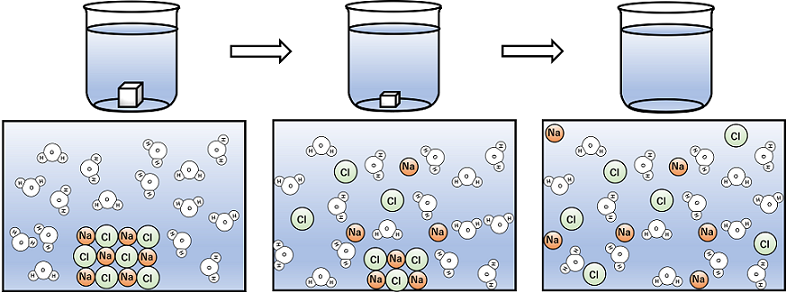
First and foremost, one of the main purposes of circular pouring is to improve the extraction efficiency of coffee grounds. This is likely the first reason that comes to mind for most people when thinking about this issue. Just like when we brew instant coffee or powdered drinks, if we simply pour hot water without stirring, the particles often fail to dissolve completely. Therefore, we use stirring to accelerate the dissolution process, making the flavor more even and robust.
The logic behind pour over coffee is similar, except that instead of using tools like spoons, we achieve a “stirring” effect by controlling the water flow. That’s also why we can’t just pour water in one fixed spot continuously, because doing so won’t effectively encourage the even release of flavor compounds from the coffee grounds. Of course, there are various stirring methods — for example, in siphon coffee preparation, common techniques include cross stirring, infinity (∞) stirring, and Z-shaped stirring. But pour over typically opts for the circular method, and there’s a particular reason for that.
So, if various stirring methods can all enhance extraction, why does pour over particularly favor circular pouring? The key lies in the fact that the precision with which we control water flow using our hands is far less stable than using solid tools like wooden sticks or spoons. If we were to use other more complex pouring patterns — such as back-and-forth or crisscross pouring — it could easily create water turbulence, also known as "turbulent flow." There are mainly two scenarios where turbulence occurs during pour over: one is during the blooming phase, when gases trapped in the coffee grounds haven't fully escaped, and sudden subsequent pouring causes those gases to escape abruptly, creating disturbances; the other is due to improper pouring techniques that lead to unstable water flow caused by human error. In contrast, a single-directional, slow, and steady circular pour can minimize these unnecessary disturbances to the greatest extent.
Of course, even with circular pouring, it’s important to master the correct method. Drawing an analogy to stirring powdered drinks, if we want the particles to dissolve more quickly, we naturally stir with more force. Similarly, in pour over coffee, we can enhance the stirring effect by increasing the speed of the circular motion. However, the difference is that we’re not aiming to extract everything from the coffee grounds — rather, we focus on extracting the parts that bring pleasant flavors, which is around the ideal extraction rate of 18% to 22%. Therefore, the intensity of the stirring must be controlled, improving extraction efficiency while avoiding over-extraction that can lead to bitterness or off-flavors.
As for specific techniques of circular pouring, it is recommended that beginners adopt a simple yet effective approach, with the core principle being “avoiding turbulence and achieving even extraction.” Pouring water in circles at a slower speed helps you more calmly control the angle and stability of the water flow. The path of the circle can resemble the shape of a mosquito coil — starting from the center of the filter cone, slowly expanding outward in circles, then gradually moving inward after reaching the edge. This pouring trajectory is not only easy to pick up but also contributes to achieving an overall even extraction effect.
This circular pouring method is especially beginner-friendly, as it makes it easier to control the intensity and rhythm of stirring, thereby significantly reducing the chances of pouring errors. There are many different pour over techniques available on the market, but it’s good to start with the most basic and effective method, gradually mastering the delicate balance between water flow and coffee grounds.
The above content is compiled by CoffeeHunters, a coffee news website.


