







Introduction:To describe the flavor characteristics of single-origin coffee more accurately, it is essential to understand the design logic behind the Coffee Taster’s Flavor Wheel. This article provides an in-depth analysis of the three-tier structure of the flavor wheel—from the core’s foundational flavor categories to the more detailed classifications in the middle and outer rings—to help you develop a systematic approach to coffee tasting. Coupled with practical cupping observation techniques, it will guide you from a beginner to a coffee enthusiast capable of discerning subtle flavors.
The Coffee Taster’s Flavor Wheel is an iconic tasting tool in the specialty coffee field. Its creation stems from the industry’s need for standardized tasting practices and draws on the evaluation logic used in wine tasting. To enable the structured description of the diverse flavors in coffee, professional institutions and academic bodies collaborated, conducting tests and statistical analyses with 72 sensory evaluation experts. They organized the complex array of flavor perceptions into a layered, systematic chart.
The development of this flavor wheel reflects the specialty coffee culture’s growing maturity and its high pursuit of quality and consistent communication. In the past, many people described coffee flavors in subjective and vague terms. The creation of the flavor wheel was designed to categorize and express these sensations more logically and systematically—much like how the wine industry classifies aromas and taste profiles.
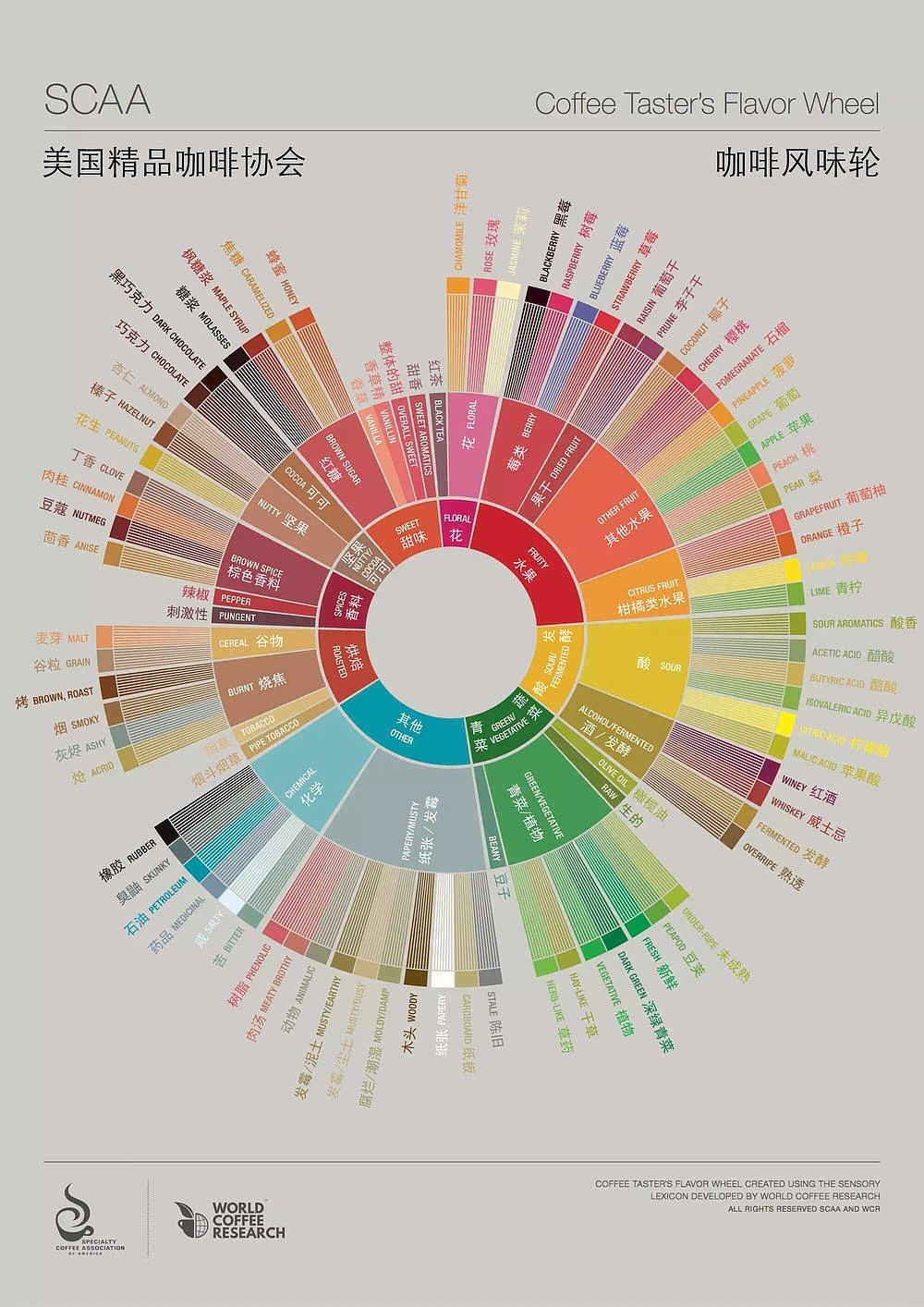
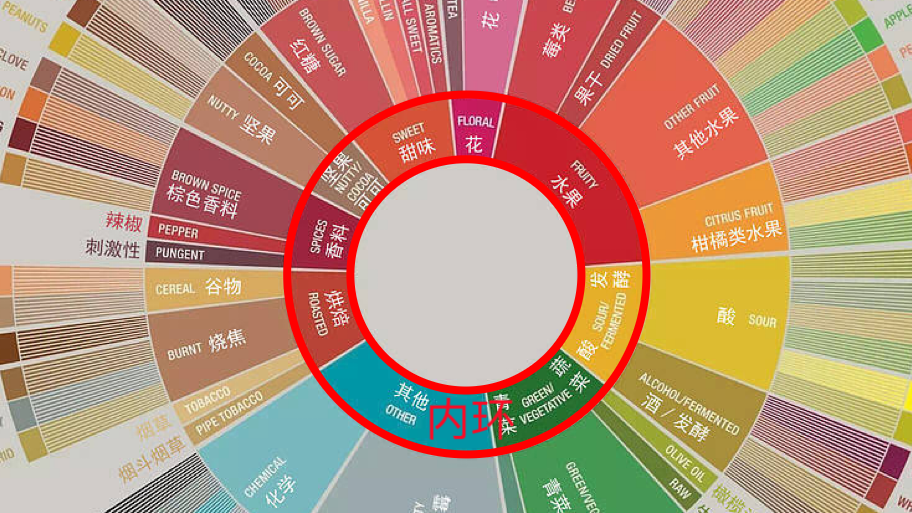
Overall, the Coffee Taster’s Flavor Wheel consists of three concentric circles, arranged from the center outward as the inner ring, middle ring, and outer ring. The inner ring represents the most basic level of flavor classification, primarily dividing flavors into several major categories, including: herbal, acidic & fermented, fruit, floral, sweet, nutty & cocoa, spicy, roasted, and other more general or hard-to-classify flavors. Mastering these fundamental types forms the essential foundation for further refining flavor descriptions.
It is worth noting that the design of the inner ring is not only for the sake of easy classification, but also based on the results of extensive sensory data analysis. In the past, experts often had limited and inconsistent vocabulary when describing coffee flavors. Through scientific methods of screening and sorting, the final set of major categories emerged as a common language used by the industry to describe flavors.
For enthusiasts who enjoy pour over coffee or exploring the flavors of single-origin beans, understanding the structure of the flavor wheel can significantly enhance the accuracy of cupping and tasting. For example, when tasting a Yirgacheffe from Ethiopia, if you detect distinct citrus and floral notes, you can first classify them under the inner-ring categories of ‘fruit’ and ‘floral,’ then look for more specific descriptive terms in the middle and outer rings, such as lemon, jasmine, or rose.
Additionally, many beginners tend to overlook the differences between roasted and fermented qualities when tasting. The flavor wheel clearly separates these aspects, helping to prevent misjudgment. For instance, some coffees may exhibit pronounced fermented aromas due to their processing method—this falls under the ‘acidic & fermented’ category, rather than simply being labeled as ‘sweet fruitiness.’
In actual cupping or everyday tasting, it is recommended to first observe the dry aroma and wet aroma, jot down your initial impressions, and then slurp the coffee, paying attention to how the flavors evolve and layer in the mouth. With repeated practice and guided by the flavor wheel, you can gradually build your own flavor memory bank, thus gaining more confidence in describing and sharing your coffee experiences.
The above content is compiled by CoffeeHunters, a coffee news website.


