







Introduction:As health awareness grows, more and more consumers are paying attention to the relationship between coffee and health. Surveys show that global searches for "health benefits of coffee" surged by 650% over the past year, with searches for "benefits of black coffee" skyrocketing by 1450%. This article compiles ten common health topics related to coffee, covering everything from nutritional composition and caffeine intake to chronic disease prevention, to help you understand the actual effects of coffee on the body and debunk common myths.
Open your phone, and you’ll often find various health-related information in family and friends’ group chats, especially regarding everyday beverages. Coffee, an essential drink for many people, has gradually become a focal point of health discussions in recent years. During the pandemic, people became even more sensitive to health matters, making the connection between coffee and health a popular topic.
According to authoritative surveys, global searches for "health benefits of coffee" increased dramatically by 650% over the past twelve months. These searches often focus on the nutritional components of coffee, caffeine content, and potential links to diseases such as dementia. Notably, searches for "benefits of black coffee" surged by 1450%, indicating a rapidly growing consumer interest in unflavored coffee.
The European Food Safety Authority (EFSA) recommends that consuming about 400 milligrams of caffeine per day — roughly equivalent to five standard cups of coffee — falls within the reasonable range of a healthy, balanced diet. As long as it is consumed in moderation, coffee not only helps to refresh and invigorate but also offers additional health benefits.
According to a pan-European survey, affected by the pandemic, 42% of coffee enthusiasts increased their caffeine intake during lockdowns. The lifestyle of lockdowns and remote work led many to develop the habit of accompanying their day with coffee, also prompting the public to pay more attention to how coffee affects the body.
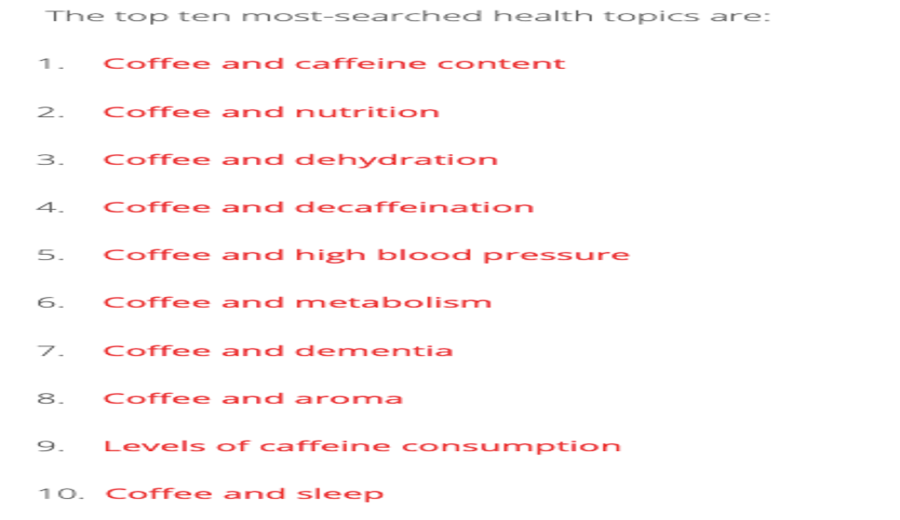
Here are ten major coffee-related health topics that have garnered significant attention over the past year, each closely related to our daily consumption:
1. Coffee and caffeine content
2. Coffee and nutrients
3. Coffee and dehydration
4. Coffee and decaffeinated options
5. Coffee and high blood pressure
6. Coffee and metabolism
7. Coffee and cognitive function as well as dementia risk
8. The impact of coffee aroma on mood
9. Recommended daily caffeine intake
10. The relationship between coffee and sleep quality
Among these, "how much caffeine is in a cup of coffee" is the most frequently asked question. Generally speaking, a standard 240-milliliter cup of black coffee contains about 80 to 100 milligrams of caffeine, though the actual amount may vary slightly depending on the roast level, brewing method, and bean variety.
Many people worry that drinking coffee can lead to dehydration, but research has shown that moderate coffee consumption actually contributes to hydration and does not cause significant fluid loss. Coffee is mostly water, so as long as it is not consumed in excess, there’s no need to overly worry about dehydration.
Additionally, pure black coffee naturally contains trace nutrients such as potassium, magnesium, and niacin, which may offer potential health benefits. However, once additives like creamers, fresh milk, sugar, or other ingredients are added, the overall nutritional profile changes, and calorie and sugar content also increase, which should be noted.
Regarding the link between coffee and dementia, some studies suggest that long-term and regular coffee consumption may help reduce the risk of cognitive decline and neurodegenerative diseases. Although research in this area is still ongoing, there is already considerable evidence indicating that coffee may have a protective effect on brain health.
During the pandemic, the rise of remote work and home life also contributed to an overall increase in coffee consumption. Many people began to view coffee as an indispensable part of their daily lives, not just for its energizing effects, but also for its potential health benefits.
Even with all the positive news, there are still plenty of voices in family group chats urging people to “drink less coffee.” However, as long as you stick to moderate consumption and understand the actual effects of coffee on the body, you can enjoy each cup with greater peace of mind.
The above content is compiled by CoffeeHunters, a coffee news website.


