







Introduction:Are your coffee beans at home losing their aroma and tasting bland? Don’t throw them away just yet. As long as they’re within the expiration date, even if they’ve passed their peak freshness, you can still extract their remaining flavors by adjusting grind size, water temperature, and brewing techniques—while avoiding the bitterness caused by over-extraction. This article will teach you how to revive flavor-faded coffee beans and share practical everyday reuse ideas to maximize the value of every bean.
Many coffee enthusiasts have experienced this: coffee beans that were fragrant when purchased gradually lose their aromatic intensity after a while, and not only does the brewed coffee smell less appealing, but the taste also becomes dull, sometimes even developing unpleasant off-flavors. In fact, this doesn’t mean the beans are spoiled or undrinkable—it simply means they’ve passed the stage of peak flavor. As long as they’re still within the shelf life indicated on the packaging and have been stored properly, these beans are safe to drink. However, they do require more careful adjustments in brewing methods to bring out their remaining desirable qualities.
The term “not fresh” refers to the gradual loss of volatile aromatic compounds in coffee beans over time, not that the beans have gone bad or become harmful to health. Generally speaking, according to food safety standards, the shelf life of roasted coffee beans is one year from the roast date. Within this period, as long as the storage environment is appropriate—such as being kept in a light-proof, airtight, and dry container—the beans can still maintain basic flavor and safety.
If you happen to have some coffee beans that have been sitting around for a while, try the following adjustment strategies to optimize your brewing results. When the carbon dioxide (the gas produced during roasting) has largely dissipated, these beans often become less reactive. The most direct impact is that the coffee grounds show significantly less expansion when water is poured over them. This leads to two main issues: first, the coffee grounds absorb water more quickly, which can easily lead to over-extraction; second, the coffee bed settles quickly in the filter and lacks fluidity, increasing the risk of clogging and uneven water flow during brewing.
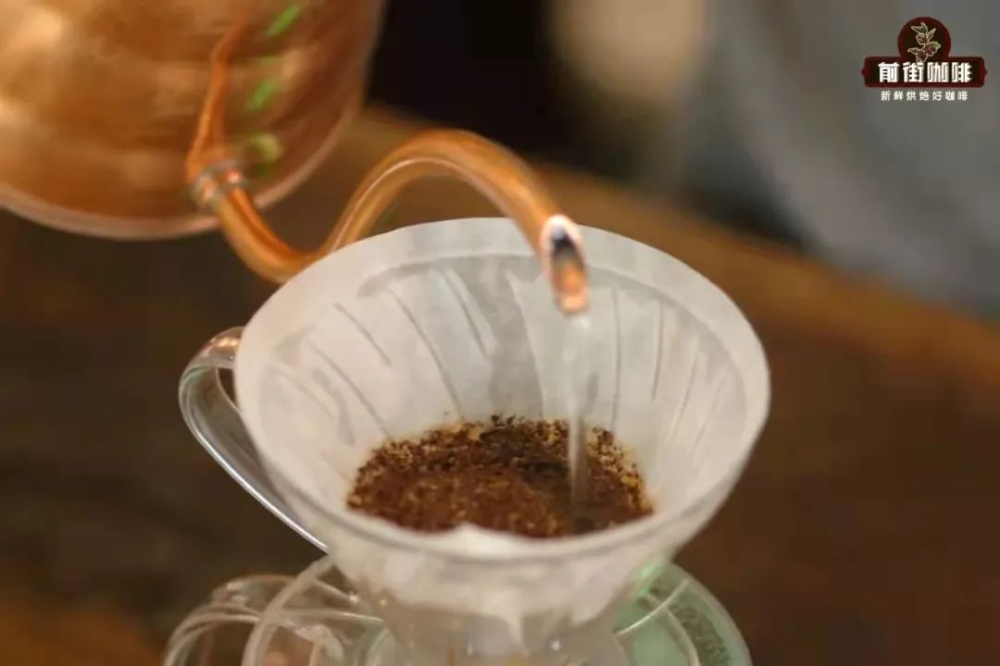
To address these challenges, the first step is to adjust the grind size. It’s recommended to make the grind slightly coarser to extend the contact time between water and coffee, reduce the risk of over-extraction, and help improve water penetration. Generally, for pour over coffee, the grind size can be adjusted to a medium-coarse to coarse level, similar in texture to sea salt or white sugar. Second, water temperature is also crucial. For coffee beans whose flavors have faded, it’s advisable to use a slightly lower water temperature, around 88°C to 90°C, which helps reduce the release of bitter substances while making the residual sweetness and fruit acidity more pronounced.
In terms of pouring technique, it’s recommended to use a pulse pouring method—for example, start with a small center pour to wet the coffee grounds, followed by a brief bloom (even if the expansion isn’t obvious, a short bloom still helps initiate extraction), and then proceed with a steady and slow circular pour to maintain the fluidity of the coffee bed. Be mindful to control the total brew time, aiming for around 2 to 2.5 minutes; too long can amplify undesirable off-flavors. Additionally, using a pre-wetted filter paper and an appropriately designed filter can also effectively improve water flow issues.
Through these fine-tuned adjustments, you may be able to rediscover a hint of the familiar good taste in those seemingly “stale” coffee beans. Even if you can’t fully restore their fresh-state performance, reasonable brewing parameters can still help you avoid overly bitter or off-flavor-heavy negative experiences, ensuring each cup of coffee remains at least palatable and balanced.
Besides adjusting brewing methods, for expired coffee beans that really struggle to deliver good flavor, there are actually many creative ways to repurpose them. For example, you can use coffee grounds as a natural deodorizer for refrigerators or shoe cabinets, or place them in closets to repel insects while adding a faint aroma. Additionally, coffee grounds are a handy helper for gardeners—they can improve soil drainage and offer some insect-repellent properties. DIY enthusiasts might also try mixing coffee grounds with soap or candle-making ingredients to create personalized natural cleaning products or scented candles. With a bit of ingenuity, coffee beans past their prime can still serve a purpose in daily life, truly achieving “waste not, want not.”
The above content is compiled by CoffeeHunters, a coffee news website.


