







Introduction:For office workers aiming to stay energized throughout the day, the choice often comes down to coffee or tea. But do you know which beverage is most effective for boosting alertness at what time? According to a survey of respondents in the United States, coffee significantly helps improve focus in the morning, while tea is more effective at maintaining vitality in the afternoon. This article delves into the mechanism of caffeine, analyzes the suitability of these two beverages at different times of the day, and offers practical pairing suggestions to help you find your optimal strategy for staying alert.
For professionals who need to stay awake all day, coffee and tea can be considered two major pillars of energy. Many have faced the dilemma: a strong cup of coffee in the morning to perk up, or some tea in the afternoon to relieve mental fatigue? A survey of over 2,000 respondents in the United States revealed that coffee drinkers often feel most energetic in the morning, while tea drinkers tend to maintain better mental states in the afternoon. These results make one wonder: is there really a difference in the alertness-boosting effects of coffee and tea depending on the time of day?
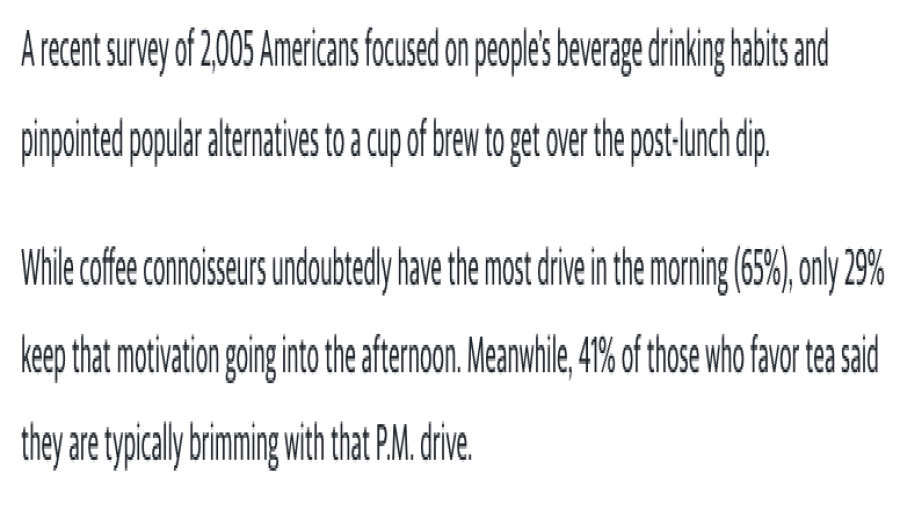
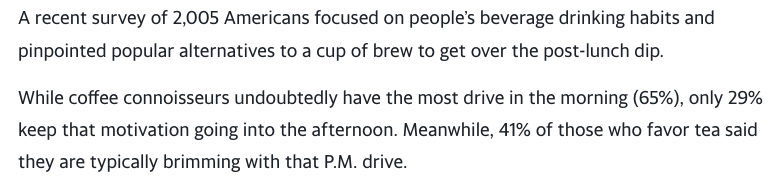
The survey indicated that over 65% of coffee enthusiasts reported drinking coffee mainly in the morning, when they feel particularly motivated, but nearly 70% admitted to a noticeable drop in energy by the afternoon, with only about 29% able to maintain the same level of alertness. In contrast, around 41% of tea drinkers said they could still stay fairly alert in the afternoon, with some even finding tea more invigorating than coffee in the morning.
You may have had a similar experience: trying to fight off the afternoon slump with a cup of coffee, only to find the wakefulness effect minimal, possibly accompanied by palpitations or restlessness. This is closely related to the metabolic rhythm of caffeine in the body. To understand the difference in alertness between coffee and tea, we must first start with their common component — caffeine .
Caffeine is a natural central nervous system stimulant that blocks adenosine receptors in the brain, thereby reducing the transmission of fatigue signals. However, the duration and intensity of caffeine’s effects are related to individual constitution and the time of consumption. Generally, caffeine begins to take effect 15 to 45 minutes after intake, peaks around 30 to 60 minutes later, and can remain in the body for several hours.
To meet the practical needs of professionals, drinking coffee in the morning can effectively counteract "morning grogginess" and help you quickly get into work mode. By the afternoon, especially in the post-lunch period, due to the body’s natural circadian rhythm tending toward slowing down, choosing tea — particularly pure tea — can provide a gentler and more stable alertness boost without causing nighttime insomnia.
It’s worth noting that although tea contains slightly less caffeine than coffee, it also has L-theanine, a compound that works synergistically with caffeine to deliver a smoother mental boost, helping with concentration without overstimulation. Therefore, for those prone to restlessness or palpitations from caffeine, switching to pure tea instead of strong coffee in the afternoon might be a more suitable choice.
When choosing between tea and coffee, it’s also recommended to adjust based on your personal schedule and sensitivity. If you’re prone to insomnia, it’s best to avoid any caffeinated drinks after the evening and opt for low-caffeine or caffeine-free alternatives whenever possible. Additionally, if you’re seeking a purer alertness boost, choose black coffee or pure tea , avoiding added sugar, creamers, or flavorings that may affect how your body responds to caffeine.
In summary, choosing coffee in the morning and switching to tea in the afternoon not only aligns with the biological rhythms of most people but is also supported by scientific evidence. By understanding the mechanisms of caffeine and being aware of your own physical and mental state, you can more intelligently plan your daily beverage intake to achieve steady alertness without compromising nighttime sleep.
Whether you prefer the rich aroma of coffee or the delicate aftertaste of tea, mastering the right timing and pairing methods can help you maintain a great state throughout the day to tackle all kinds of challenges.
The above content is compiled by CoffeeHunters, a coffee news website.


