








Introduction:Did you know? On the streets of Indonesia, there’s an “extreme” way of drinking coffee that involves dropping red-hot charcoal directly into the brew — Kopi Joss. This folk-originated beverage wasn’t initially created to reduce caffeine, yet it has been unexpectedly found to lower caffeine levels to some extent. This article will delve into the decaffeination principles of tamarind wood charcoal, its actual effects, and discuss the controversies and precautions of drinking it, giving you a scientific and cultural perspective on this unique Indonesian coffee.
Modern coffee industry has developed various professional decaffeination techniques, including solvent extraction, supercritical CO₂ processing, and Swiss Water Process, all of which can effectively reduce caffeine content. However, in an era when such technologies were not yet widespread, Indonesians had already devised a special way to “adjust” caffeine intensity — by dropping red-hot tamarind wood charcoal into brewed coffee, thus creating the street specialty known as Kopi Joss.
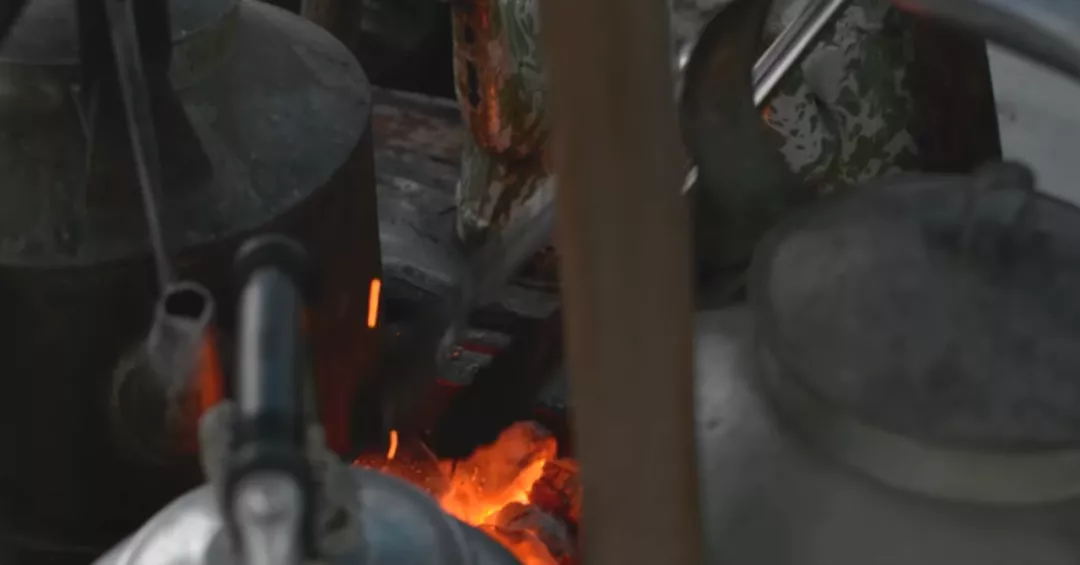
The birth of this drink was not for the purpose of decaffeination, but rather because locals believed that charcoal could soothe stomach discomfort and provide warmth against the cold. It is observed that vendors place glowing-hot charcoal, taken straight from the stove, into a cup of strong black coffee loaded with sugar. The intense reaction creates a sound resembling “j~o~s~s~~,” hence the name Kopi Joss (where “joss” in Indonesian means “great” or “effective”).
In practice, the vendor typically mixes concentrated coffee with a generous amount of sugar, then uses long tongs to drop the burning-hot charcoal into the cup, pressing it gently to the bottom with a spoon. At this point, the coffee vigorously bubbles and emits smoke due to the high-temperature charcoal, making for a quite visually striking process. The charcoal remains in the cup until the customer finishes drinking, after which it is reheated and reused.
Although the original intention wasn’t to reduce caffeine, research last year by Ahmad Fauzan, a chemistry student at Gadjah Mada University in Yogyakarta, Indonesia, unexpectedly revealed the decaffeination potential of Kopi Joss. The study pointed out that the tamarind wood charcoal used has an iodine adsorption rate as high as83%, which can adsorb some caffeine and chlorogenic acids, thereby improving taste and reducing bitterness.
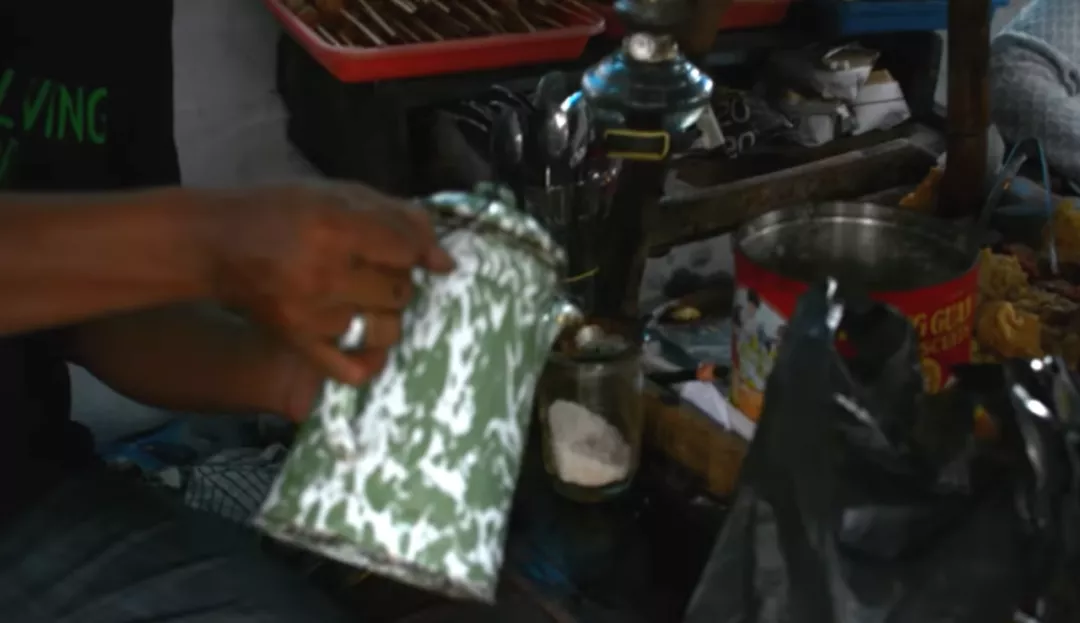
Specific data shows that the caffeine content of regular Indonesian black coffee is about68.78 mg per 100 ml, but after adding red-hot tamarind wood charcoal, the caffeine in Kopi Joss drops to55.13 mg per 100 ml. The study also found that the best adsorption effect occurs when the charcoal contacts the coffee for40 minutes, during which caffeine can be reduced by approximately20.15 mg per 100 ml, and that the addition of charcoal has minimal impact on the drink’s appearance and overall flavor.
It’s worth noting that while the charcoal adsorbs caffeine, it also neutralizes some chlorogenic acids, resulting in a smoother taste and reduced bitterness in Kopi Joss compared to regular black coffee. This may also be one of the reasons early drinkers reported feeling “gentler on the stomach.”
However, this traditional method still comes with considerable controversy. Since charcoal can shed fine particles during boiling, consumers actually ingest small amounts of charcoal dust. While charcoal itself is not digested or absorbed by the human body, the long-term safety of this practice remains inconclusive, especially for those with weak gastrointestinal function or stomach conditions, who are advised to evaluate the risks carefully.
Additionally, while Kopi Joss does have a “decaffeination” effect, the reduction is not extremely significant, and for individuals strictly controlling their caffeine intake, it may still not be sufficient to replace professionally decaffeinated coffee. From a cultural perspective, this coffee embodies more of the wisdom and lifestyle of Indonesian street culture, being part of the local culinary scene rather than a scientifically precise decaffeination solution.
In summary, as a uniquely Indonesian street coffee, Kopi Joss offers not only a distinctive visual and flavor experience, but also presents an interesting scientific case through its charcoal-based decaffeination principle. If you visit Indonesia, do try this “hardcore coffee” for yourself. But if your goal is strict caffeine reduction or you have sensitive stomach issues, it’s still advisable to opt for professionally decaffeinated coffee or consume in moderation. The collision of tradition and science makes this coffee not just a pick-me-up, but also an excellent vessel for culture and research.
The above content is compiled by CoffeeHunters, a coffee news website.


