







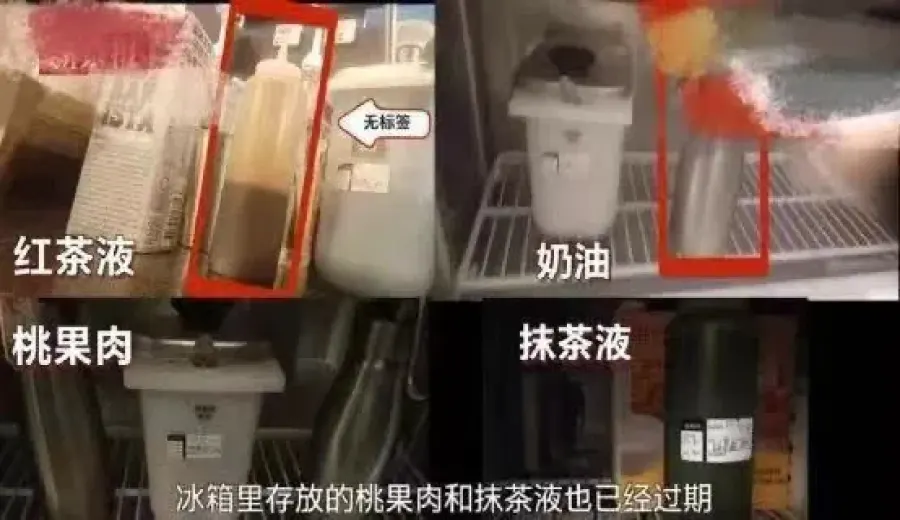
Introduction:Two Starbucks outlets in Wuxi were heavily fined 1.37 million yuan for food safety violations, drawing public attention to hygiene management in chain restaurants. Beyond the hefty fines, the incident also exposed internal regulatory loopholes and an imbalance in cost control. This article details the incident, outlines the penalties, and analyzes how chain coffee shops can maintain proper daily hygiene standards, helping readers understand the key management aspects behind food safety.
After the food safety issues at two Starbucks locations in Wuxi came to light, not only were all staff dismissed and the stores ordered to suspend operations for rectification, but the authorities also issued a combined fine of 1.37 million yuan, including the confiscation of illegal gains totaling 30,000 yuan. The incident quickly sparked widespread concern about hygiene management in the chain catering industry, especially among well-known coffee brands, and prompted consumers to re-examine the production processes and safety controls of their everyday beverages.
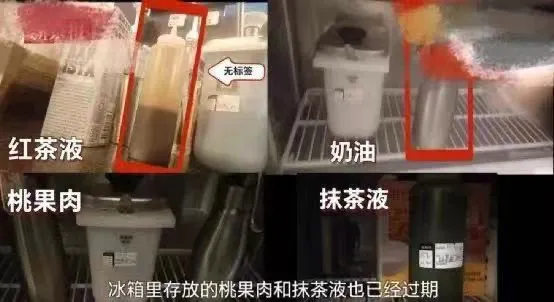
Following the exposure, Starbucks China stated on its official Weibo account that it took the matter very seriously and immediately cooperated with market supervision authorities in conducting store closures and investigations. Other outlets across the country were subsequently subjected to surprise inspections by local market regulators. Aside from the two involved Wuxi stores, most other outlets did not exhibit major violations, but common issues included incomplete scrapping records, missing disinfection logs, and employees not wearing required work caps and masks in accordance with regulations.
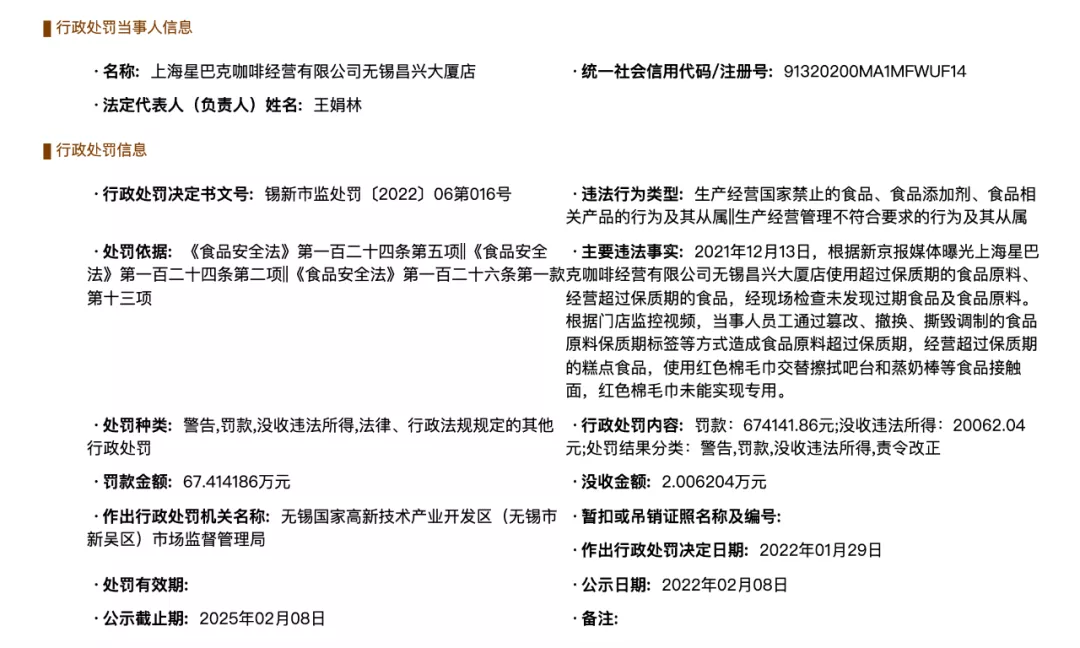
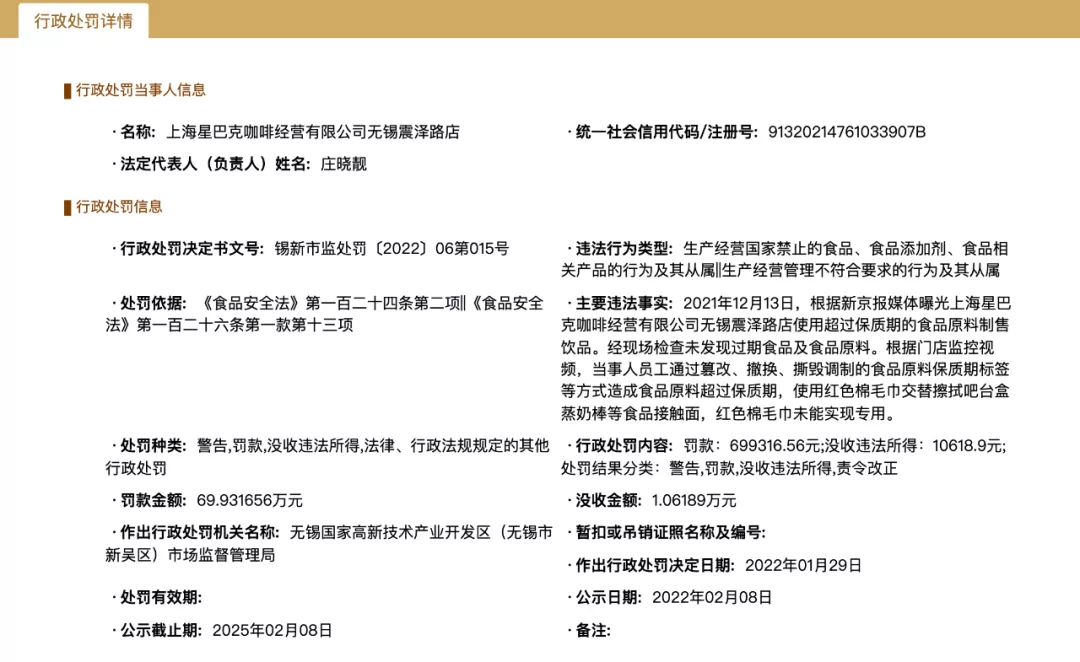
The two implicated stores—Shanghai Starbucks Coffee Management Co., Ltd. Wuxi Changxing Building Store and Wuxi Zhenze Road Store—were fined 674,000 yuan and 699,000 yuan respectively under Article 124, Paragraph 2, and Article 126, Paragraph 1, Item 13 of the Food Safety Law, totaling 1.37 million yuan, along with the confiscation of 20,000 yuan and 10,000 yuan in illegal gains. This level of punishment reflects the strict regulatory stance on violations in food production and sales.
Although this incident is an isolated case, it highlights how expansion under cost pressures or lax management may lead to a “cutting corners” mentality at the grassroots level. Some observers have noted that if such issues were widespread across most Starbucks outlets, the brand would likely have already struggled to maintain its foothold in the Chinese market. Therefore, this should be seen as a classic warning sign of how “one bad apple can spoil the barrel.”
Puzzlingly, these violations were not hard to detect and should have been caught early through internal audits. The core issue may lie in whether there are dedicated personnel responsible for oversight and whether hygiene requirements at every step are genuinely enforced. If management systems become merely formalities, frontline employees can easily become negligent due to lack of supervision, ultimately eroding consumer trust.
In the early stages of the incident, some defended Starbucks, arguing that it was just an issue with individual stores and that most maintained high standards. However, comments from netizens revealed that complacency regarding food safety still exists within the industry—for example, questioning the motives of undercover reporters, or even claiming that “as long as the food isn’t spoiled, it’s fine.” Such attitudes are not only incorrect but could also plant the seeds of future food safety risks.
Notably, had it not been for the in-depth investigation by journalists, these problems might have remained hidden for a long time. Poor business performance cannot be used as an excuse to compromise hygiene standards. The establishment of food safety systems is meant to protect consumer health, not merely to pass inspections. Once a food safety incident occurs, the damage to brand reputation and legal liabilities will far outweigh any short-term cost savings.
In response to criticism of weak enforcement by regulatory authorities, it’s true that food and drug regulatory bodies face challenges in monitoring a vast number of businesses with limited manpower, making real-time, comprehensive oversight difficult. Therefore, the ultimate responsibility for food safety still rests with enterprises and their employees, while consumers and the general public are encouraged to actively report suspicious behavior to form an effective external oversight mechanism.
In summary, this incident serves as a reminder to all chain catering brands, especially those in the coffee industry, that food safety is no small matter. The existence of regulatory systems is precisely to eliminate complacency and ensure that every cup of coffee and every food item is prepared in a safe and controlled environment. Only by addressing issues with honesty and actively improving can brands regain the trust of consumers.
The above content is compiled by CoffeeHunters, a coffee news website.


