







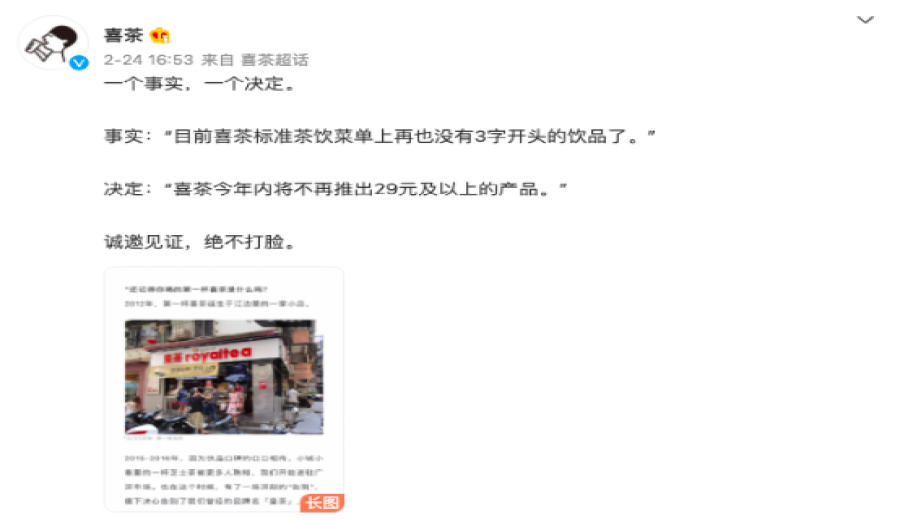
Introduction:After the pandemic, the tea beverage industry generally raised prices, but HEYTEA took a counter-trend approach by announcing that it would not increase prices this year and would discontinue products priced above 29 RMB. The standard tea beverage price range has been comprehensively adjusted downward to between 15 and 25 RMB. This move quickly led to a surge in orders, with some stores seeing queues of over an hour during peak hours. This article delves into the market logic behind the price cuts, explores consumers' concerns about quality, and reveals the actual measures HEYTEA is taking to maintain standards, helping readers rationally view this wave of "affordable storm."
Since the outbreak of the pandemic, the tea beverage industry has faced rising costs for ingredients and labor, prompting many brands to successively raise their prices, forcing consumers who rely on milk tea for a daily energy boost to become more budget-conscious. However, HEYTEA recently launched a surprising strategy: not only has it reduced menu prices, but it has also publicly committed to no price increases for the entire year and will no longer launch products priced over 29 RMB.
According to the latest adjustments, HEYTEA’s standard tea beverage menu has completely removed any items priced in the “30s,” with now over half of its products falling within the 15 to 25 RMB price range.On February 24, the company officially announced that it would strictly enforce its no-price-increase policy for the year, with products priced between 15 and 25 RMB now forming the mainstay of the current menu.
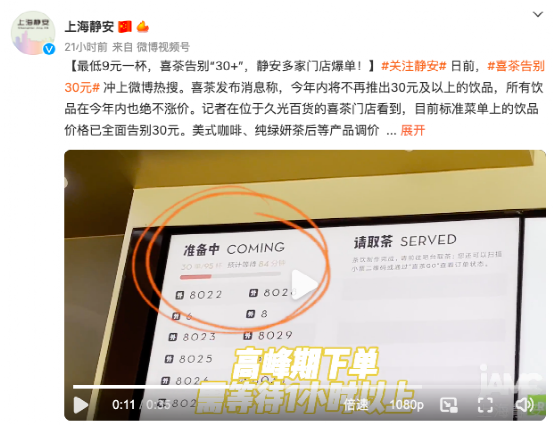
The price adjustment immediately triggered a market response, with a significant increase in both delivery and in-store orders. Many stores experienced overwhelming demand, with peak-hour wait times exceeding one hour, and some branches even temporarily disabled online ordering. The sight of stacked drinks waiting to be picked up became a tangible representation of this consumption boom.
Consumer reactions have been polarized:Supporters such as Ms. Yue, a white-collar worker in Shanghai,stated that they have significantly increased their purchase frequency after the price drop, especially finding the fruit tea series more affordable; other customers pointed out that previous prices above 30 RMB made daily consumption feel luxurious, and the current price range is more in line with expectations. Notably, all new HEYTEA products are priced at just over 20 RMB, and the brand plans to introduce “10s” RMB drinks in the future, along with new options including a standard 500 ml cup and a larger 650 ml MAX size.
In response to market concerns, HEYTEA emphasized that recipes and product standards remain unchanged, and the price reduction aims to broaden consumer choice. However, some users have reported quality fluctuations, such as reduced cheese portions in certain products. Industry experts noted that maintaining low prices while ensuring consistent quality requires reliance on supply chain optimization and improved production efficiency.
This price-cutting strategy has successfully sparked a consumption boom, with significant increases in order volume per store, but it also places higher demands on production processes and ingredient management. Whether HEYTEA can maintain product consistency while expanding its market penetration will be key to continuously earning consumer trust.

The above content is compiled by CoffeeHunters, a coffee news website.


