








Introduction:In 2021, WBrC World Brewers Cup champion Matt won the title using a blend, drawing significant attention from the industry. He used a blend of 60% natural Ethiopian Heirloom Eugenioides and 40% washed Catucai, employing a metal V60 filter, a 1:15 coffee-to-water ratio, and a unique approach with segmented temperature control and five pours to deliver outstanding layers and sweetness. This article takes an in-depth look at his competition brewing recipe—from bean selection and water temperature control to pouring details—offering practical insights to help you improve your pour over skills.
At the 2021 WBrC World Brewers Cup, champion Matt stood out by using a blend rather than a single-origin Geisha, capturing the attention of many coffee enthusiasts. The blend he used consisted of60% natural Ethiopian Heirloom Eugenioidesand40% washed Catucai. The former contributes intense sweetness to the cup, while the latter brings clarity and bright acidity. In terms of brewing technique, Matt opted for a metal V60 filter, usinga 1:15 coffee-to-water ratio, along withfive pours, and innovatively divided the water temperature intotwo stages: 93°C and 88°C, resulting in a coffee with layered and balanced flavors.
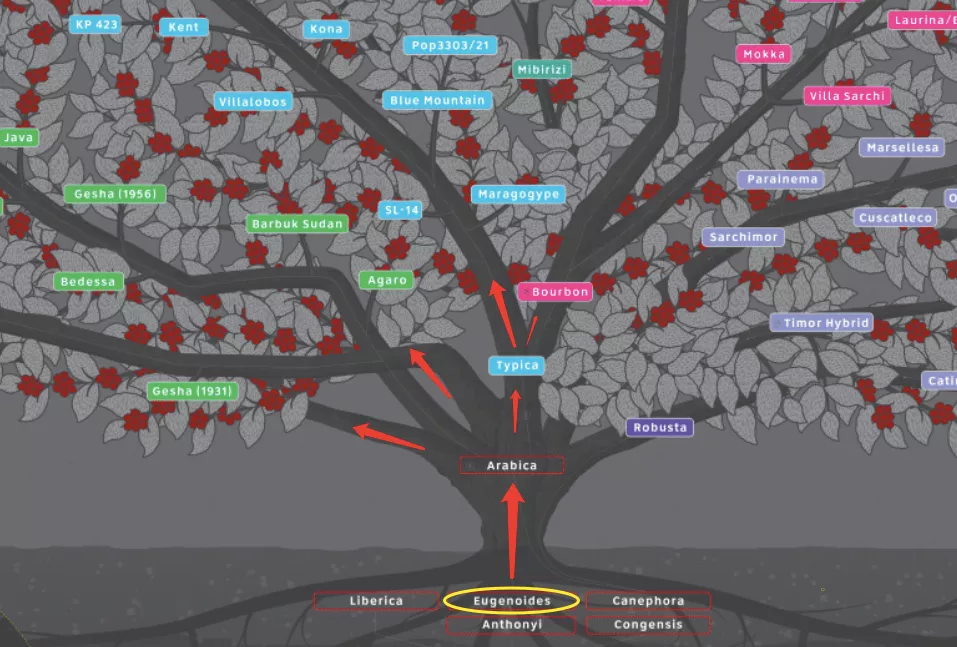
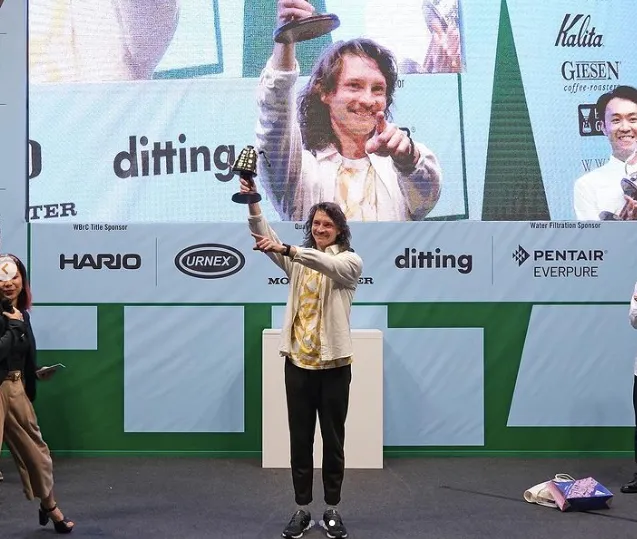 In this competition, not only the champion Matt but also the runner-up chose blends over Geisha or single-origin coffees, highlighting the potential and uniqueness of blends in competitions. It’s important to note that there is no absolute superiority between single-origin beans and blends—it all depends on flavor expression and competition strategy. Matt shared after the event that his blend consisted of60% natural Ethiopian Heirloom Eugenioides,40% washed Catucai. The Eugenioides variety may be relatively unfamiliar to many, but it is actually one of the “parent varieties” of Arabica coffee, a hybrid of Eugenioides and Canephora. Its Chinese translation is somewhat unwieldy, so it is sometimes simply referred to as “parent variety.”
 Matt specifically pointed out that this parent variety plays the role of providingexceptionally high sweetnessin his competition beans, with almost no noticeable acidity or bitterness, resulting in a very clean flavor profile. Of course, such performance is also inseparable from the excellent farming techniques and meticulous natural processing at the Sacred Farm. However, sweetness alone isn’t enough to make a captivating cup of coffee, so Matt also added40% washed Catucai from Finca Florida in Ecuador. This bean is a common variety in Central and South America but was rarely selected for this competition, and it comes from a high-quality T1-grade farm in Ecuador, contributingbright, clean, and pleasant acidity, which perfectly balances the sweetness of the parent variety.
Overall, although Matt’s blend is not the commonly seen Geisha in competitions, its flavor profile and blending strategy were enough to refresh the judges’ palates, showcasing exceptional creativity and quality control. Of course, most of us may not have access to the same grade of beans, but thishighly compatible pour over method that balances sweetness and complexityis well worth learning and practicing for coffee enthusiasts.
Next, let’s take a closer look at the specific brewing parameters Matt used in the competition. From the official competition video, we know that he used ametal V60 filter, with a coffee dose of20 grams, and a total brew water volume of300 grams, translating to a1:15 coffee-to-water ratio. The grind size was relatively coarse, and the total pouring process was divided intofive pours (including the bloom), with water temperature control being a highlight of this recipe—he prepared two kettles at different temperatures,using 93°C for the first three pours and 88°C for the last two, to modulate flavor extraction at different stages.
 Based on the video, Matt’s total brew time was approximately2 minutes and 43 seconds, starting the first pour at the 3-minute and 42-second mark of the competition timer and finishing by removing the filter at the 6-minute and 25-second mark. Although Matt did not publicly disclose the exact amount of water for each pour, observers estimated his pouring pattern to be similar to the famous Tetsu Kasuya’s 4:6 method, though with adjustments in temperature and ratios. The approximate pouring amounts were60g, 80g, 60g, 60g, and 40g, all designed around stable and precise flavor extraction.
This method has several key points worth learning. First is theuse of a metal filter. Matt explained that the metal material helpsmaximize the expression of acidity and flavor. While the impact of filter material may not be very noticeable in everyday brewing, in high-level competitive settings, such details can become decisive. Next is the application ofsegmented temperature control, a technique that is gaining increasing attention in the pour over world. It is generally believed that higher temperatures help extract more flavor compounds but can also bring out excessive bitterness; lower temperatures help suppress over-extraction and preserve bright acidity. Matt used the higher temperature (93°C) in the early stage to bring out sweetness and complexity, and the lower temperature (88°C) in the later stage to control extraction and avoid over-brewing, achieving overall balance in flavor.
Additionally, Matt’s pouring technique is also highly instructive. He used a fixed-point pouring method combined with a strong stream to create agitation, then returned to a fixed central pour. This approach shares similarities with Tetsu Kasuya’s 4:6 method, emphasizingcoarse grind, high water flow, stable ratios, and efficient agitation. One noteworthy detail is that after each pour, Matt closely monitored the scale to ensure the target water volume was reached, quickly topping up if there was any deviation. This demonstrates his exceptional execution and precision, which are also key factors in maintaining stability during competitions.

The above content is compiled by CoffeeHunters, a coffee news website.


