







Introduction:As coffee becomes part of everyday life, even Shanghai’s Longhua Temple, with its 1,700-year history, has joined the trend by opening a beverage window next to its vegetarian restaurant, offering “vegetarian coffee” made with oat milk instead of dairy. This thoughtful initiative not only caters to vegetarians and those who are lactose intolerant but also sparks public discussion on whether coffee can be categorized as “meat” or “vegetarian.” This article will delve into the background of Longhua Temple’s move and revisit other cases of temples venturing into the coffee business, showing you the fresh spark created by the collision between ancient temples and coffee.
In recent years, as coffee culture has flourished, various innovative beverages have emerged one after another, and even long-established religious sites have joined this cross-industry trend. Shanghai’s oldest temple, Longhua Temple, recently added a beverage window next to its vegetarian restaurant, launching “vegetarian coffee” that replaces cow’s milk with oat milk, catering to the needs of both vegetarians and those who are lactose intolerant. This is not the first time temples have ventured into the coffee arena—ranging from Guangzhou’s Great Buddha Temple to Hangzhou’s Yongfu Temple, the combination of Buddhism and coffee has already begun. By entering the market with an affordable price point, Longhua Temple has sparked online discussions: Does coffee really have a meat or vegetarian distinction? Is selling coffee at a temple cultural promotion or just a commercial gimmick? Let’s find out.
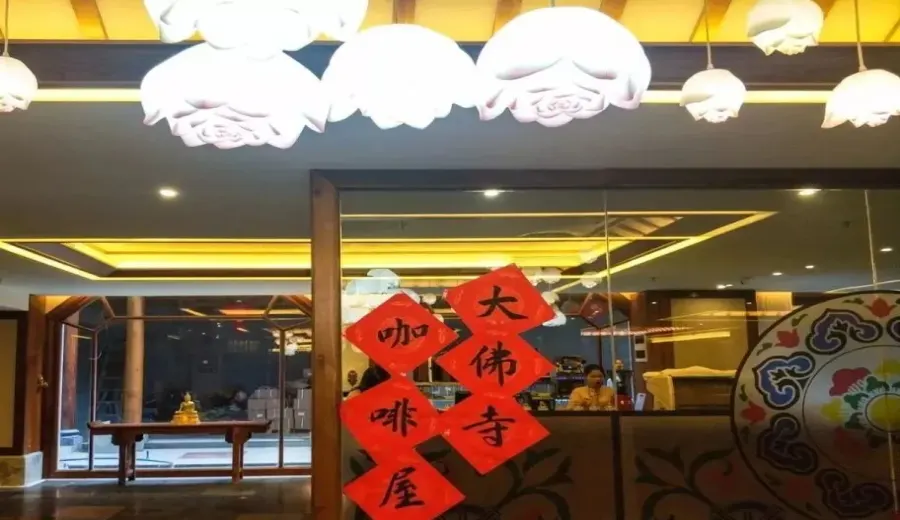
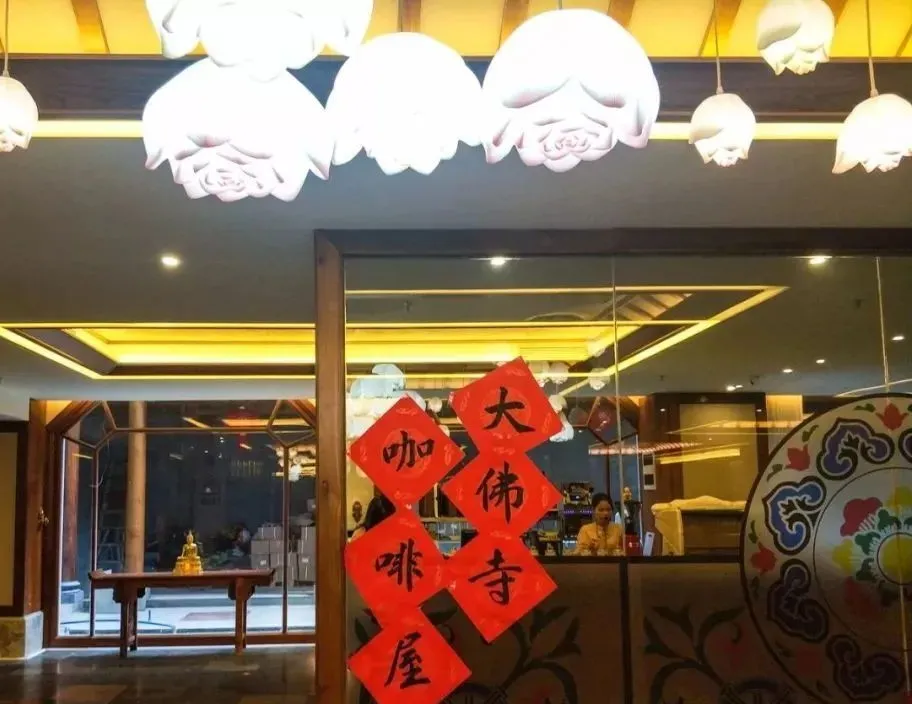
As early as 2018, when the coffee market had not yet entered a period of intense competition, Guangzhou’s Great Buddha Ancient Temple set up a “Great Buddha Temple Coffee House” at the temple’s exit. The shop’s decor was full of Zen charm, with glowing lotus installations hanging at the entrance, creating a solemn and tranquil atmosphere. The signage was written on simple red paper, without any fuss. The shop offered milk tea, freshly ground coffee, and health drinks to meet the diverse needs of worshippers. (This coffee shop has since ceased operations.)
In September 2021, Hangzhou’s Yongfu Temple also opened a café named “Cibei” near its exit. Each coffee on the menu was given a Zen-inspired name—for example, mocha was called “Joy,” cold brew latte was named “Zen Beginning,” and caramel macchiato was called “Ink and White”—successfully attracting many young people to visit and take photos.
With the saying “Enjoy coffee in a sacred Buddhist space, but don’t judge others by their drink” gaining traction, Shanghai’s 1,700-year-old ancient temple—Longhua Temple—also began selling “vegetarian coffee.” Unlike other temples that set up standalone coffee shops, Longhua Temple chose a more community-friendly approach by adding a beverage window within its vegetarian restaurant.
Longhua Temple is Shanghai’s oldest and largest ancient temple, with a uniquely designed layout—the first hall is the Maitreya Hall, rather than the more common Heavenly King Hall, highlighting the temple’s reverence for the Maitreya Bodhisattva. In addition to its deep historical roots, Longhua Temple’s vegetarian noodles and snacks are also widely praised. The recently launched “vegetarian coffee” has set up a beverage sales area next to the existing vegetarian food window, offering a variety of choices such as freshly squeezed juice, lemon tea, and freshly ground coffee.
Regarding the classification of milk, although milk is an animal product, it is generally considered vegetarian. However, to avoid public doubts about whether milk is meat or vegetarian, Longhua Temple specifically uses oat milk instead of cow’s milk. This not only suits vegetarians but also accommodates those who are lactose intolerant. The pricing is quite affordable, making it highly competitive in Shanghai’s downtown area. This move has sparked heated online discussions, with some people exclaiming, “So coffee can also be divided into meat and vegetarian?” showing the public’s interest in this innovative attempt.
The popularization of coffee culture has made various cross-industry collaborations a trend. Temples venturing into the coffee market may be hoping to expand development opportunities through diversified operations and attract the attention of younger demographics. Through these seemingly unrelated combinations—such as the union of ancient temples and coffee—curiosity among the public can be sparked, leading to a better understanding of the historical and cultural significance of temples and cities.
Regarding the phenomenon of temples selling coffee, some netizens have raised questions: Can centuries or even millennia of historical heritage really compete with a foreign beverage in attracting young people? Is this a positive or negative influence on the inheritance of historical culture? This is worth further reflection.
The above content is compiled by CoffeeHunters, a coffee news website.


