







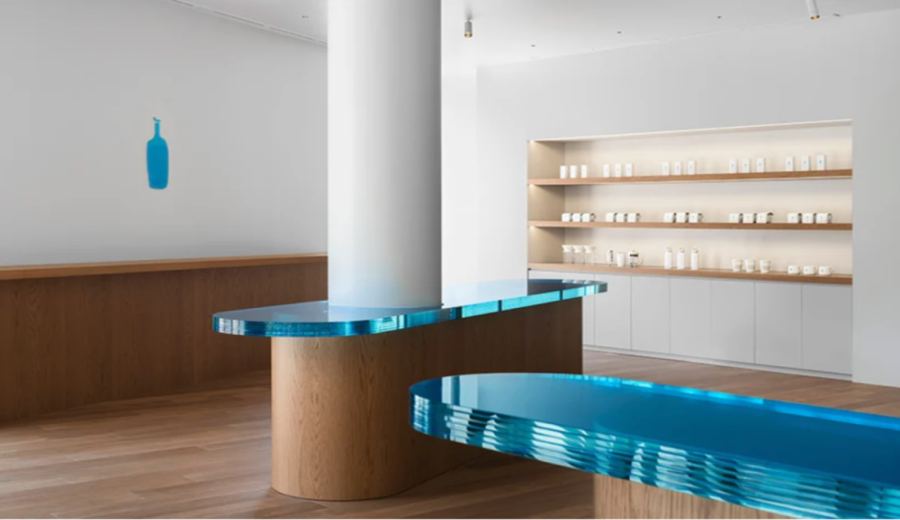
Introduction:Blue Bottle Coffee has launched a new location in Japan’s Chayamachi district, blending the area’s deep-rooted tea culture with modern spatial aesthetics to create a dual-zone design that contrasts warmly toned natural wood with cool, pure blue. The first floor utilizes abundant natural light and wooden elements to craft a cozy atmosphere, while the second floor employs blue lighting and sound-light effects to deliver a unique immersive experience. This article dissects the planning details of each floor, analyzes the application of color psychology, and explores the sensory regulation logic behind the design, offering insight into the thoughtful spatial strategy of specialty coffee shops.
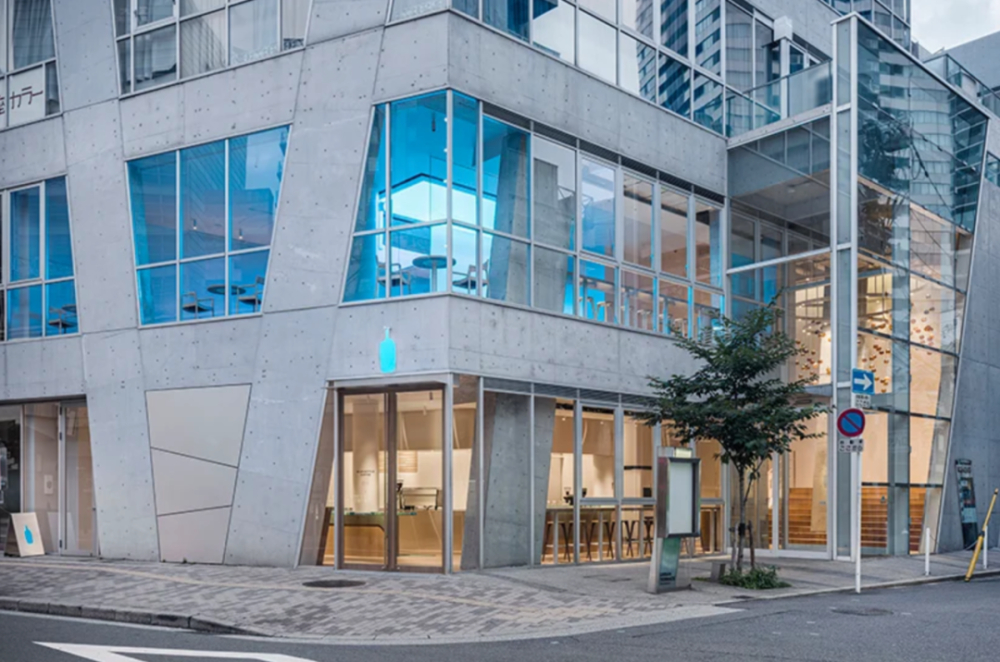
Blue Bottle Coffee has established a new outlet in Chayamachi, an important cultural hub in Kansai, reimagining the site’s century-old tea gathering tradition through a contemporary lens. This two-story building features a masterful arrangement of materials and color palettes, delineating a first floor lounge area dominated by warm wooden tones and an experimental, fully blue immersive second floor space—forming a striking yet harmonious contrast.
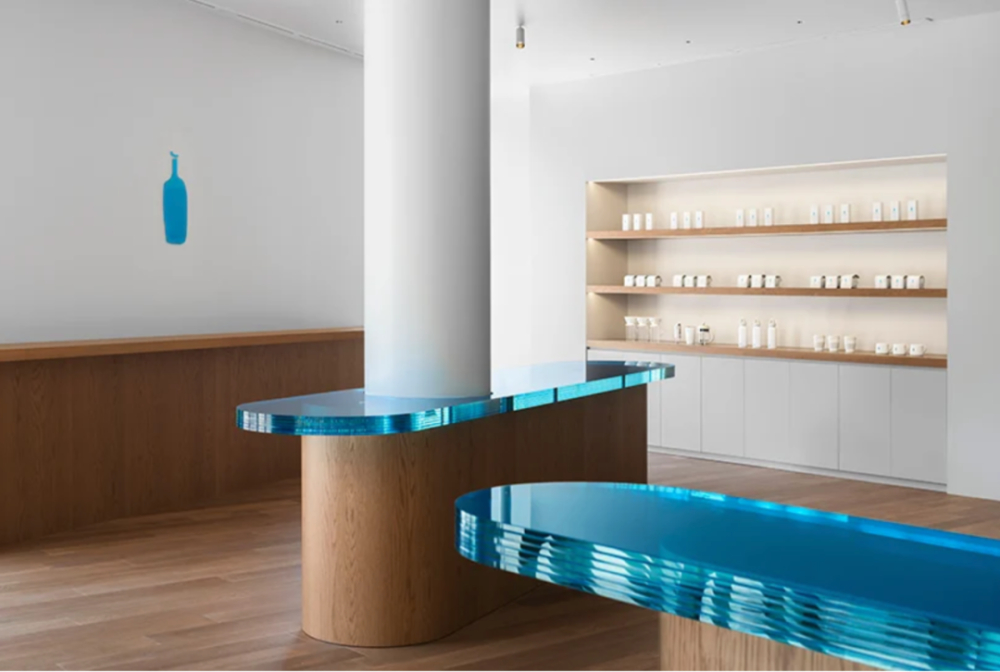
According to the designers, Chayamachi has long been a gathering place for Japanese tea ceremony enthusiasts, with tea house culture fostering a unique social dynamic. To translate this cultural heritage into the vocabulary of a modern coffee shop, the spatial planning emphasizes a “dual-tone narrative”—using the visual dialogue between natural wood and indigo blue to both extend the approachability of local teahouses and endow the specialty coffee space with a contemporary artistic character.
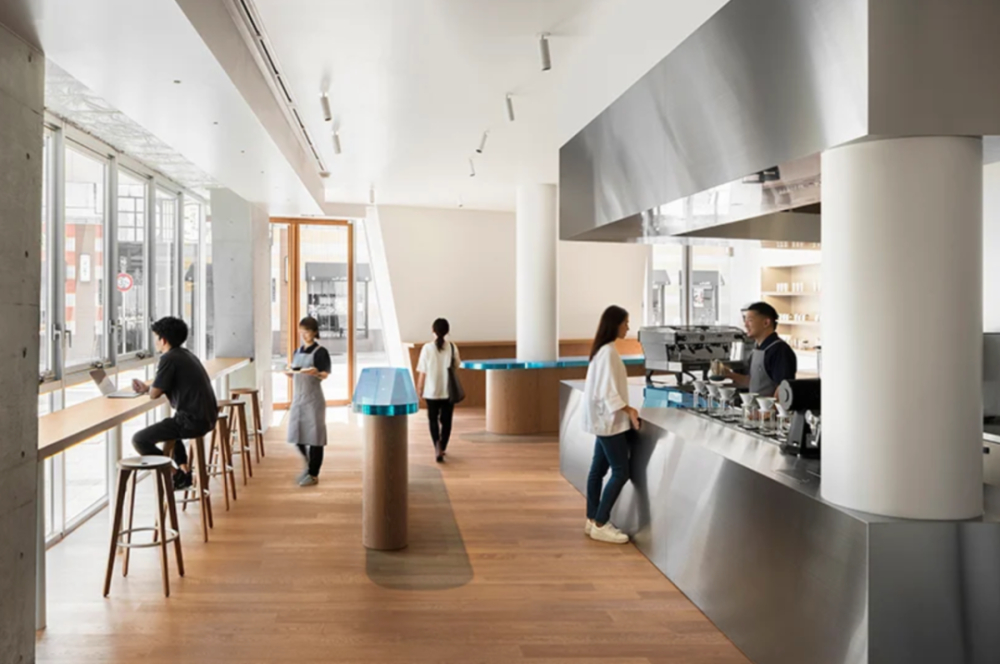
Upon entering the first floor, one is immediately enveloped by the soft texture of wood, with carbonized Japanese cedar used for floors and columns, their surfaces retaining fine grain patterns to enhance tactile dimension. Floor-to-ceiling windows draw in natural light, which, during the optimal sunlight hours from 10 a.m. to 3 p.m., evenly illuminates the interplay of light and dark wood grains. The stainless steel bar counter, made from 304 food-grade mirror-finish material,with an 85% light reflectivity rateensures brightness even on overcast days, while its 105 cm height is tailored for ergonomic brewing operations.
The first-floor circulation design incorporates subtle ingenuity: the central blue glass dining table not only echoes Blue Bottle Coffee’s signature color, but its15-degree inclineand precise placement 3.2 meters from the stairwell to the second floor naturally guides foot traffic upward. The spiral staircase connecting the two levels is adorned with custom glass chandeliers, featuring 32 hand-blown brown glass orbs arranged in a gradient, which cast dynamic light spots on the walls through refraction.
The second-floor space completely upends traditional café design logic, employing a Pantone 2945 C professional blue hue throughout, complemented by an embedded LED blue lighting system to create an immersive ambiance. The central area features a special light-shadow installation, combining dynamic ceiling-projected imagery with ambient sound effects; on-site testing indicates this can produce an approximate18–22% extension or compression effect on occupants’ perception of time. A noteworthy experiential detail is the use of benches made from memory foam and ceramic composite materials, with surface temperatures maintained at a constant 22±1°C to enhance comfort.
Color psychology experts note that while blue has a calming effect, when its usage exceeds 65% of a space, it may induce feelings of oppression and suppress appetite. This design mitigates the issue through three balancing measures: first, embedding 0.5 cm-wide matte silver strips in the blue walls to disperse visual focus; second, installing warm yellow accent lights (2700K color temperature) in seating areas; and third, utilizing curved glass walls to create diffused light reflection. Empirical data shows this comprehensive solution extends average customer dwell time to 58 minutes—an increase of about 27% compared to monochromatic spaces.
This coffee experimentation ground, merging regional culture with sensory science, showcases the diverse possibilities of specialty coffee space design. From wood selection to light programming, every detail reflects the modern café’s operational philosophy that goes beyond mere beverage sales.
The above content is compiled by CoffeeHunters, a coffee news website.


