







Introduction:Drip bags are renowned for their ease of use—you can enjoy coffee flavors quickly without any specialized equipment. But many coffee enthusiasts wonder: can drip bags be steeped like a French press? And what are the tricks to pouring water properly? This article delves into the extraction principles behind drip bag coffee, compares the differences between drip filtration and immersion brewing, and offers practical advice on segmented pouring and water flow control to help you improve your home brewing quality. We also recommend several drip bag options that cater to different taste preferences and deliver pour over-level performance.
Drip bags are one of the most convenient brewing methods closest to pour over. With just hot water, a cup, and a drip bag, you can easily extract coffee flavors without the hassle of scales or thermometers. However, many users are curious: can you simply soak the drip bag in water like an immersion brew? In fact, traditional immersion methods are not suitable for brewing that aims to preserve the original intent of drip bag design. But by adjusting your pouring technique, you can still optimize extraction and get results close to the nuanced profile of pour over.
Common drip bag brewing methods can be divided into two main categories: drip filtration and immersion. The mainstream approach is the drip method, where hot water is poured directly onto the coffee grounds inside the drip bag’s filter, allowing the brewed liquid to naturally drip through. As for immersion, it does not mean submerging the entire drip bag into a kettle—this not only fails to effectively extract flavors but may also lead to over-extraction or unwanted sediment release due to prolonged contact time. A proper alternative to immersion involves pouring the coffee grounds into a container, mixing them with hot water, letting them sit, and then filtering through paper or a mesh filter—but this method deviates from the original design intention of drip bags.
Although drip bags are simple to use, maintaining a bit of ritual can significantly enhance extraction quality. Taking the commonly available 10-gram drip bags as an example, referring to the pour over recommendation of a coffee-to-water ratio of 1:15 to 1:18, the total water volume should ideally be controlled between 150 to 180 milliliters. When pouring, you can start with a small amount of hot water to pre-wet the coffee grounds—a step commonly known as the bloom—which helps to activate the coffee, lasting about 10 seconds.
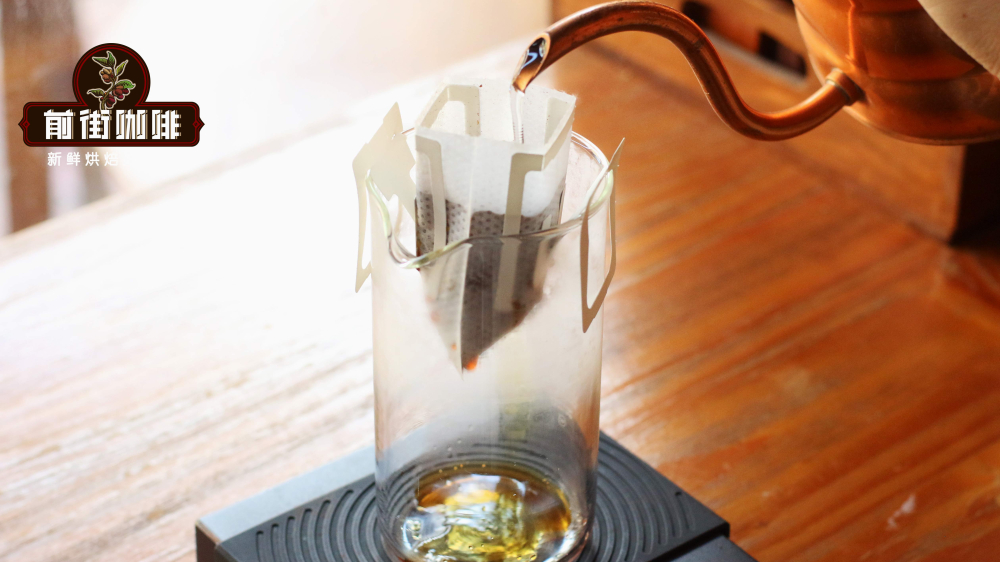
Next, it’s recommended to pour in three stages. The first pour should fill the drip bag to about half its height, the second and third pours should each bring it up to around four-fifths full. After each pour, wait briefly until the brewed coffee has fully dripped through before proceeding to the next pour. Pouring too much water at once can cause the upper layer of the drip bag to accumulate water, which may then seep out from the edges, not only reducing extraction efficiency but also making the coffee flavor thinner. Based on actual testing, using this three-stage pouring method with a total brew time of about one and a half minutes and a total water volume of around 150 milliliters is ideal for those seeking a refreshing taste. If you prefer a milder flavor, you can add an extra pour to reach four-fifths full, bringing the total up to 180 milliliters.
To ensure the coffee grounds are evenly saturated and to release more aroma and flavor compounds, it’s recommended to use a strategy of small, multiple pours while controlling the water flow to be gentle and steady. Too strong a water flow not only risks quickly overflowing the drip bag but also hinders even extraction across the coffee bed. Using a kettle with a narrow spout helps you control the direction and speed of the water flow more precisely. It’s advisable to keep the pouring point centered on the drip bag and to limit the circular motion to a small area—ideally about the size of a one-yuan coin—to improve overall extraction uniformity and efficiency.
With so many drip bag brands and flavor profiles available, choosing the right product for your taste is key. For those who enjoy floral and fruity notes, you might opt for drip bags that highlight distinct floral characteristics, such as those featuring Panamanian Geisha, known for its unique floral and tea-like qualities. Friends who prefer a bright, mildly acidic profile can try the Huakui drip bag, which offers notes of black tea and berries. For those seeking a balanced taste that’s neither too sour nor too bitter, Brazilian bean drip bags are a great choice, with their smooth, nutty, and chocolatey profiles being widely appreciated. If you prefer a rich, bold, and sweet-aftertaste flavor, consider high-grade Golden Mandheling drip bags that have undergone multiple hand selections—these beans are celebrated for their low defect rate and full-bodied richness, making them ideal for fans of dark roast flavors.
The above content is compiled by CoffeeHunters, a coffee news website.


