







Introduction:Blue Mountain coffee is often mistakenly thought of as just a premium Americano, but in reality, it is vastly different from espresso-based brews. This guide will take you through the true classifications of Blue Mountain coffee beans, its unique flavor characteristics, and provide expert pour over recommendations—including key parameters such as filter choice, water temperature, coffee-to-water ratio, and grind size—to help you extract the purest Blue Mountain flavors and identify who is best suited to enjoy this rare coffee.
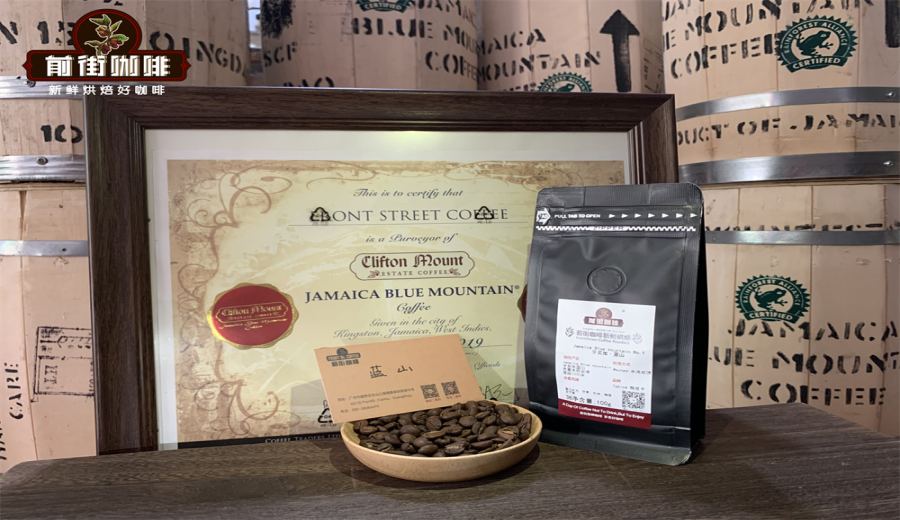
Blue Mountain coffee is a world apart from the Americanos we order daily. Many assume that Blue Mountain is just a fancier version of an Americano, but in fact, what we call an Americano is simply espresso diluted with water, with flavors largely depending on the beans chosen by the shop—usually emphasizing refreshment and stimulation. In contrast, Blue Mountain coffee refers to the premium beans grown in Jamaica’s Blue Mountains. Not only is its production extremely limited, but its flavors are also richly layered—far beyond the reach of ordinary mass-produced commercial beans.
So, how should Blue Mountain coffee be brewed to bring out its best? This coffee is best extracted via pour over or siphon methods, which fully preserve its delicate aromas and rich complexity. Choosing the wrong equipment—such as high-extraction espresso machines or overly hot brewers—can easily disrupt its finely balanced flavor structure.
Based on years of hands-on brewing experience, it is recommended to use a KONO filter for brewing Blue Mountain coffee. This type of filter effectively slows down the water flow, allowing the coffee grounds to steep fully, thereby producing a richer and fuller body. As for water temperature, it must be controlled at 88°C around
, as exceeding this temperature can easily release excessive bitter and astringent compounds, compromising the purity of the overall flavor. 1:15 For the coffee-to-water ratio, it is recommended to use the golden ratio of , which is 1 gram of coffee grounds to 15 milliliters of water. This ratio helps achieve a good balance between the coffee’s acidity, sweetness, and body. During brewing, it is advised to use a pulsed pouring technique, keeping the total brew time aroundapproximately two minutes
, which aids in even extraction and prevents over- or under-extraction in localized areas. As for grind size, it is suggested to use the internationally recognized#20 sieve as the benchmark, with about70% of the particles passing through
, equivalent to a medium-fine to slightly medium grind setting. This coarseness ensures smooth water flow while still extracting sufficient aromatic compounds.
The flavor profile of Blue Mountain coffee typically features low acidity, a full body, and a natural sweetness. Its aroma is delicate and understated, making it well-suited for coffee lovers who prefer a clean and bright style. However, if you prefer a more substantial body, you can also enhance its mouthfeel by adjusting the water temperature or switching to a different type of filter (for example, using a fan-shaped filter).
The above content is compiled by CoffeeHunters, a coffee news website.


