







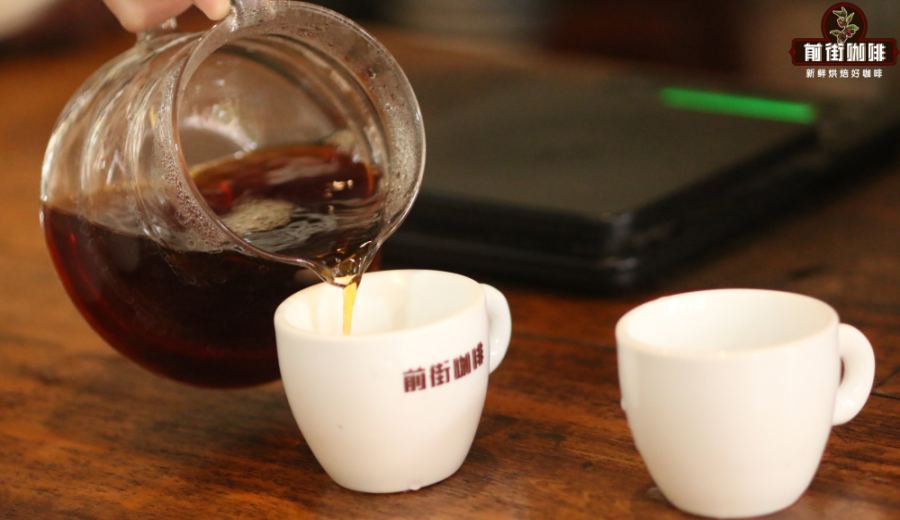
Introduction:Want to explore the charm of China-grown specialty coffee? This article takes you on an in-depth journey through Yunnan’s four major producing regions—Pu’er, Baoshan, Dehong, and Lincang—to uncover their geographical characteristics and flavor distinctions. It also analyzes the historical background and taste profiles of the two mainstream coffee varieties, Typica and Catimor. Additionally, it shares practical pour over brewing tips for sun-dried Typica, covering water temperature, grind size, and extraction time to offer a complete beginner’s guide, allowing you to savor the unique charm of Yunnan’s small-bean coffee.
In recent years, Yunnan specialty coffee has gradually made its mark on the international stage, drawing more and more coffee enthusiasts to focus on high-quality domestic beans. This article systematically introduces Yunnan’s main small-bean coffee producing regions—including Pu’er, Baoshan, Dehong, and Lincang—and provides an in-depth analysis of how the local geographical environments influence coffee flavors. It also explores the rise and decline of the Typica and Catimor varieties, offering a comprehensive understanding of this emerging coffee-growing hotspot.
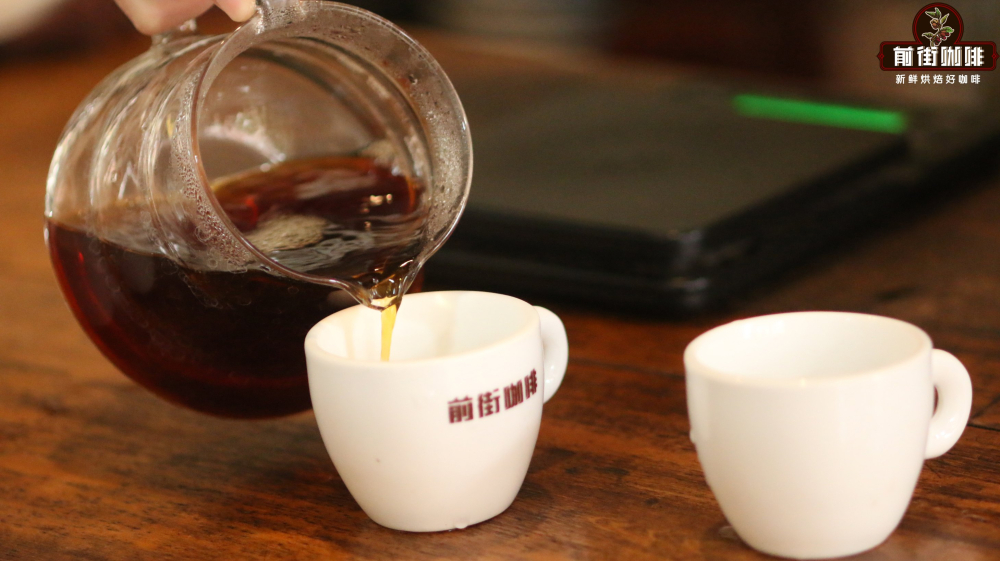
Many people’s first impression of coffee may come from the iconic Blue Mountain in Hong Kong dramas from the 1980s and 1990s. The satisfied expression on the elders’ faces as they took a sip in those childhood memories remains unforgettable. As understanding of coffee deepens, many have shifted from drinking only imported beans to appreciating and supporting high-quality domestic Yunnan coffee. This article focuses on Yunnan’s renowned small-bean coffee producing regions, taking you into this unique terroir coffee belt.
With the support of national policies and market forces, Yunnan small-bean coffee has gradually gained recognition. Beyond the well-known Pu’er and Baoshan, regions like Dehong and Lincang also boast excellent growing conditions. These areas not only produce high-quality coffee but also, thanks to microclimate variations, give each bean its own unique character. From the tea-producing region of Pu’er to the borderland of Lincang, each producing area has a flavor story worth exploring.
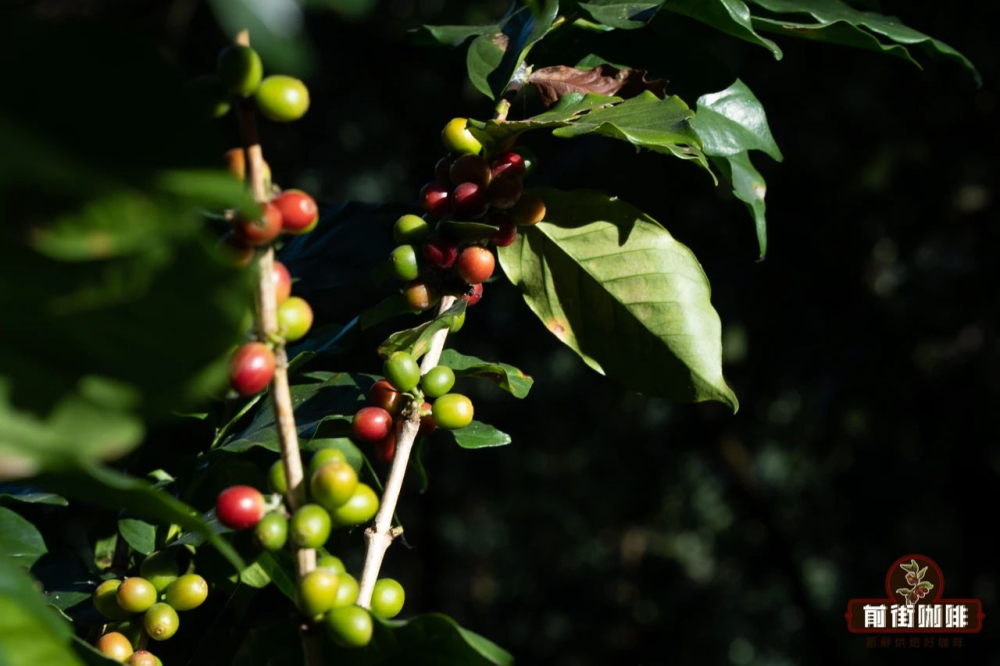
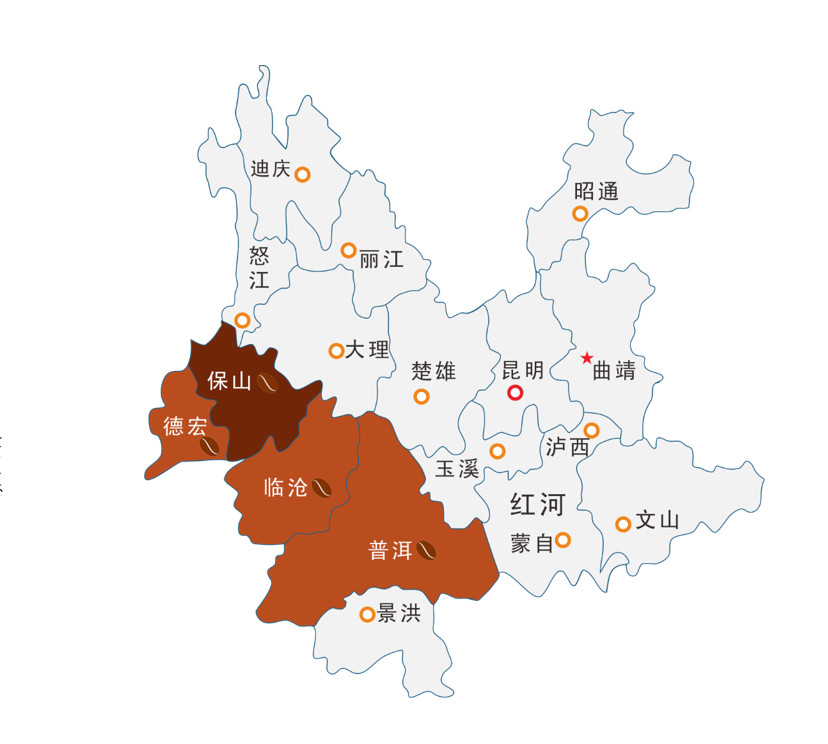
Yunnan boasts uniquely favorable natural conditions: high forest coverage, fertile soil, abundant rainfall, high altitude, and mild climate, along with its proximity to the Tropic of Cancer, making it one of the few premium coffee-growing regions in China. In addition to Pu’er and Baoshan, areas like Dehong and Lincang are also included, with most producing regions situated at elevations between 700 and 1600 meters. The subtle differences in climate conditions create specialty coffees rich in flavor layers.
Pu’er City includes nine counties and districts such as Simao, Ning’er, and Mojiang, all of which grow small-bean coffee. The local average annual temperature ranges between 17 and 20 degrees Celsius, with planting altitudes between 700 and 1600 meters, making it suitable for various processing methods to bring out the potential of the coffee. Baoshan covers five counties and districts, including Longyang and Longling, and is home to the “Baoshan Small-Bean Coffee” geographical indication. Its planting altitude ranges from 1000 to 1500 meters, with an average annual temperature of around 21 degrees Celsius. As early as the late 1950s, coffee from the Luxi producing area was rated as first-class in the London market, demonstrating its exceptional quality.
Dehong is one of the earliest regions in China to introduce coffee. Small-bean coffee was brought in from Myanmar in 1914, but it wasn’t until 1953 that commercial-scale planting began. The local climate is stable, with significant diurnal temperature variations that help coffee cherries accumulate sugars and flavor compounds. Lincang City, located in southwestern Yunnan and bordering Myanmar, sees coffee cultivation in counties such as Gengma and Zhenkang. The area enjoys a mild average annual temperature, notable diurnal temperature shifts, and abundant rainfall, making it a focal point for coffee companies. One brand has even established its own estate here to practice premium coffee cultivation principles.
Currently, most Yunnan coffee beans on the market belong to the Catimor variety, but the early mainstream was the ancient Typica. After the reform and opening up, international brands such as Nestlé and Starbucks promoted Catimor due to its strong resistance to leaf rust and yield that is three times higher than Typica, making it more suitable for large-scale production. However, Catimor, which contains Robusta genes, often has a more pronounced bitter aftertaste. In contrast, Typica offers an elegant flavor but has gradually been replaced due to its higher management difficulty and lower yield. This shift in varieties reflects the trade-off between market demand and flavor preferences.
A certain brand has been deeply involved in the roasting field for many years, and its planting initiatives even predate its roasting business. Initially, attempts were made to grow coffee in Guangdong, but after realizing the importance of variety, altitude, and processing methods, the focus shifted to Yunnan producing regions. Facing Yunnan’s unique dry and wet seasonal climate, the team adhered to high planting standards, maintained ecological diversity, and ensured that coffee trees grew in the best possible environment. Typica is relatively difficult to manage and sensitive to sunlight, so the estate retains rich vegetation to create a stable microclimate.
After several years of effort, the brand’s estate welcomed its second harvest season. The latest batch of coffee beans was processed using the traditional sun-drying method, with fully ripe red cherries evenly spread on sun-drying beds and slowly dried over a long period. Although time-consuming, this method preserves rich fruity aromas and sweetness. Staff must regularly turn the beans to avoid over-fermentation. The final product showcases a full-bodied dried fruit sweetness, soft plum acidity, and nutty tones, with a sweet brown sugar and black tea-like aftertaste, authentically representing the classic flavor of Yunnan small-bean coffee.
To fully experience the flavors of this sun-dried Typica, it is recommended to use freshly roasted beans, with the optimal tasting window being 4 to 7 days post-roast. For brewing, the Hario V60 dripper is recommended, with water temperature controlled at 90 degrees Celsius, a coffee dosage of 15 grams, a coffee-to-water ratio of 1:15, and a grind size passing 75% through a 20-mesh Chinese standard sieve. The specific process is as follows: pour 30 grams of water for a 30-second bloom, then pour water in a slow circular motion from the center outwards to 125 grams, wait for the water level to drop, and continue pouring to 225 grams, with a total extraction time of about 2 minutes. Be sure to grind and brew immediately to preserve the best aroma and flavor layers.
The above content is compiled by CoffeeHunters, a coffee news website.


