







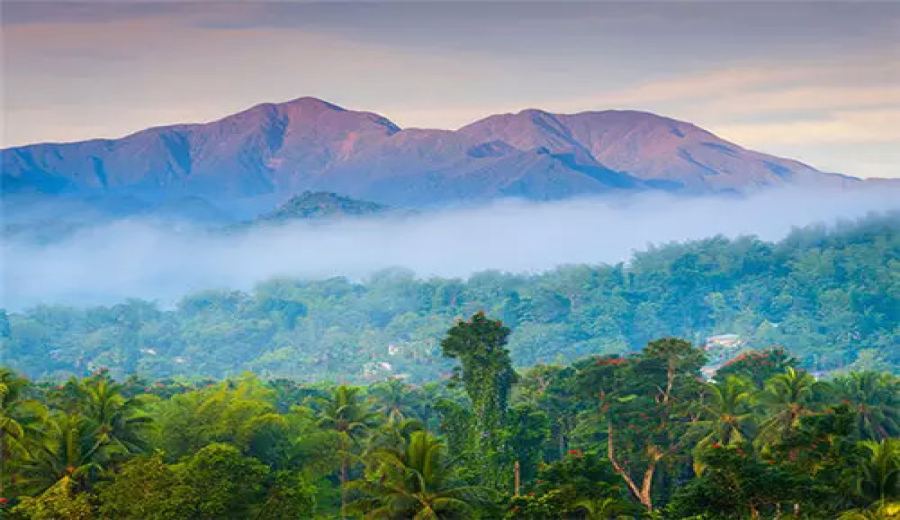
Introduction:Jamaica Blue Mountain coffee is world-renowned for its perfectly balanced acidity, sweetness, and bitterness, along with its rich yet delicate mouthfeel. This article delves into its Typica variety origins, explores the strict grading standards of Blue Mountain No. 1, introduces the history and eco-friendly processing methods of the Clifton Estate, and details the washed processing steps, flavor characteristics, as well as recommended brewing methods and parameters — making it an essential guide to understanding Blue Mountain coffee.
Jamaica Blue Mountain coffee, hailed as one of the world’s top-tier coffee offerings, owes its allure not only to its stringent origin certification and processing standards but also to the ancient Arabica variety it uses — Typica. This variety was introduced to Jamaica from Martinique in the 18th century by then Governor Nicholas Lawes and has taken root in the Blue Mountains for over two hundred years, gradually adapting to the region’s unique island-type tropical rainforest climate. It not only exhibits stronger disease resistance but also develops aromatic and flavor profiles that are difficult to replicate elsewhere, thanks to the special altitude and microclimate.
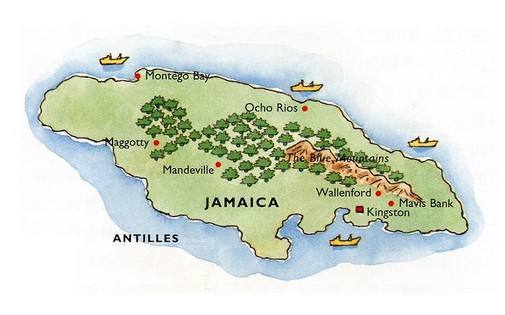
The Blue Mountain coffee growing region is strictly limited to the mountainous area north of Kingston in eastern Jamaica, with legal cultivation for Blue Mountain No. 1 restricted to elevations between 910 meters and 1700 meters. The area features a cool, humid, and foggy climate with even rainfall, paired with fertile and well-drained soil, creating an optimal environment for coffee cultivation. Notably, local farmers practice intercropping with bananas, avocados, and other crops on terraces, which helps maintain soil and water while providing moderate shading and microclimate regulation for the coffee trees.
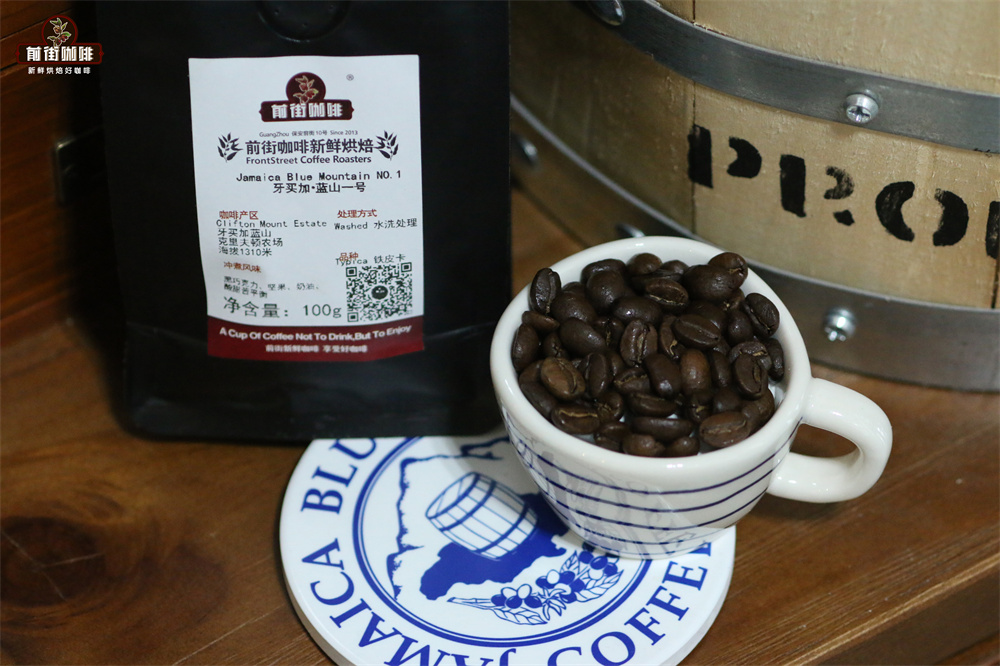
The grading system for Blue Mountain coffee is extremely rigorous.Only green beans that meet a screen size of 17 or above, have a defect rate below 2%, maintain a moisture content between 10% and 12.5%, and are confirmed through cupping to have a balanced acidity, sweetness, bitterness, body, and aroma can be classified as Blue Mountain No. 1. The Blue Mountain coffee selected from this region comes from the Typica variety grown at suitable altitudes on the Clifton Estate. Its flavor profile is dominated by dark chocolate, nuts, and a creamy smooth mouthfeel, with a gentle and layered acidity — making it one of the finest coffees sought after by coffee enthusiasts worldwide.
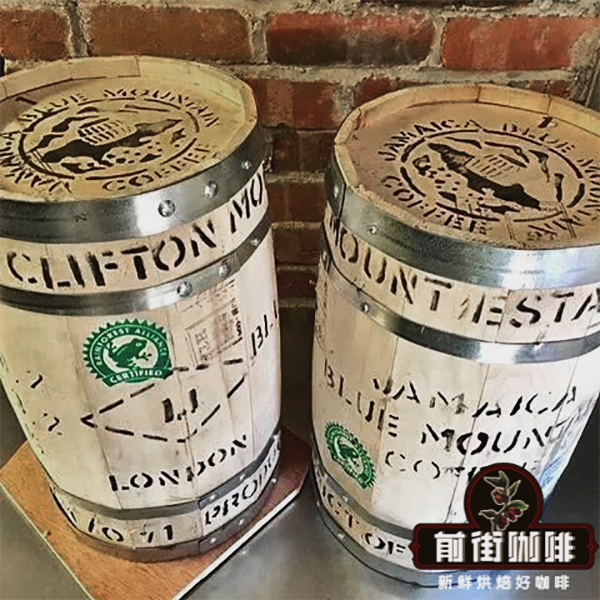
It is worth mentioning that Blue Mountain coffee is one of the very few regions that still ships green beans in wooden barrels, which bear a green tree frog emblem symbolizing certification under the Rainforest Alliance’s Sustainable Agriculture Network Standard. This not only represents a commitment to environmental friendliness but also ensures better protection for the coffee during transport, reducing aroma loss and quality fluctuations.
The Clifton Estate, as one of the key producing regions of Blue Mountain coffee, has a history dating back to the mid-18th century, with coffee cultivation beginning around 1750. Since 1978, it has been managed by the Sharp family, who continue to uphold high standards of sustainable operations. Located at an altitude of about 1310 meters in the Clifton Mountains, the estate benefits from significant diurnal temperature variations, moderate sunlight and rainfall, and mineral-rich soil — all of which contribute to slow ripening of the coffee cherries and the accumulation of richer aromatic compounds. Even so, due to the steep terrain, harvesting remains extremely challenging and is mainly carried out by skilled female pickers who select only fully ripe coffee fruits.
In terms of processing, the Clifton Estate employs traditional washed methods combined with modern facilities to ensure consistent quality.First, the floatation method is used to separate ripe and unripe beans.Then, water is used to channel the ripe cherries into a pulper to remove the outer skin. Subsequently, the beans, still covered with mucilage and parchment, enter fermentation tanks where the mucilage is broken down. After washing with clean water, the parchment-covered beans are spread on drying racks until their moisture content drops to 11–12%. Finally, these green beans are rested at the BMCP processing plant for about a month to further stabilize their flavor and internal structure.
When roasting Jamaica Blue Mountain coffee, a medium-dark roast is chosen to balance the intense aromas of chocolate and nuts while preserving a moderate level of acidity, resulting in a more multi-dimensional overall flavor. Cupping results show that Blue Mountain No. 1 offers a balanced profile of acidity, sweetness, bitterness, body, and aroma, making it ideal for coffee lovers who enjoy a full-bodied taste yet seek delicate layers.
For brewing recommendations,it is advised to use coffee beans roasted within 5 daysand to consume them after the 4 to 7 day resting period post-roast for optimal flavor expression. If grinding, it is recommended to use the coffee as soon as possible to avoid oxidation affecting the aroma. The KONO filter cone is recommended, using a small stream of water to pour in circles centered on the coffee bed — starting with 30 grams of water for a 30-second bloom, then pouring up to 125 grams for the first pour, followed by a second pour up to a total of 225 grams. The total extraction time is approximately 2 minutes. This method effectively highlights the richness and aroma of Blue Mountain coffee, delivering a creamy-smooth mouthfeel.
Overall, Jamaica Blue Mountain coffee embodies the essence of variety, origin, processing, and roasting. With its intense aromas of dark chocolate and nuts, along with a finely balanced acidity, sweetness, and bitterness, it is regarded as one of the most harmonious coffees in the world. For coffee enthusiasts eager to explore the world of specialty coffee, Blue Mountain is not just a flavor experience but also a model for understanding coffee cultivation and processing craftsmanship.
The above content is compiled by CoffeeHunters, a coffee news website.


