







Introduction:On hot summer days, iced pour-over coffee has become the go-to choice for many coffee enthusiasts. Compared to regular hot pour-over, iced pour-over not only retains the layered complexity of the coffee but also adds a refreshing coolness. However, simply adding ice to a standard hot pour-over recipe often leads to diluted concentration due to melting ice, resulting in a loss of flavor. This article will delve into four beginner-friendly iced pour-over brewing methods—including high-concentration high-extraction, ice-flash brewing, stirring, and ice-bath cooling—and use medium-light roasted sample beans as an example to provide detailed parameters and operational tips. This will help you easily brew iced pour-over with balanced acidity and sweetness, and full, vibrant flavors.
As temperatures rise, so does the demand for iced coffee. Especially iced pour-over, which highlights the delicate nuances of coffee while maintaining a refreshing taste, has become a summer favorite for many. However, making a truly delicious cup of iced pour-over actually involves quite a bit of know-how. Simply applying a hot pour-over recipe and adding ice can often lead to the coffee becoming bland due to dilution from melting ice.
To make an iced pour-over with complete flavor and balanced acidity and sweetness, the key lies in mastering two core elements: extraction yield and concentration. Extraction yield affects the balance of coffee’s acidity, sweetness, and bitterness, while concentration determines the overall body and richness. As long as these two factors fall within the appropriate range, you can adjust various parameters according to your personal preferences.
Iced pour-over is actually an evolution of traditional hot pour-over, with the addition of ice as a cooling method. But in practice, if you directly transplant hot pour-over parameters, although you may maintain a certain extraction yield, the melting ice can easily cause a drop in concentration. Therefore, the solution lies in adjusting the ratio, grind size, pouring technique, or using physical cooling methods to ensure the final cup of coffee is neither too weak nor too thin.
The following introduces four practical and easy-to-master iced pour-over brewing methods, each paired with actual parameters using medium-light roasted sample beans. Whether you’re a beginner or already experienced, you can easily put them into practice.

Method 1: High-Concentration High-Extraction Method
The so-called high-concentration high-extraction method refers to extracting more soluble coffee substances by adjusting grind size and technique under limited water volume, ensuring that there is still enough flavor and rich body after the ice melts. It is recommended to use a finer grind size and moderately reduce the total water volume.
Taking the sample beans as an example, the recommended parameters are as follows:
Coffee dose: 15 grams
Hot water (92°C): 150 grams (10x)
Ice: 75 grams (5x)
Grind size: Approximately 83% passing through a #20 sieve (equivalent to EK43s setting 9 or C40 setting 22)
Filter: Hario V60
Technique: Three-pour method
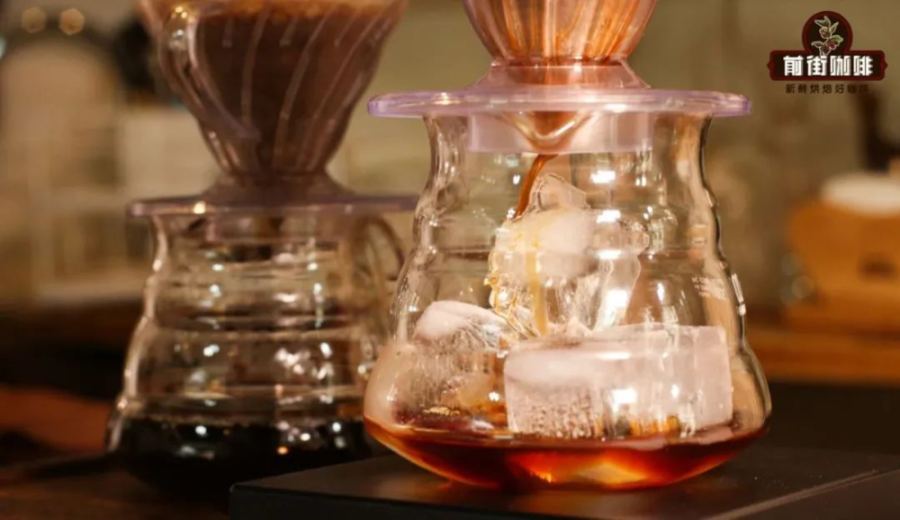
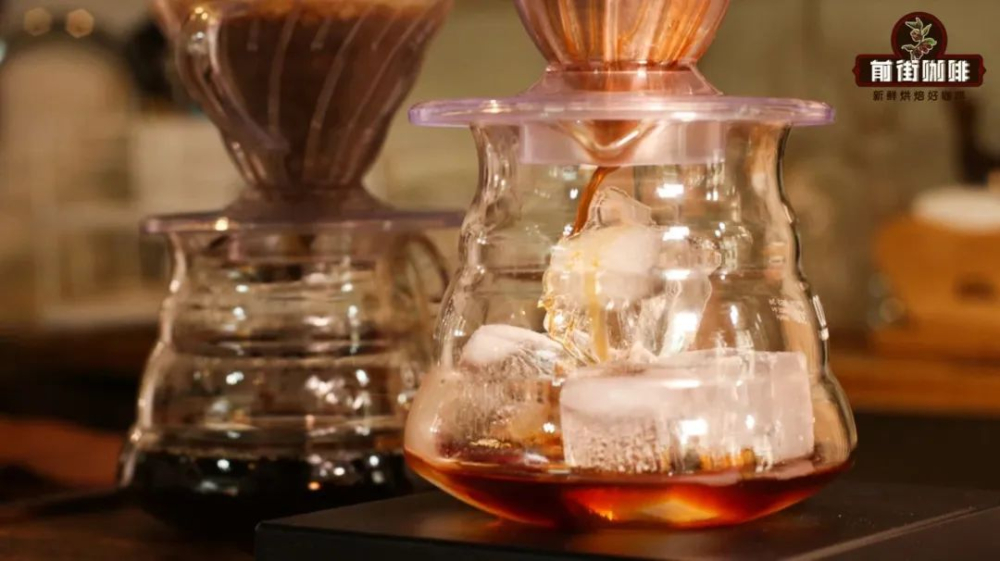
Steps: First, place 75 grams of ice in the server, then put the ground coffee into the filter and gently tap it flat. The first pour uses a small stream of 3ml/s, pouring in a small circle from the center outwards with 30 grams of hot water, followed by a 30-second bloom. Then, the second pour uses the same technique to add 60 grams of water, paying attention to controlling the liquid level. Finally, when the coffee bed is almost dry, pour the remaining 60 grams of hot water. The total brew time is recommended to be between 1 minute 50 seconds and 2 minutes.
This method, when used with Kafa Forest beans, yields flavors of lemon, blueberry, and other fruity acids, along with a nutty richness, resulting in a refreshing and well-balanced acidity and sweetness. Note that there may still be some melting ice left after brewing; it is recommended to drink it promptly or remove the ice beforehand to avoid over-dilution.
Method 2: Ice-Flash Brewing Method
If your home ice-making conditions are limited and ice melts quickly, it could lead to over-dilution of the coffee, resulting in weak flavor. In this case, you can switch to the “ice-flash” cooling method, using more ice and repeated pouring to effectively control both concentration and temperature.
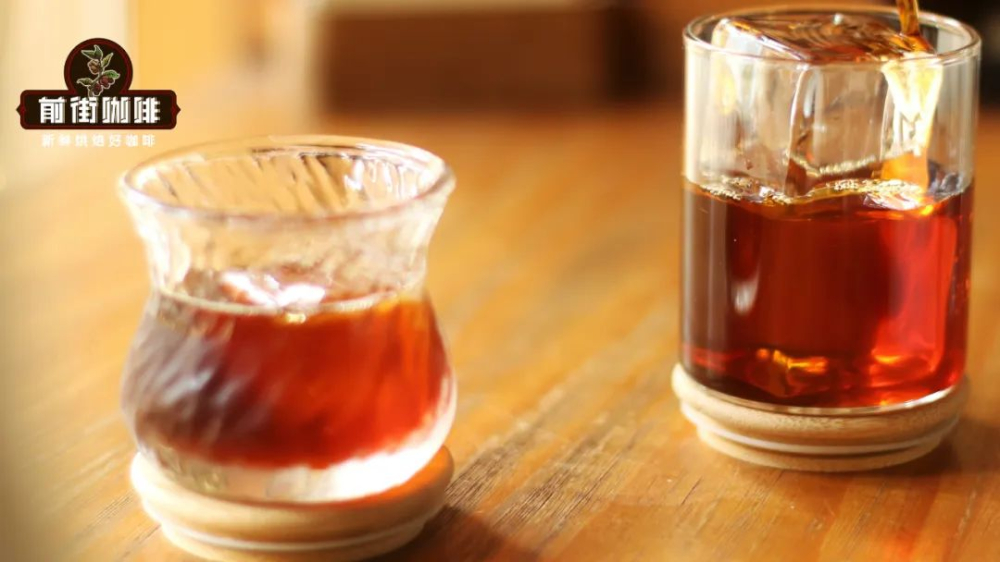
This method doesn’t require changing the original hot pour-over parameters. Simply prepare double the amount of ice (about 150 grams), and pour the brewed coffee directly over the ice. The cooling effect of the ice helps achieve the desired temperature reduction. This method preserves more layers of flavor. When used with Kafa Forest beans, it highlights aromas of yellow peach, citrus, and apricot, with a softer mouthfeel and a sweet aftertaste.
Method 3: Stirring Method
Adding moderate stirring during the pouring process can effectively improve the contact efficiency between coffee grounds and hot water, thereby increasing overall extraction yield and flavor concentration. It is especially suitable for medium-light roasted beans, helping to release more acidic and sweet compounds as well as floral notes.
Recommended parameters are as follows:
Coffee dose: 15 grams
Hot water: 160 grams
Ice: 80 grams
Grind size: Approximately 80% passing through a #20 sieve (equivalent to EK43s setting 9.5 or C40 setting 24)
Filter: Hario V60
Technique: Three-pour (30g → 80g + stir → 50g)
Procedure: First, place the ice in the server, then add the coffee grounds. The first pour is a 30-gram bloom. For the second pour of 80 grams, pause when the water level reaches 110 grams, then use a small spoon to stir in circles along the wall of the filter about 5 times, and wait for the coffee to slowly drip. Finally, pour the remaining 50 grams of water. The total time is about 2 to 2 minutes 10 seconds. Shake the server with the ice at the end before drinking.
This method yields Kafa Forest beans with bright flavors, featuring notes of pomelo, orange, yellow peach, and a tea-like finish. The cooling effect of the ice adds a refreshing sensation, making the overall profile more layered and juicy.

Method 4: Ice-Bath Cooling Method
If you’re pursuing ultimate flavor and don’t mind waiting, you can try the “ice bath cooling method.” This approach does not adjust grind size or brew ratio but instead uses an external ice-water environment for physical cooling, avoiding direct contact between ice and coffee liquid to minimize dilution.
Recommended parameters are as follows:
Coffee dose: 15 grams
Brew ratio: 1:15
Grind size: Approximately 78% passing through a #20 sieve (equivalent to EK43s setting 10 or C40 setting 26)
Water temperature: 92°C
Filter: Hario V60
Technique: Three-pour (30g bloom → 95g medium pour → 100g finish)
Procedure: First pour 30 grams of hot water for a 30-second bloom, then pour 95 grams at a rate of 5ml/s (takes about 50 seconds), followed by the remaining 100 grams. Total brew time is about 2 minutes 10 seconds. After brewing, place the entire server in an ice-water mixture to cool down until the temperature reaches 10°C before drinking.
This method produces Kafa Forest beans with extremely rich layers of flavor, based on white floral and citrus acidity, with a finish of melon, sugar orange, and blueberry. It achieves a balanced and full-bodied acidity and sweetness, making it the most complex and layered among the four methods.

The above content is compiled by CoffeeHunters, a coffee news website.


