







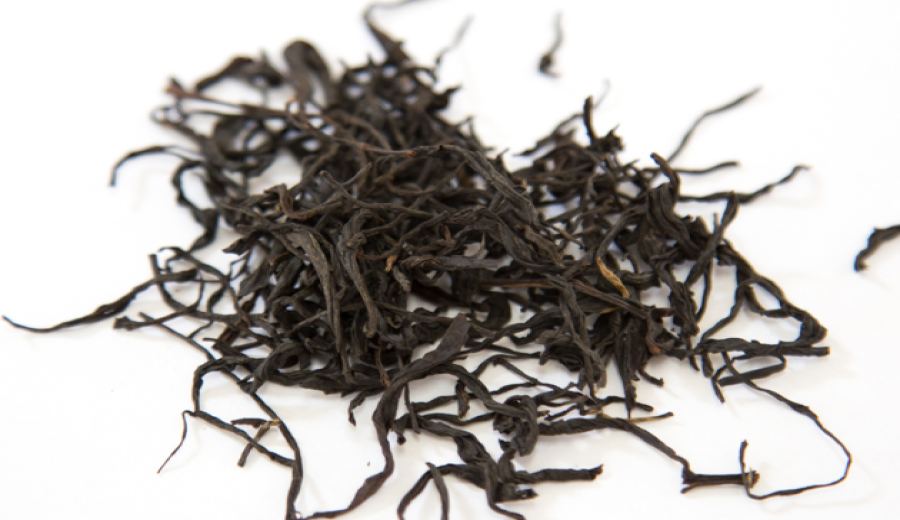
Introduction:As the origin of world black tea, Lapsang Souchong is often confused with terms such as Neishan Xiaozhong and Waishan Xiaozhong. This article provides a detailed analysis of the definitions and differences between Lapsang Souchong, Neishan Xiaozhong, and Waishan Xiaozhong, and explores in depth how the core tea-growing area of Wuyi Mountain at altitudes of 800 to 1500 meters, with its high elevation and significant diurnal temperature variation, shapes the distinctive smoky aroma and sweet taste of Lapsang Souchong. Understanding these differences helps you choose truly high-quality Lapsang Souchong.
Lapsang Souchong is hailed as the progenitor of world black tea. Its name has undergone several evolutions, from early terms like “Black Tea” and “Red Tea,” to later ones such as “Xiaozhong Black Tea,” “Xingcun Xiaozhong,” “Tongmu Xiaozhong,” “Smoked Xiaozhong,” and even “Neishan Xiaozhong” and “Waishan Xiaozhong,” before finally being standardized as “Lapsang Souchong.” Each name carries a piece of history related to the development of tea and market recognition, reflecting how different production regions and methods influence the flavor of the tea.
Many tea enthusiasts often wonder whether Neishan Xiaozhong is the same as Lapsang Souchong. In fact, the term “Neishan Xiaozhong” originates from the fact that Tongmu Village is located deep within the Wuyi Mountains, where the local tea gardens are regarded as “Neishan” (inner mountains), in contrast to other areas collectively referred to as “Waishan” (outer mountains). During the Qing Dynasty, due to the influence of the Minnan dialect, “Neishan” was also called “Lapsang,” which later became the origin of the international market name “Lapsang Souchong.”
So, what is Waishan Xiaozhong? Simply put, it refers to tea produced outside of Tongmu Village. These teas may imitate the production method of Lapsang Souchong, but due to differences in growing environment, tea plant varieties, and processing techniques, they fail to exhibit the unique aroma and taste of Lapsang Souchong. Especially during the Qing Dynasty, some aged teas or non-Tongmu Village teas were transported to Xingcun Town and heavily smoked, resulting in “Smoked Xiaozhong” with an overly strong smoky flavor, which is far inferior in quality to Lapsang Souchong.
The true essence of Lapsang Souchong lies in the uniqueness of its growing environment. The tea-growing area is located in the rocky terrain of the Wuyi Mountains, at altitudes of about 800 to 1500 meters, with rugged terrain, abundant rocks, and poor soil—conditions that are highly challenging for tea tree growth. However, it is precisely these harsh natural conditions that encourage tea trees to accumulate more flavor compounds under adversity, resulting in tea leaves with richer aroma and more pronounced sweetness.
Additionally, the high altitude of the Wuyi Mountain region brings significant diurnal temperature variations. During the day, ample sunlight allows tea trees to carry out photosynthesis fully, synthesizing rich amino acids and carbohydrates. These substances not only form the foundation for tea growth but are also key factors in shaping the sweetness and layered aroma of the tea liquor. At night, temperatures drop rapidly, slowing down tea metabolism, and the nutrients accumulated during the day are less likely to be consumed, thus remaining in the leaves. This results in final black tea products with richer internal components and a more rounded, full-bodied taste.
It is worth noting that traditional Lapsang Souchong production often employs pine wood smoking techniques, which impart a unique smoky aroma to the tea—a flavor characteristic that clearly distinguishes it from other black teas. The success of this technique is also closely related to the intrinsic quality of the tea leaves themselves. Only tea from high-altitude core production areas can maintain purity and layered aroma after smoking.
In summary, to distinguish Lapsang Souchong from Waishan Xiaozhong, one cannot rely solely on the name but must understand the production region, altitude, and tea-making environment. The reason Lapsang Souchong has become a world-class black tea is not only due to its long history but also because it is grown in high-mountain tea gardens at 800 to 1500 meters in the Wuyi Mountains. Under harsh natural conditions and the influence of diurnal temperature variation, it develops an irreplaceable aroma and sweetness. Choosing the right production area is the key to experiencing the truly classic flavor of Lapsang Souchong.
The above content is compiled by CoffeeHunters, a coffee news website.


