







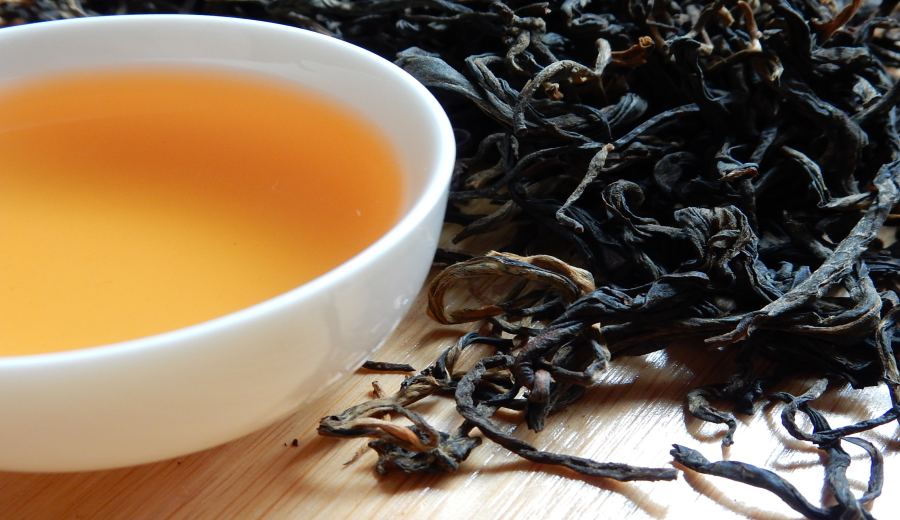
Introduction:The world of black tea is rich and diverse, ranging from Taiwan’s Red Jade to Fujian’s Lapsang Souchong, and Yunnan’s ancient tree black tea—each variety bears unique terroir characteristics. This article takes an in-depth look at five representative types of black tea—including High Mountain Purple Red, Wild Black, traditional Special Grade Lapsang Souchong and Qizhong, as well as Taiwan #18 Red Jade—breaking down their origins, processing methods, and flavor profiles to help you find the one that suits your palate best.
Among the many types of black tea, Taiwan Red Jade is undoubtedly one of the most recognizable representatives. This tea is made from the Taiwan #18 varietal, primarily grown around Sun Moon Lake in Nantou County. Due to the strong connection between the varietal and the growing region, this tea is also directly referred to as "Sun Moon Lake Black Tea" or "Taiwan #18." Its most distinctive feature is a unique cool minty sensation, reminiscent of the refreshing character of Ceylon Uva tea, making it invigorating and particularly appealing to those who enjoy crisp-style black teas.
Lapsang Souchong, as the progenitor of the world’s black teas, originates from Tongmuguan in the Wuyi Mountains of Fujian. In the past, it was also called Lapu Mountain Suchuan Black Tea. This tea has had a profound influence, even giving rise to well-known flavored teas such as Earl Grey and King’s Tea. Traditional Lapsang Souchong can be broadly divided into two main categories: one is the classic smoky style known for its pronounced pine smoke aroma (Category A), and the other is a more premium version showcasing tropical fruit notes (Category B). The one introduced in this article belongs to the classic smoked variety, with its distinctive smokiness resulting from the traditional processing method of drying over pinewood open flame after fixation. It’s worth noting that high-quality Lapsang Souchong should not only have smoky notes but also rich fruity aromas. If it carries only plain smoke without fruity undertones, it may be of slightly inferior quality.
Lapsang Souchong Qizhong takes the traditional foundation a step further. This tea presents an intense blend of tropical fruit, honey, and peach aromas, with a rich and luxurious flavor profile. Unlike conventional black teas that are dried directly after fermentation, Qizhong undergoes prolonged roasting over charcoal at around 100°C after drying, enhancing the tea’s maturity to elicit deeper fruity notes. Its raw material comes from old seedling trees in high-altitude tea gardens at 1200 meters, with strong roots, resulting in a long-lasting aftertaste and prominent throat sensation. It is highly favored by seasoned tea enthusiasts and is often considered an excellent pairing with whisky.
Turning to Yunnan, natural cultivation tea gardens at an altitude of 2100 meters produce an ancient tree black tea with unique flavors. This apricot-honey scented black tea follows the standard Yunnan black tea processing technique, characterized by very light withering to highlight a soft and mellow mouthfeel. When sipped, one can perceive a delicate honey aroma accompanied by a slight mint-like coolness. It performs excellently both neat and as a base for milk tea, making it suitable for consumers who prefer a smooth and gentle taste.
Another black tea from Yunnan—Congou Black Tea—employs a withering process similar to that of Darjeeling, bringing out a subtly spicy and luxurious aroma, with an overall style that is brighter and livelier. The raw material for this tea also comes from naturally cultivated seedling tea trees at 2100 meters in Lincang, harvested from trees over a hundred years old. As a result, the tea liquor is rich and mellow on the palate, with a fine and profound aftertaste, as if a sense of warmth gradually seeps into the body, offering a highly comforting drinking experience.
In the tea gardens of Lincang, Yunnan, at an altitude of about 2000 meters, grows a special purple tea varietal. Known for leaves with an aroma reminiscent of perilla, it is often used as a raw material for Pu-erh raw tea. A certain merchant specially processed this purple tea into black tea, resulting in the unique High Mountain Purple Red. In addition to a faint perilla-like note, this tea also emits a sweet aroma similar to sweet potato. Its flavor has a spreading sensation in the mouth, with a full and luscious texture, making it highly suitable as a base for milk tea and also appealing to tea drinkers who enjoy distinctive aromas.
Lastly, Wild Black Tea offers a completely different flavor experience. Made from fresh leaves of wild tea trees naturally growing in the mountainous regions of Lincang, Yunnan, these trees are not cultivated but have grown wild in the forests for years, resulting in an exceptionally wild flavor. When sipped, one can detect a strong personality akin to wild mountain vegetables, with complex aromatic layers often capturing notes of grapes, vanilla, tender tree bark, and dried fruits. The tea liquor is rich and bold, with clear contours and a deep aftertaste. For tea drinkers seeking uniqueness and natural flavors, it is an unmissable choice.
In summary, from the minty freshness of Taiwan Red Jade, the smoky fruitiness of Lapsang Souchong, to the honeyed tones of Yunnan ancient tree black tea and the unique perilla twist of purple tea—each type of black tea has its own distinctive terroir expression and ideal drinking context. When selecting, consumers can consider their personal taste preferences, budget, and intended use (such as drinking neat, blending, or pairing with meals) to find the black tea that best suits them.
The above content is compiled by CoffeeHunters, a coffee news website.


