







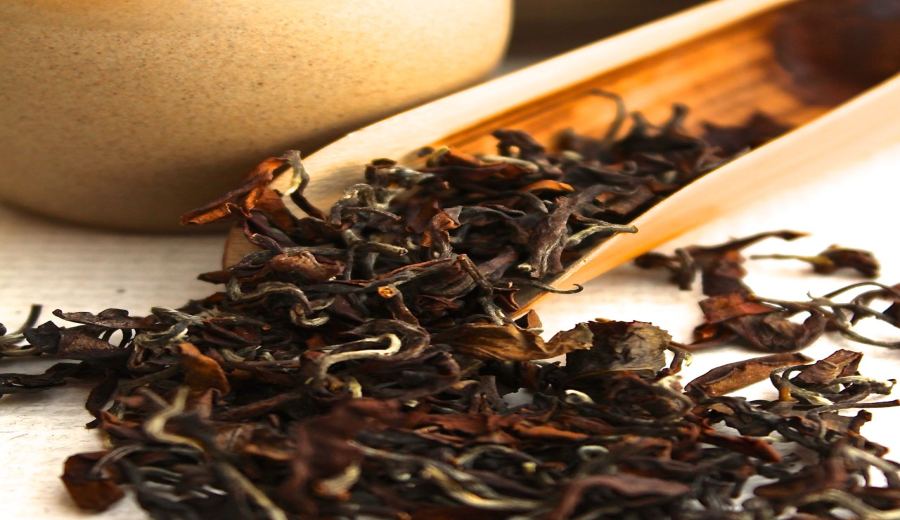
Introduction:Honey-scented black tea is widely loved for its unique honey-like aroma resulting from tea leaves bitten by the tea green leafhopper, but it’s becoming increasingly difficult to find high-quality products on the market. This article delves into the key factors that influence the flavor of honey-scented black tea, including tea plant varieties, altitude, and fermentation processes. It also provides a simple and practical brewing suggestion: blending Oriental Beauty with high-quality black tea to elevate the overall flavor profile. By introducing in detail the characteristics of Yunnan ancient tree black tea and apricot-honey scented tea, it helps you easily enjoy a more rounded and smooth premium honey-scented tea experience.
Honey-scented black tea is renowned for its distinctive honey and muscat grape aromas, which stem from the special secondary metabolites produced by the tea plant in response to bites from the tea green leafhopper. However, high-quality honey-scented black tea that can deliver this flavor is becoming rarer on the market, and the threshold for enjoying it is gradually rising.
The reasons behind this phenomenon are diverse and complex. The primary factor is the increasing demand for honey-scented black tea in the Chinese market year after year, leading to rising raw material costs. Some production regions sacrifice quality in pursuit of higher yields. Secondly, if the fermentation process is not precisely controlled, it can easily produce stuffy and off-flavors, compromising the purity of the honey aroma. Furthermore, fresh leaves from high-altitude premium tea gardens are often used to make oolong tea, while honey-scented black tea tends to use leaves from lower-altitude tea gardens, which are inherently limited in favorable flavor conditions. In addition, the active period of the tea green leafhopper is concentrated in early summer. Tea leaves harvested during this time are usually coarser, and pesticide use is more frequent in low-altitude areas, further affecting the final quality.
If you want to enjoy honey-scented black tea that comes close to the ideal flavor, there is a smarter solution: using blending techniques to combine Oriental Beauty with high-quality black tea. This combination doesn’t require pre-mixing—just add them in a 1:1 ratio when brewing. For example, out of a total of 3 grams of tea, use 1.5 grams each of Oriental Beauty and black tea. Although Oriental Beauty is classified as an oolong tea, its high fermentation process is similar to that of black tea, with a naturally strong honey aroma, though the taste of the liquor is relatively refreshing. It complements the rich body of black tea exceptionally well.
When selecting black tea for blending, there are several key considerations. First and foremost, ensure that the fermentation termination process is properly managed. If the fermentation is excessive or not stopped in time, the leaf base may turn dark brown and emit unpleasant musty odors. High-quality black tea should have a bright leaf base color with clear sweetness. Another important factor is the season and altitude: it is recommended to choose black tea harvested in spring from naturally grown old tea trees at altitudes of 2000 to 2300 meters. These teas, grown in superior environments, are rich in iron content, producing a smooth and thick liquor that significantly enhances the overall flavor complexity and aftertaste.
For blending purposes, three distinctive black teas can be prioritized: Yunnan Ancient Tree Black Tea Apricot-Honey Aroma, Ancient Tree Dian Hong, and Yunnan Gongfu Black Tea. These teas are all made from naturally grown tea trees at high altitudes, harvested in spring, and processed using mature fermentation techniques, making them ideal for achieving a balanced flavor when paired with Oriental Beauty.
It’s worth noting that Oriental Beauty itself is also a naturally grown, fertilizer-free tea, with a strong honey aroma. Even when brewed alone, it offers a commendable flavor. However, when blended with the aforementioned high-altitude black teas, the smoothness and aroma complexity of the liquor are significantly enhanced, achieving a holistic expression that single-origin honey-scented black teas rarely attain. Tea enthusiasts are encouraged to try this blending method and experience the perfect fusion of muscat grape aroma and rich texture in the cup—this will likely offer a whole new perspective on honey-scented black tea.
The above content is compiled by CoffeeHunters, a coffee news website.


