







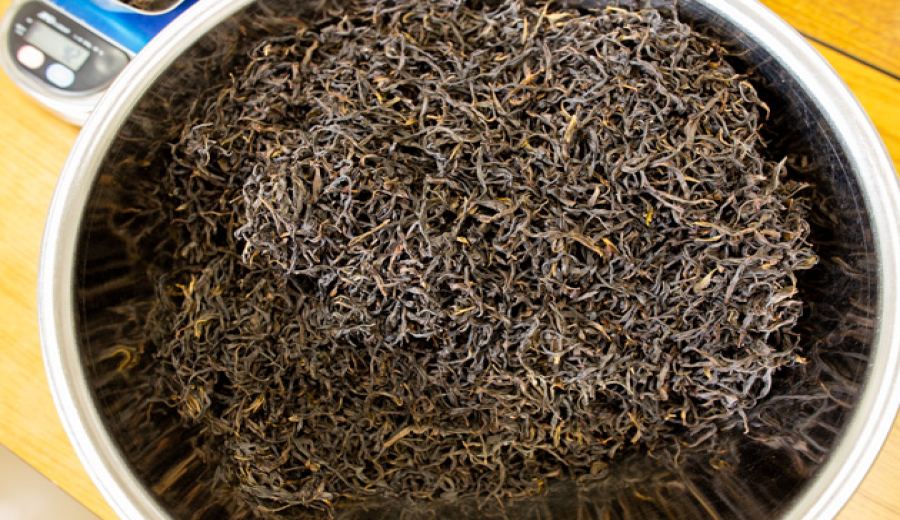
Introduction:Phoenix Dancong oolong is hailed as the "perfume of teas," but prices for teas bearing this name can vary wildly in the market, ranging from just tens of yuan to over a thousand. So what does it mean when Mi Lan Xiang Dancong is priced at 400 yuan per jin? This article delves into the variety characteristics of Phoenix Dancong, its propagation methods, growing altitudes, tree ages, and other key factors to uncover the real logic behind quality and value — and help you pick high cost-performance teas.
Phoenix Dancong oolong has long been praised in the tea world as the "perfume of teas" for its delicate and diverse aromas and richly layered flavors. However, walk into a tea shop or browse an online store, and you’ll find products all labeled “Phoenix Dancong” with prices ranging from just a few dozen yuan to several thousand, and quality varying enormously. Especially for popular varieties like Mi Lan Xiang Dancong, some sell for as little as 400 yuan per jin, while others go for thousands — so what’s the difference? This article will comprehensively break down the grading logic of Phoenix Dancong from aspects like variety definition, propagation methods, growing altitude, and tree age, helping you buy tea without any more guesswork.
What makes Phoenix Dancong so captivating is its aroma — fresh and sweet like just-cut fruit — and its taste, which is not bitter or astringent at all but rather naturally sweet and smooth. To fully appreciate its charm, it’s recommended to brew it with water close to boiling point to bring out the richness and silkiness of the liquor. Many tea enthusiasts say that after drinking high-quality Phoenix Dancong, they feel their body gradually warm up, even with a slight blush on their cheeks, creating a relaxed and comforting sensation — that’s the allure of great tea.
The term “Dancong” literally means “single bush,” referring to tea made from the fresh leaves of specific individual tea trees. In earlier times, tea trees were propagated by seed, so while each descendant inherited traits from the mother plant, there were subtle differences in leaf size, astringency, aroma, and flavor — much like how parent and child are never exactly alike. As a result, different tea trees on the same mountain often exhibit unique aromas and flavors. In the past, tea farmers would select trees with distinctive characteristics and process them individually to preserve their individuality — hence the origin of “Dancong.” Mixing leaves from different single plants tends to dilute the aroma and diminish uniqueness. Therefore, truly high-quality Phoenix Dancong usually comes from the leaves of specific old trees; even if they’re all called “Mi Lan Xiang,” the source determines whether their aroma profiles vary greatly.
In the world of Phoenix Dancong, the lowest grade mostly consists of “tea garden” teas. These tea trees are generally young and almost always propagated en masse through cuttings, resulting in relatively uniform aromas and flavors with little variation. Leaves are typically harvested from entire tea gardens and processed together. Although many products on the market that claim to be “Phoenix Dancong” actually come from such tea gardens, strictly speaking, these teas do not meet the definition of “Dancong” and can only be considered regular Phoenix oolong. Unfortunately, many products on the market today claim to be “Phoenix Dancong” regardless of whether they truly come from single bushes or high mountains — consumers should pay extra attention when purchasing.
Even among products labeled as “Dancong,” actual quality can still be significantly affected by the tea tree’s altitude, soil environment, and age. For example, teas labeled as “Mi Lan Xiang Dancong” or “Song Zhong Dancong” may share the same name, but their internal flavors and prices can differ by more than tenfold. Some cheaply priced Mi Lan Xiang may cost just a few dozen yuan per 100 grams, whereas high-quality versions can easily run into hundreds or even thousands. This shows that the name “Phoenix Dancong” alone cannot be used as a direct indicator of value.
Looking further within the category of Dancong, there are even more nuanced grades. Especially for trees over 500 years old, known as “old clumps” (老欉), their leaves are often processed individually and not blended with others to preserve the most original flavor characteristics. But it’s worth noting that old clump status isn’t the sole determinant of quality. Some trees around 300 years old, if grown in regions with fertile soil and ideal environments, can also stand out in major competitions. For instance, one Mi Lan Xiang we launched came from medium-to-old-age trees in a high-quality environment, and its flavor performance was equally outstanding. Teas from the highest peak of Phoenix Mountain — Wu Yuan Shan — are also often labeled “Wu Yuan,” as the area has a large number of centuries-old tea trees and is recognized as the golden zone for producing top-tier Phoenix oolong.
The above content is compiled by CoffeeHunters, a coffee news website.


