







Introduction:Although Qimen Mao Feng shares its name with a type of green tea, it is one of China’s classic black tea representatives, boasting unique aromas and layered flavors. This article delves into its origin background, leaf characteristics, and optimal brewing methods, guiding you through a comprehensive understanding of this tea—from dry leaf aroma to liquor taste. It also provides practical taste evaluations and market reference prices to help you both appreciate and purchase wisely.
Qimen Mao Feng is a uniquely flavored Chinese black tea. Despite sharing its name with the common green tea “Mao Feng,” it showcases a distinctly different charm through the black tea production process. Compared to the freshness of green tea, Qimen Mao Feng stands out in the world of black teas with its rich yet delicate expression. This article will explore its terroir features, leaf appearance, and suitable brewing conditions, taking you deep into its dry leaf fragrance, liquor color, and flavor structure. It also compares the differences between gongfu-style brewing and everyday simplified brewing to help you fully grasp the allure of this tea.
Although the origin of Qimen Mao Feng is not explicitly indicated in its name, its history dates back to 1875, when local tea makers introduced Fujian black tea production techniques, creating this relatively “young” black tea variety. Interestingly, “Mao Feng” originally referred to a grade term in green tea, indicating the picking of only the tenderest buds and the first or second leaves at the very top of the tea plant. Qimen Mao Feng retains this concept, emphasizing the selection of premium and tender raw materials.
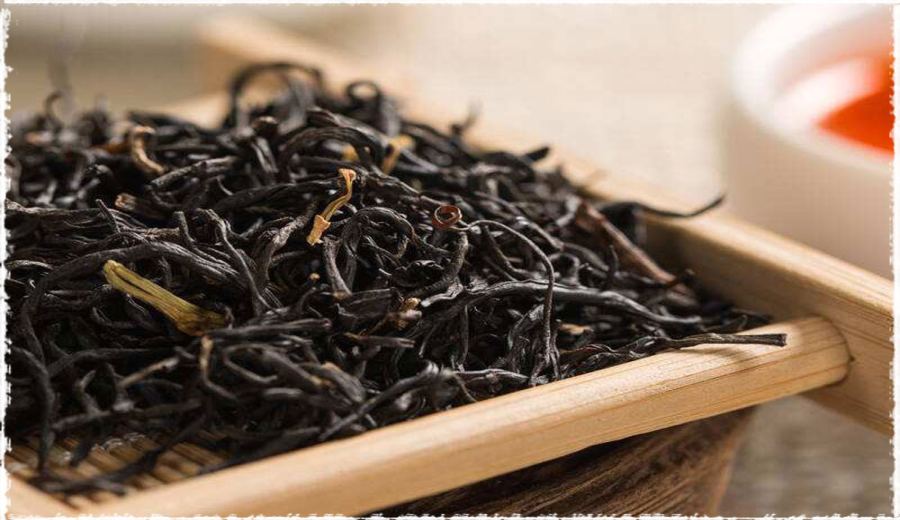
Observing its dry leaf appearance, the tea leaves are small in size and slightly curled, with an overall deep and uniform color. Upon closer inspection, you can spot scattered golden-yellow bud tips among the leaves, especially noticeable under light. These bud tips often carry a sweet and mellow flavor base and are also key to forming the layered aromas in the liquor. In addition, the dry leaves themselves emit a soft floral aroma with a hint of sweetness, foreshadowing the potential fragrance direction after brewing.
It is recommended to use a ceramic or porcelain gaiwan for brewing, which helps preserve the aroma and flavor while making it easy to observe changes in the liquor. The optimal water temperature is 100°C (approximately 212°F). For the first infusion, a steeping time of 30 seconds is suggested, with subsequent infusions gradually extended to fully release the diverse layers of flavor. These parameters are ideal for tea enthusiasts who wish to deeply experience the nuances of Qimen Mao Feng and to compare the changes across different brewing stages.
The brewed liquor presents a deep reddish-brown color, which may appear close to purplish-red when served in a white porcelain cup, making it highly distinctive visually. Upon tasting, the liquor delivers a distinct malty sweetness and a soft rose-like floral aroma. Some tea drinkers may even detect subtle notes reminiscent of clove or other roasted spices—though not easily put into words, the overall flavor profile is harmonious and comforting. The liquor is refreshing and well-layered, with a slight astringency that is not overly intense, falling within an acceptable range that even adds to the flavor complexity.
Whether you’re using a traditional gaiwan for gongfu-style brewing or directly steeping in a large cup, Qimen Mao Feng delivers consistent performance. Gongfu brewing allows for more precise control over water temperature, timing, and aroma release, making it suitable for those who wish to savor each nuanced layer. Simplified brewing, on the other hand, is more convenient for daily enjoyment and is especially fitting for coffee lovers who enjoy the aroma and light sweetness of black tea as part of their regular beverage choices.
When tasting Qimen Mao Feng, it is recommended to enjoy the pure flavor of the liquor without adding sugar, milk, or other flavorings, so as not to mask its delicate aromas and layers. The strength of this tea lies in its robust body paired with refined aromatic variations, making it a rather distinctive offering among black teas. For readers looking to explore the diverse flavors of Chinese black tea, Qimen Mao Feng is definitely a worthwhile choice to try.
As for the market price of authentic Qimen Mao Feng, it is generally priced per liang (a traditional unit) or per 500 grams. Depending on market conditions and quality grades, the price per liang may vary. Tea enthusiasts are advised to compare product descriptions, leaf appearances, and user reviews from different sources when purchasing, in order to determine whether the tea meets basic characteristics such as “fine and tender buds and leaves, with golden buds dotted throughout.” Understanding these key identification points can help you make more informed choices when selecting authentic tea and avoid purchasing products that do not meet your quality expectations.
The above content is compiled by CoffeeHunters, a coffee news website.


