







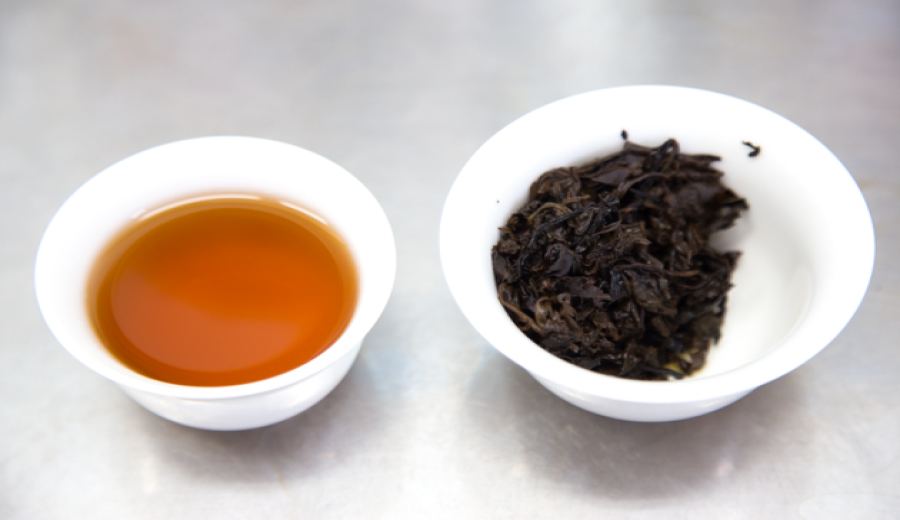
Introduction:This 2010 Yunnan ancient tree black tea has undergone eight years of aerobic aging and two years of anaerobic aging. The tea liquor unfolds a complex sweetness reminiscent of ripe persimmons and dried dates, with a deep aftertaste and high brewability. This article details the unique flavor development mechanism—from the growing environment and raw material selection to the two-stage aging process—and provides professional brewing recommendations and market reference prices to help you better understand the key points of appreciating high-aged Dian Hong.
Located in Huocao Mountain Tea Area, Zhenkang County, Lincang City, Yunnan Province, just a mountain away from the Myanmar border, this area is home to century-old ancient tea trees that produce this rare black tea aged for ten years. The tea gardens sit at an altitude of around 2,000 meters and are managed entirely using natural farming methods, with strict bans on pesticides and chemical fertilizers. Wild tea trees over a century old, through slow growth, accumulate more than four times the polyphenols and mineral content found in ordinary tea gardens.
This tea has set a unique record of two-stage aging: it was aerobically aged in a local Yunnan warehouse from 2010 to 2018, and then transferred to an anaerobic environment for another two years after 2018. This approach of first allowing ventilation and then sealing helps the tea naturally develop the characteristic honey-like aroma of black tea, while the anaerobic environment facilitates the conversion of theaflavins into richer thearubigins, ultimately resulting in a composite taste that combines the vibrancy of Dian Hong with the smoothness of Pu-erh ripe tea.
Professional tea masters describe its aroma profile as "nine-tenths ripe persimmon infused with aged black tea base liquor." The top notes present bright fruit sugar sweetness, the mid-palate reveals a mellow richness akin to Chinese dried dates, and the finish carries the gentle aged charm unique to Pu-erh ripe tea. When sipped, the sweetness spreads from the tongue surface to the back of the throat, lasting more than three times longer than with ordinary black teas.
Actual brewing tests show that 5 grams of tea leaves can be used to brew 1 liter of boiling water (concentrated version), or diluted to 2 liters while still maintaining distinct flavor layers. It is recommended to use 90–95°C spring water, with the first infusion steeped for 45 seconds to awaken the tea’s essence, and each subsequent infusion increased by 10 seconds. Notably, a Yixing clay teapot brings out its deep woody tones better than a porcelain gaiwan, but porcelain ware preserves the fresh floral and fruity aromas more effectively.
Its brewability is astonishing—under standard tea leaf amounts, it can be brewed continuously for over 12 infusions. After the fifth infusion, it is recommended to switch to decoction to extract residual substances. Its stomach-friendly nature when consumed on an empty stomach stems from the rich amino acids and gallic acid in spring-harvested raw materials, which effectively neutralize the astringency of tannic acid.
Market reference prices indicate that a reasonable price range for authentic 500-gram packs of Yunnan ten-year-aged black tea is between NT$6,000 and NT$8,000 (depending on packaging and the completeness of preservation documentation). Collectors should note that genuine products should come with original storage records and year-authentication certificates. Genuine tea liquor will not show light brown flocculent sediment upon cooling—an important indicator for identifying whether the raw material is truly from ancient tea trees.
The above content is compiled by CoffeeHunters, a coffee news website.


