







Introduction:Oolong tea lies between green tea and black tea, with a complex and meticulous production process, especially during the oxidation (or "leaf shaking") stage. By precisely controlling the degree of oxidation, it achieves its unique aroma and flavor. This article will detail the seven key steps—from plucking, withering, oxidation, fixation, rolling, roasting to packaging—and delve into how oxidation influences the color and flavor profile of the tea liquor, helping you better understand this representative tea of Chinese and Taiwanese tea culture.
Oolong tea is a semi-fermented tea that sits between green and black tea, primarily produced in Mainland China and Taiwan, and has gradually developed in recent years in places such as India, Vietnam, and Nepal. Its production method combines mechanization with traditional handcrafting, especially for high-end Wuyi Rock Tea and Anxi Tieguanyin, which are often meticulously handcrafted to showcase richer layers and more delicate flavors.
The overall production process can be divided into seven major stages: plucking, withering, oxidation (leaf shaking), fixation, rolling, roasting, as well as sorting, cooling, and packaging. Among them,Oxidation (Leaf Shaking)is the core step in shaping the unique flavor of oolong tea. By controlling the degree of oxidation, it affects the final color, aroma, and taste of the tea liquor. The oxidation ratio can vary greatly, from as low as about 8% to as high as 80%.
First is the plucking stage, usually carried out in spring, summer, and autumn, with 3 to 4 harvests per year. Mature leaves are primarily harvested—typically one bud with three to four leaves—when the new sprout has grown to about half the size of the leaf. This is considered the optimal time for picking. Tea quality is noticeably affected by the season; generally, spring and autumn teas are of higher quality than summer tea due to better climatic conditions. In terms of picking techniques, the common method involves using both hands: the index and middle fingers grip the stem, while the thumb gently snaps it off.
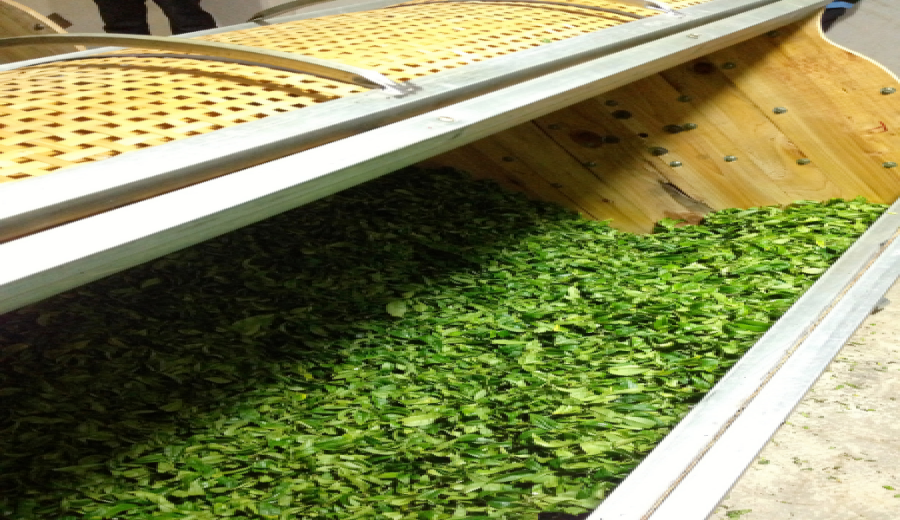
Next comes the withering stage. Freshly picked tea leaves first undergo moderate shaking or slight bruising to initiate the oxidation reaction, laying the foundation for subsequent aroma development. Withering can be done indoors or outdoors, with the goal of allowing the leaves to lose some moisture. Initially, the leaves are spread thinly on bamboo mats to prevent overheating, and later the leaf layer can be gradually increased. This step helps soften the leaves, improving their formability during subsequent rolling and preventing breakage.
Oxidation (leaf shaking) is a crucial part of the entire process. Building on the withering stage, it controls the degree of oxidation through continuous alternation of shaking and resting. After being bruised, the edges of the leaves release sap that reacts with air, accelerating oxidation and gradually removing grassy flavors. A common operational principle is “heavy shaking, light withering; light shaking, heavy withering,” meaning the duration and intensity of shaking and resting are adjusted according to the condition of the leaves. Leaves are shaken in a bamboo basket and then lightly pressed to cause slight bruising on the edges, followed by flattening to slow down the oxidation rate. This is repeated multiple times until red edges appear on the leaf margins and a distinct aroma emerges, indicating the completion of oxidation.
Fixation is the next critical step, aimed at using high heat to halt the oxidation reaction while beginning the drying process of the leaves. This stage is typically carried out by high-temperature stirring (pan-firing), which destroys enzyme activity to ensure oxidation does not continue. Also referred to as “fixing,” although brief, it is a vital step in stabilizing the quality of the tea.
Rolling helps shape the appearance of the tea leaves and builds their flavor structure. During this process, the leaves are compressed under pressure, causing juices to be released and react with each other, forming new compounds that further enhance aroma and taste. Rolling also encourages some of the tea juice to seep back into the leaves, aiding in quicker flavor release during brewing. Depending on the variety, oolong tea can take on various shapes, such as the long coiled form of Wuyi Rock Tea, the semi-round shape of Taiwan Dongding tea, and the round ball shape of Anxi Tieguanyin.
Roasting is an important procedure for enhancing the aroma and shelf life of oolong tea, divided into two stages: “light roast” and “heavy roast.” The light roast stage involves high-temperature treatment for a short period to remove excess moisture and stabilize the shape of the leaves. The heavy roast stage uses low temperature and longer roasting times, where tea masters can adjust the “fire intensity” as needed to further deepen the aroma and improve the tea liquor’s performance. Charcoal is the preferred fuel, followed by wood, electricity, natural gas, petroleum, and coal—each type of fuel also has varying degrees of impact on the tea’s aroma.
Finally, there is the sorting, cooling, and packaging stage. Once the tea is fully dried, it undergoes manual or mechanical grading to remove substandard leaves and impurities. Classification is based on leaf size, color, and integrity, determining its market grade. The industrial grade of a batch of tea is determined by the proportion of whole leaves, broken leaves, and tea dust, which directly affects its market positioning and consumer experience.
The above content is compiled by CoffeeHunters, a coffee news website.


