







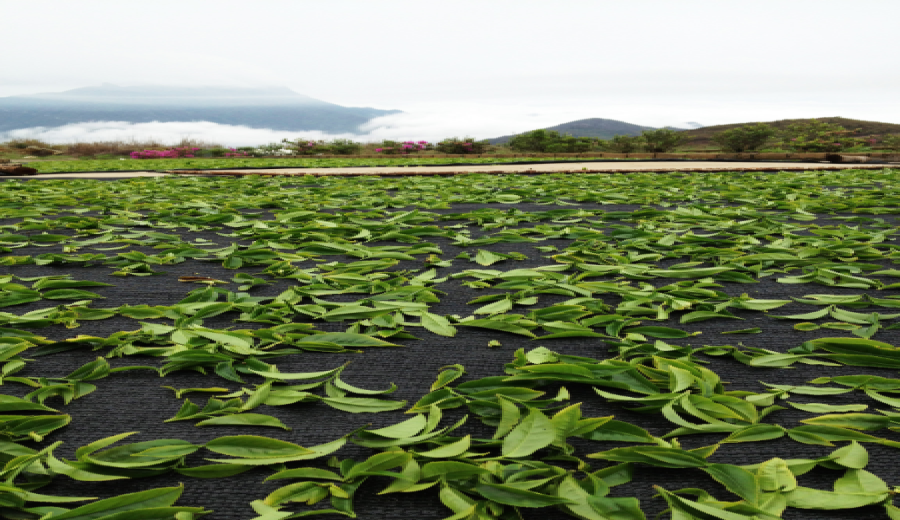
Introduction:Daye Ye Dancong is a unique oolong tea variety native to the Phoenix Mountain area in Chaozhou, Guangdong, renowned for its dark-colored leaves and rich floral aroma. This article delves into the tea’s growing environment, varietal characteristics, liquor appearance, and its complex and layered flavors, while also providing practical brewing tips and precautions to help you gain a more comprehensive understanding of this beloved oolong tea among tea enthusiasts.
Daye Ye Dancong is one of the most representative varieties of Phoenix oolong teas and is often referred to internationally as "Big Black Leaf." Originating from the Phoenix Mountain area in Chaozhou City, Guangdong Province, China, it belongs to the high-aroma category of oolong teas. It is typically harvested in early April each spring, with the spring tea of that year being particularly outstanding in quality.
The term "Dancong" originally referred to oolong tea made from a single wild tea tree, but it has gradually become a general term for oolong teas from the Phoenix Mountain area. Today, the name not only covers local teas from Phoenix Mountain but is also commonly used to refer to premium oolong teas from the Guangdong region. Daye Ye earns its name from its large, dark-colored leaves. The finished tea emits a natural orchid fragrance, with a mellow taste and a distinct sweetness.
The raw material for this tea comes from local old tea trees in Chaozhou, said to be around 40 to 50 years old. The tea plant variety is Daye Ye, a natural hybrid offspring of Shuixian and Phoenix oolong. Its leaves are broader than those of typical oolong teas, appearing deep green with smooth surfaces and fine downy hairs. Mature leaves are about 11.2 cm in length and 3.8 cm in width, with an oval shape.
The dry leaves of Daye Ye Dancong are distinctly varied in size, with colors ranging from deep brown to dark green, some leaves exhibiting a notable glossy sheen. After brewing, the tea liquor is clear and bright golden yellow, with a richly layered aroma. Initially, a delicate orchid fragrance stands out, followed by creamy sweetness and subtle floral-fruity notes.
When tasting, the first impression is a distinct floral aroma, which then transitions into a gentle sweetness and a bread-like richness. The overall mouthfeel is smooth with a long-lasting aftertaste. There is a hint of subtle floral bitterness in the liquor, but no astringency. The sweet aftertaste is pronounced, with quick saliva stimulation, a lasting throat sensation, and a sweetness that lingers in the mouth for a long time.
For brewing, it is recommended to use water at around 90°C, controlling the steeping time for each brew. The first infusion should take about 20 to 30 seconds before pouring out. Subsequent infusions can be extended gradually based on personal taste preference. If using the traditional gongfu tea method, use about 5 grams of tea leaves per 150 ml of water per brew to fully showcase its aroma and complexity. This tea has a high tolerance for multiple infusions, maintaining good flavor expression even as the number of brews increases.
Phoenix Mountain, as the main producing area of Daye Ye Dancong, boasts uniquely favorable natural conditions. The region includes 73 peaks, with undulating terrain and dense forests, offering fresh and moist air. The average annual temperature is about 20°C, with annual rainfall reaching up to 2100 mm, providing ideal climate conditions for tea tree growth. This area is not only a famous tourist destination but also an important production region for China’s Phoenix Dancong oolong teas.
According to records, Phoenix Dancong tea was rated as one of China’s 32 famous teas in 1982. The local tea gardens cover a total area of over 20,000 mu, including more than 3,000 ancient tea trees over 200 years old, and even a 600-year-old "Songzhong Tea King." These old tea trees form the essential foundation for producing high-quality Dancong teas.
In summary, Daye Ye Dancong, with its unique aroma, mellow taste, and rich complexity, is a must-try for oolong tea enthusiasts. Understanding its origin, varietal traits, and proper brewing methods not only enhances the tea tasting experience but also allows for a deeper appreciation of the classic charm of this oolong from Chaozhou.
The above content is compiled by CoffeeHunters, a coffee news website.


