







Introduction:This article provides an in-depth analysis of the Mozart coffee bean from Costa Rica’s Musician Series, detailing its unique fermented aroma, complex floral notes, and fruity sweetness—from the growing region’s geography and farm background to its anaerobic honey processing method. It is ideal for coffee enthusiasts who enjoy pour over brewing and exploring special processing methods, offering a comprehensive reference for tasting and selection.
As a key producer of specialty coffee in Central America, Costa Rica has long been renowned for its refined honey processing techniques. Among the many classic processing methods—washed, natural, and honey—Costa Rica’s honey-processed coffees are often regarded as one of the most outstanding representations of this technique.
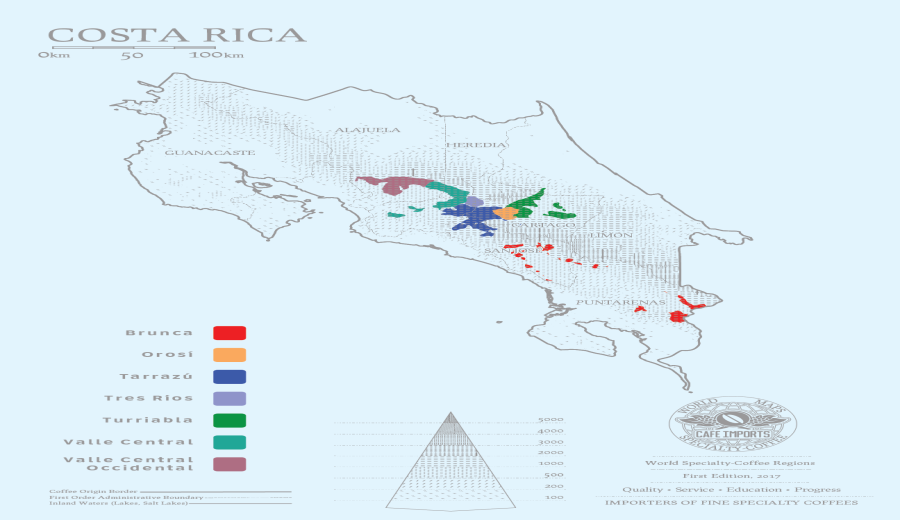
The star of this article—the “Mozart” coffee bean from Costa Rica’s Musician Series—comes from the country’s famous Tarrazú region, more precisely, from the Canet Estate at an altitude of nearly 2,000 meters. Located in the highest part of the Tarrazú area, this estate primarily grows passion fruit, but the small quantity of coffee it produces demonstrates extraordinary potential thanks to its exceptional environmental conditions.
The Tarrazú region not only boasts fertile volcanic soil but also benefits from stable and abundant rainfall, providing ideal growing conditions for coffee trees. Notably, the region was once favored by the British royal family, and even the Pope of the Vatican has spoken highly of its coffee in public speeches, attesting to its high quality.
Coffee harvesting at the Canet Estate strictly follows manual selection to ensure that every coffee cherry reaches optimal ripeness. This meticulous process is the foundation for the Mozart coffee bean’s delicate flavor profile.
In terms of processing, the Mozart coffee bean employsanaerobic honey processing, also known as anaerobic fermentation. This method is similar to red wine production, where coffee beans with their outer skin removed but still covered with mucilage are placed in a sealed stainless-steel fermentation tank. Under anaerobic conditions and the naturally occurring high pressure inside the tank, the sugars in the coffee pulp are slowly broken down through enzymatic action, transforming into richer flavor compounds.
This anaerobic fermentation process typically requires precise control of temperature and time to achieve optimal fermentation results. The fermentation duration may range from 24 to 72 hours, depending on specific processing needs. This process enhances the coffee’s sweetness and acidity complexity while imparting unique fermented aromas.
The final cup of Mozart coffee showcases pronouncedfermented aromas, accompanied by complex floral notes such as jasmine and delicate white blooms. On the palate, it delivers a rich sweetness of tropical fruits like mango and passion fruit, along with moderate acidity, presenting an overall profile that is both balanced and layered.
For coffee enthusiasts who enjoy exploring different processing methods through pour over brewing, the Costa Rica Mozart coffee bean is an exemplary choice. It not only embodies the sweet style of honey processing but also reflects the innovative changes brought by anaerobic fermentation, making it a premium bean suitable for both entry-level and advanced tasting.
The above content is compiled by CoffeeHunters, a coffee news website.


