







Introduction:Did you know? In addition to being famous for its robust black tea, Assam in India also produces innovative oolong teas that blend local culture. This article takes an in-depth look at how local tea farmers draw inspiration from poetry to craft tea, and showcases the exquisite craftsmanship of traditional wood-fired roasting and natural floral scenting through two distinctive oolongs—Meraki and Petrichor. From the details of tea production to the folk uses of xewali flowers, this piece offers a comprehensive understanding of these uniquely flavored teas, along with practical purchasing advice.
Assam has long been world-renowned for its rich and bold black teas, yet this land also nurtures surprisingly innovative oolong tea craftsmanship. This article will take readers into the world of Assam’s tea artisans, exploring how they use poetry to narrate the soul of tea, and focusing on two highly distinctive oolong varieties—Meraki and Petrichor. The former emphasizes the tea master’s meticulous care throughout the processes of withering, oxidation, and wood-fired roasting, showcasing an ultimate pursuit of detail; the latter employs a rare natural scenting technique, using Assam’s native xewali flower to impart a unique aroma to the tea liquor. We will also decode the cultural significance of xewali flowers in the region, and provide a detailed analysis of the flavor profiles and selection tips for these two teas, allowing even black tea enthusiasts to broaden their palates.
Why did you think of combining poetry with tea? Tea farmer Subhasish shares: “We chose to interpret the story of tea through poetry because poetry is concise and powerful. Initially, we just wrote a poem for one tea, but during the creative process, we gradually developed various styles of poems. For example, the poem we wrote for a black tea is called ‘Trouvaille,’ which means ‘lovely’ or ‘found by chance.’ In fact, in the tea cultures of China, India, and Japan, there are legends about monks or kings who accidentally discovered tea trees and brewed the leaves into tea. Our poems are also naturally inspired crystallizations of such moments.”
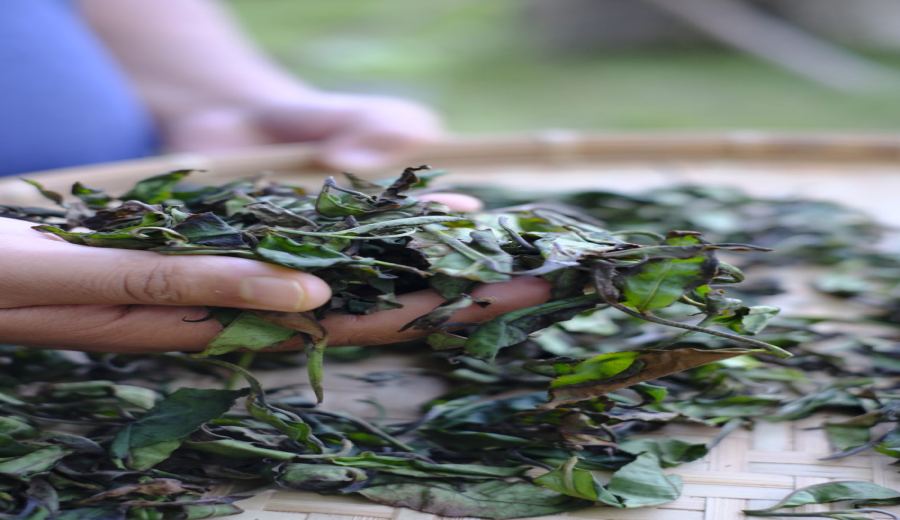
Among the many teas, Subhasish personally recommends two distinctive oolongs. The first is the tea named Meraki, a Greek word meaning “to put one’s soul into one’s work,” which perfectly echoes the complex process of oolong tea production. The tea master must monitor the withering time, oxidation level, and use traditional firewood for roasting, strictly controlling the temperature and duration of each step. Subhasish emphasizes: “We insist on using firewood instead of electricity or gas. The tea master must stay by the process without leaving, ensuring the tea leaves do not lose their essence due to over-roasting. This dedication to craftsmanship is one of the reasons why Meraki is so dear to us.”
The other is the experimental oolong tea Petrichor, launched in November 2020, which uses a natural scenting technique inspired by the philosophy of Chinese jasmine tea production—but instead of jasmine, it uses Assam’s unique native flower, xewali. Subhasish explains: “The natural scenting process is similar to that of jasmine tea, allowing the floral aroma to naturally infuse into the leaves during the tea-making process, rather than simply mixing afterward. This technique is not common in India, but we hope to showcase the harmonious resonance between tea leaves and local plants through it.”
Xewali holds deep cultural significance in Assam, commonly used in religious prayers, as a snack with meals, or even molded into human shapes as a teatime treat. This white flower emits a soothing aroma and grows widely in the foothills of the Himalayas, including regions like Nepal, Sikkim, Assam, West Bengal, and Bangladesh. Subhasish adds: “In Assam, xewali is almost a flower that every household courtyard must grow. It not only decorates life but also integrates into blessing and culinary cultures. This flower can be woven into garlands to welcome guests, showing the host’s sincere hospitality.”
This xewali-scented Petrichor oolong tea not only reflects the Assam tea farmers’ respect for nature and innovative spirit, but also provides tea enthusiasts who love unique flavors with a fresh choice. If your impression of Indian tea still stops at strong black tea, why not try these oolongs that blend poetry, craftsmanship, and local culture—they will offer you an unprecedented taste experience and cultural feast.
The above content is compiled by CoffeeHunters, a coffee news website.


