







Introduction:Phoenix Dancong tea is renowned for its diverse aroma profiles, among which Huangzhixiang (Yellow Branch Fragrance) stands out for its elegant, gardenia-like scent that has won the hearts of many tea enthusiasts. This article delves into whether Huangzhixiang Dancong belongs to the light-aroma or strong-aroma type, analyzing its characteristics through fermentation and roasting processes. It also compares Songzhong and Huangzhixiang in terms of varietal origins, aroma profiles, and flavor expressions, supplemented with background on the Phoenix Dancong production region, old-tree resources, and brewing essentials — helping you gain a comprehensive understanding of this classic Guangdong oolong tea.
Phoenix Dancong is a lightly fermented, medium-roasted oolong tea, yielding a tea liquor with a gentle, light honey-yellow hue. It boasts a mellow and smooth mouthfeel, and upon closer sipping, a subtle trace of gardenia floral notes can be detected. To reduce bitterness and astringency, tea farmers typically harvest tender buds and leaves from the oldest mother trees on Phoenix Mountain during early spring. This tea not only exhibits a high aroma intensity but also strikes a balanced harmony between elegance and fullness in taste.
In terms of production craftsmanship, Phoenix Dancong undergoes mild oxidation and moderate roasting, resulting in a tea liquor with a delicate honey-yellow color and a rich mouthfeel, while the gardenia floral aroma gradually emerges during the tasting experience. For those new to Dancong oolongs, Huangzhixiang is a highly approachable choice — it features distinct aromas, a refreshing taste, and is relatively affordable.
The aroma profile of Huangzhixiang closely resembles that of blooming gardenia flowers. Its flavor style is light and bright, and it is sometimes compared to the scent of Milan (also known as Xuelan), though overall it presents a softer and more refined expression. Like other Dancong oolongs, Huangzhixiang tea leaves offer good brewability, allowing multiple infusions where each cup continues to deliver that captivating fragrance, with the charm lasting all the way to the final brew.
Huangzhixiang Dancong originates from Chaozhou, Guangdong Province, China — one of the core production regions for Dancong oolong tea. The local climate is transitional between tropical and subtropical, complemented by fertile yellow-red soil that is highly conducive to tea tree growth. According to historical records from Chaozhou, tea cultivation on nearby Phoenix Mountain began over 600 years ago, making it one of the important birthplaces of oolong tea.
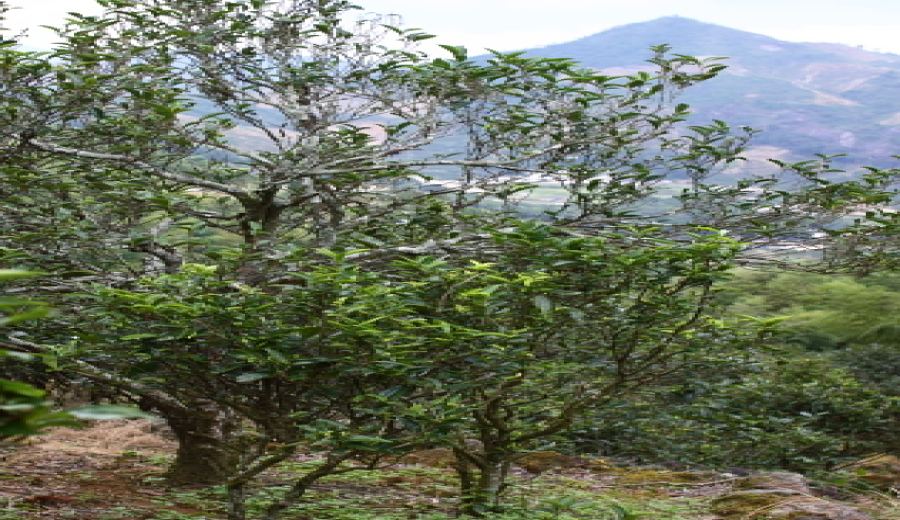
The terrain of the Phoenix Mountain tea region is diverse, with numerous peaks dotting the landscape. Among them, Wuyan Mountain, the highest in elevation, is regarded as the cradle of the area’s tea culture. To this day, the site preserves over 4,000 ancient tea trees aged over a hundred years, among which the oldest is the mother tree of the Huangzhixiang (also called Huangzhi) variety. This mother tree stands six meters tall, is approximately 600 years old, and is classified as a rare “semi-tree” type with a robust, arbor-like trunk and deep root system. The tea liquor made from its fresh leaves is often likened by tea connoisseurs to aged Yunnan pu’er in terms of its richness and layered complexity.
In the past, tea farmers on Phoenix Mountain primarily propagated tea plants via seeds. However, due to the seed-propagation characteristics similar to apples, offspring tea trees often developed varying varietal traits. As a result, the Wuyan Mountain area is home to a multitude of tea trees with diverse aroma types and characteristics. This is precisely why Guangdong Dancong oolong is often described as a tea category with “ten different fragrances,” where each tea showcases its own unique personality and aroma profile.
The above content is compiled by CoffeeHunters, a coffee news website.


