







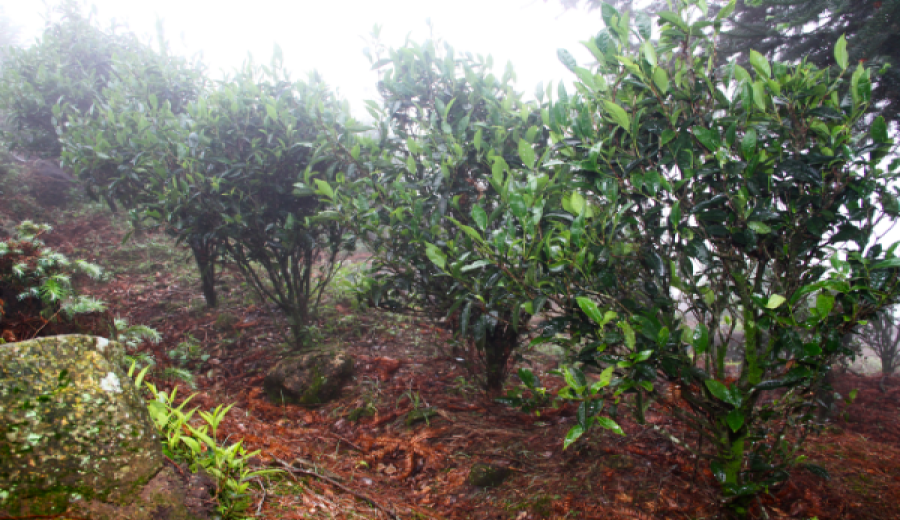
Introduction:The Yulanxiang Dancong is one of the rarer traditional varieties within Fenghuang Dancong, made from fresh leaves of ancient tea trees in the Wuyun Mountain area. Its liquor presents an enchanting light amber hue and emits a natural magnolia floral aroma. This article delves into the characteristics of its origin, picking and production processes, with a special focus on how charcoal roasting shapes its unique flavor profile. It also explains why the Wuyun production area is regarded as a more authentic source, helping coffee and tea enthusiasts better appreciate the charm of this tea.
The Yulanxiang Dancong is a relatively rare traditional type among Fenghuang Dancong, sourced from ancient tea trees in the Wuyun Mountain area of Phoenix Mountain, Chaozhou City, Guangdong Province. The most distinctive feature of this tea is the natural magnolia flower fragrance that emerges in the brewed liquor, which also exhibits a gentle, light amber color. The taste is relatively full-bodied and smooth, unlike the astringency often found in newer teas. Even after multiple infusions, the aroma continues to linger.
The unique flavor of this tea is not only derived from the inherent traits of the tea plant variety but is also closely related to each step in the tea-making process—especially during withering, oxidation, and roasting stages—all of which rely on the experience and skill of the tea master. Therefore, understanding the entire process from origin, picking, to processing is essential to fully grasp the charm of this tea.
Regarding its origin, the Yulanxiang Dancong mainly comes from the Wuyun Mountain area of Phoenix Mountain in Chaozhou City, Guangdong Province. Tea trees in this region are generally older, so the fresh leaves harvested possess a gentler character. Compared to the strong bitterness commonly found in typical Dancong teas, this tea offers a rounder, more layered flavor with lasting aroma that remains consistent from the first infusion to the last, delivering a rich and profound tasting experience.
Its name "Yulanxiang" (Magnolia Fragrance) directly stems from the natural magnolia-like aroma emitted by the tea leaves during processing. However, this fragrance is not accidental—it is meticulously controlled by the tea maker through a series of processes including withering, oxidation, and charcoal roasting. Among these, the roasting technique is particularly crucial, especially the final stage using lychee wood charcoal, which imparts a unique tropical fruit note and a gentle, mellow smoky base.
In terms of picking, the production of Yulanxiang typically takes place at the end of April each year, during the spring harvest season. The picking standard is “medium opening,” meaning only the top 3 to 4 mature fresh leaves from each tea tree are harvested. These leaves must be picked around noon and delivered to the tea factory by 5 p.m. the same day to maintain their freshness and quality.
Once the fresh leaves arrive at the factory, they first undergo outdoor sun withering for about one to two hours, though the exact duration depends on the day’s temperature and humidity. After withering, the leaves are moved indoors and evenly spread on round bamboo sieves about one inch thick. These sieves are then stacked layer by layer on wooden racks and left to rest for approximately eight hours. During this time, the tea maker gently shakes the sieves every half hour or so to promote even oxidation and encourage slight damage to the edge cells, thereby initiating a mild natural oxidation reaction.
When the tea leaves reach the desired level of oxidation, they then enter the high-temperature fixation stage. This process usually involves rapid stirring in a drum heated to about 200°C for approximately 7 to 10 minutes, adjusted according to the amount of leaves used each time. The goal of this step is to immediately halt oxidation and lock in the tea's current aroma and components. After fixation, the leaves are further processed with a rolling machine, pressing and curling the softened leaves into tight strips. The pressure applied must be carefully controlled to preserve the integrity of the leaves.
After rolling, the leaves still retain some moisture. They then undergo about 45 minutes of initial drying to remove excess water. The resulting rough tea may still contain some stems or overly mature leaves, which are manually picked out by the tea master to ensure the purity of the final product. Next, the Yulanxiang Dancong goes through two additional drying procedures: one using an electric oven and another using smoke-free charcoal fire. This is a traditional craft step that many modern Dancong teas have gradually abandoned, yet it has a significant impact on deepening the aroma and enhancing the richness of the liquor.
In summary, the Yulanxiang Dancong achieves its elegant aroma, mellow taste, and richly layered profile thanks to its raw material from ancient Wuyun Mountain tea trees, delicate production craftsmanship, and unique charcoal roasting process. If you are a tea enthusiast looking to deeply explore the more traditional and orthodox flavors of Fenghuang Dancong, consider adding this tea to your tasting list to experience its unique magnolia floral notes and the charm of charcoal undertones.
The above content is compiled by CoffeeHunters, a coffee news website.


