







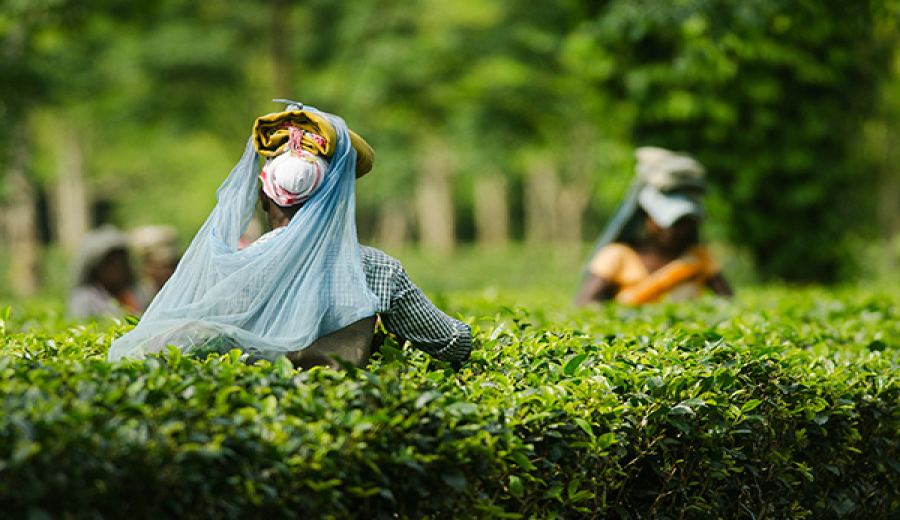
Introduction:Assam tea is not only an essential base for English Breakfast tea, but it also embodies a unique journey of plant evolution, technological innovation, and local cultural history. From the origin of large-leaf tea varieties, the birth of the CTC production method, to the traditional tea cultivation techniques of the Singpho tribe, this article will delve into how Assam tea has shaped the global tea landscape, and introduce details that even seasoned tea enthusiasts often overlook.
Assam tea holds a significant position in the global tea industry, and its prominence stems not only from its distinct evolutionary path compared to China’s small-leaf varieties, but also from the unique geographical environment and cultural background of Northeast India. The following five key facts will help you rediscover this highly influential type of tea.
First, the tea plants grown in the Assam region are large-leaf varieties, which did not originate from China’s small-leaf types but evolved through hybridization with local wild tea plants. In addition to being used to make tea leaves, the leaves and seeds of these large-leaf varieties can also be utilized to produce tea seed oil, food additives, and even serve as ingredients in perfumes, showcasing their diverse value.
When discussing Assam tea processing technology, one cannot overlook the CTC method. This technique was pioneered by William McKercher in Assam during the 1930s, using a series of cylindrical rollers fitted with sharp blades to crush, tear, and curl the tea leaves, ultimately forming fine and tightly compacted granules. This method enhances the richness and aroma of the brewed tea, making it highly suitable for tea bags, and it rapidly gained global popularity by the late 1950s.
Due to its strong flavor and malty aroma, Assam tea produces a bright-colored, full-bodied cup, making it a popular choice for breakfast tea blends. Its flavor complements breakfast foods exceptionally well and pairs especially nicely with milk. Whether it’s English Breakfast or Irish Breakfast tea, Assam is an indispensable base.
Interestingly, Assam tea estates still follow their own custom time zone known as "chai bagan time" or "tea garden time," a practice that has been in place for over 150 years. This time zone is about one hour ahead of Indian Standard Time, helping the estates more efficiently schedule harvesting and processing, making full use of the golden early morning hours.
Furthermore, the history of Assam tea dates back much further than the colonial era. Long before the arrival of the British East India Company, the local Singpho tribe had already begun cultivating tea plants and producing fragrant beverages from them. According to records, Singpho tribal leader Bessa Gam introduced the plant to Scottish explorer Robert Bruce as early as 1823, proving that the cultural roots of Assam tea predate colonial influence.
The above content is compiled by CoffeeHunters, a coffee news website.


