







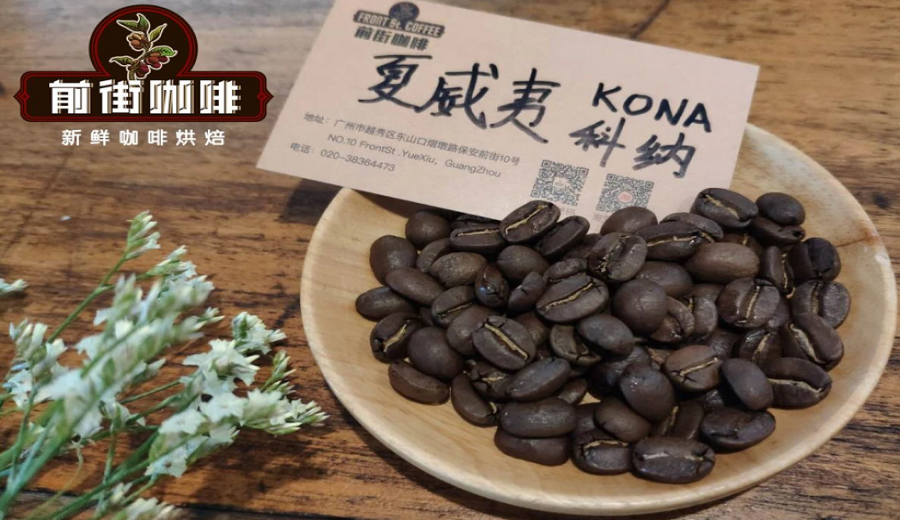
Introduction:Hawaiian Kona coffee is hailed as the king of island coffees, standing alongside Jamaican Blue Mountain as one of the top representatives in the coffee world. This article delves into the planting history of Kona coffee, its unique terroir conditions, and its rigorous grading standards. It particularly focuses on the premium Typica variety produced by the Queen’s Estate, detailing its cultivation at 1,100 meters above sea level, washed processing method, and medium roast profile. Discover how this pour over coffee showcases a rich fruitiness of mulberries, black plums, and plums, along with a distinctive juice-like mouthfeel.
Renowned for its delicate and elegant flavor profile as well as its rare growing conditions, Hawaiian Kona coffee is honored as the “king of island coffees” and stands shoulder to shoulder with Jamaican Blue Mountain as one of the world’s top coffee representatives, often referred to as the “king and queen” of coffee. This article will guide you through a comprehensive understanding of Kona coffee’s origins, regional characteristics, grading system, and take an in-depth look at the classic Typica variety from the Queen’s Estate. Learn how it thrives at a mid-altitude of 1,100 meters, and through washed processing and moderate roasting, delivers an intoxicating fusion of mulberries, black plums, plums, and maltose—rich fruity aromas paired with a velvety, juice-like body.
Kona coffee is grown in the Kona region of Hawaii’s Big Island, which is not only the only commercially active coffee-growing area in the United States, but also boasts uniquely advantageous geographical and climatic conditions that give rise to coffee with highly distinctive flavor profiles. The Kona region lies on volcanic slopes, enjoying consistent cloud cover, nutrient-rich volcanic soil, and notable diurnal temperature variations. These factors contribute to slowly ripening coffee cherries, which are conducive to the accumulation of flavorful compounds.
The history of coffee cultivation in Hawaii began in the early 19th century. According to records, the first Spanish advisor, Don Francisco de Paula Marin, introduced coffee to Hawaii in 1817, but initial attempts were unsuccessful. It wasn’t until 1825 that Chie Boki, then mayor of Oahu, brought coffee seeds from Brazil and successfully planted them in the Manoa Valley, marking the beginning of a new chapter in Hawaiian coffee farming. Subsequently, around 1828, Bourbon variety coffee was introduced to the Big Island and expanded to Kauai by 1836. However, a pest and disease outbreak in 1858 nearly wiped out the entire island’s coffee industry, leaving only the Kona region of the Big Island intact—thus forming what is today the world-renowned Kona coffee region.
The climate of the Kona region is typically island-style, with minimal annual temperature fluctuation, but significant day-night temperature variation. The persistent cloud cover shields the coffee trees from intense sunlight, helping them grow slowly and accumulate complex flavors in the cherries. Although the overall elevation is not particularly high, the mineral-rich volcanic soil, combined with regular afternoon showers, provides near-perfect growing conditions. These elements contribute to Kona coffee’s refined and layered taste characteristics.
Among globally renowned island-style coffees—including Jamaican Blue Mountain, Hawaiian Kona, Kafé, the semi-decaffeinated varieties from Bourbon Island, and Saint Helena coffee—not only do they enjoy extremely high acclaim in the international market, but their prices also often rank among the highest. In fact, island coffees account for more than half of the world’s top ten most expensive coffee products, highlighting their rarity and preciousness.
The primary variety cultivated in Kona is Typica, one of the oldest Arabica varieties originating from Ethiopia and the ancestor of many modern coffee varieties. Typica offers refined floral and fruity aromas with a clean and delicate flavor profile. However, it is relatively fragile, with low disease resistance—especially to coffee leaf rust—and yields are also low. As a result, it has gradually been replaced by other disease-resistant varieties in large-scale commercial production. Yet, precisely because it is difficult to cultivate, Typica is all the more rare, and in a terroir as uniquely favorable as Kona, it can fully express its distinctive flavor potential.
As a standout in the Kona region, the Queen’s Estate produces premium Typica coffee beans cultivated at a mid-altitude of 1,100 meters, processed with meticulous washed methods, and roasted to a moderate degree—making it a classic favorite among many coffee enthusiasts. When brewed using pour over methods, this coffee clearly reveals sweet fruit notes of mulberries, black plums, and plums, complemented by soft maltose aromas. Upon tasting, it delivers a silky mouthfeel reminiscent of juice, with distinct layers and a long-lasting finish, perfectly embodying the gentle and elegant character of island coffee.
For readers eager to explore and taste Kona coffee in depth, it is recommended to start with the Queen’s Estate washed Typica, especially the medium-roast pour over beans, which fully express its balanced fruitiness and rich body. By mastering appropriate extraction parameters—such as a water temperature of 90–93°C and a coffee-to-water ratio of 1:15 to 1:16—you can further highlight the delicate flavor nuances of this coffee.
The above content is compiled by CoffeeHunters, a coffee news website.


