







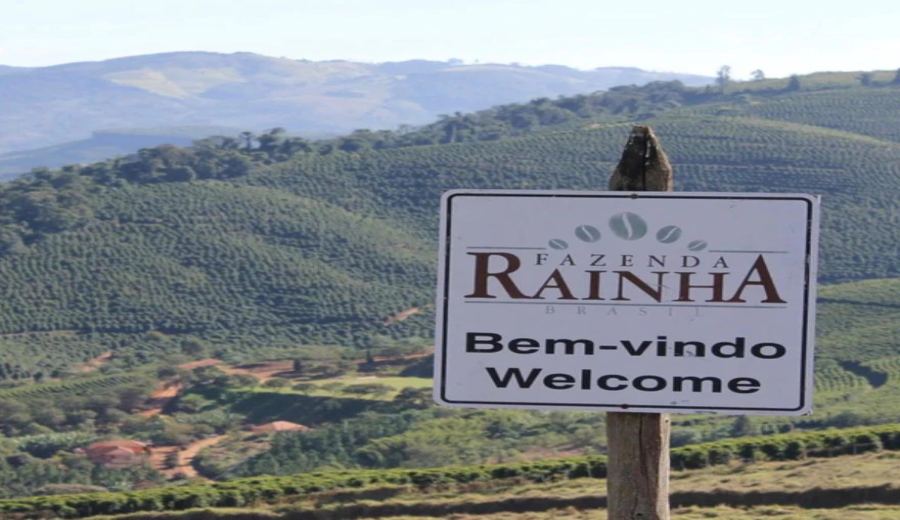
Introduction:Want to enjoy a pour over coffee that is rich, low in acidity, clean in flavor, and has a pronounced sweetness? The Yellow Bourbon coffee beans from Brazil’s Fazenda Rainha (Queen Estate) are processed using a unique honey method, delivering a strong profile of nuts and cocoa with a sweet, brown sugar-like finish. This coffee is a favorite among many enthusiasts. This article delves into the origin background, variety characteristics, processing method, as well as optimal roasting and pour over parameters for this bean, helping you better understand and perfectly extract its full potential.
For coffee lovers who prefer a rich body and minimal acidity, the Yellow Bourbon beans from Brazil’s Fazenda Rainha are an excellent choice to try. These beans come from the Queen Estate located at altitudes between 1400 and 1950 meters in Brazil’s Mogiana region, and are owned by the renowned Carvalho Dias coffee family. Since the first Brazilian COE competition in 1999, the family has won multiple awards, including the championship, 9th place, and 11th place in 2004. The Queen Estate consistently produces high-quality coffee. Its Yellow Bourbon variety, combined with honey processing, showcases a rich profile of nuts and cocoa, paired with a bright, brown sugar sweetness—making it a great option for pour over enthusiasts.
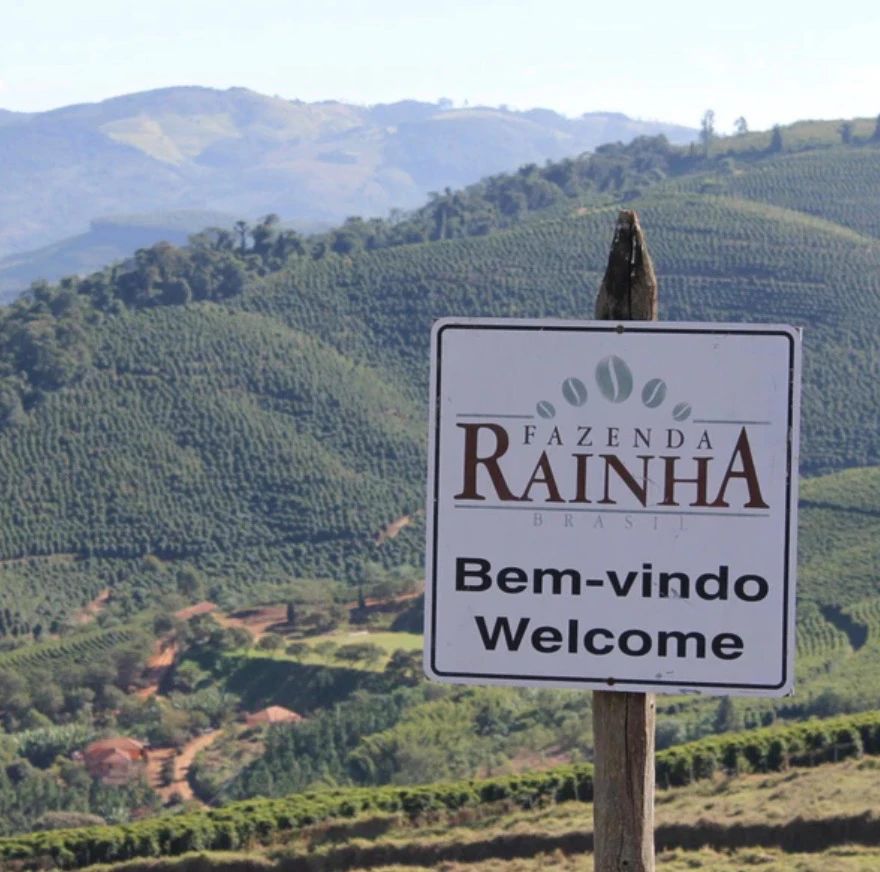
Fazenda Rainha (Queen Estate) is located in Brazil’s Mogiana region, at elevations ranging from 1400 to 1950 meters. Such altitude and microclimatic conditions provide an ideal growing environment for coffee cherries. The estate is personally managed by agricultural engineer José Renato G. Dias, who is dedicated to improving coffee quality and sustainable production. Notably, all workers at the estate live on the farm, eliminating the use of temporary labor and providing health insurance and medical support. Additionally, the estate community has built its own school and church, reflecting a strong commitment to employee welfare. In terms of environmental management, Fazenda Rainha holds BSCA certification and employs a UTZ-certified social and environmental management system. It has long participated in the COE (Cup of Excellence) competition, earning international recognition for its quality.
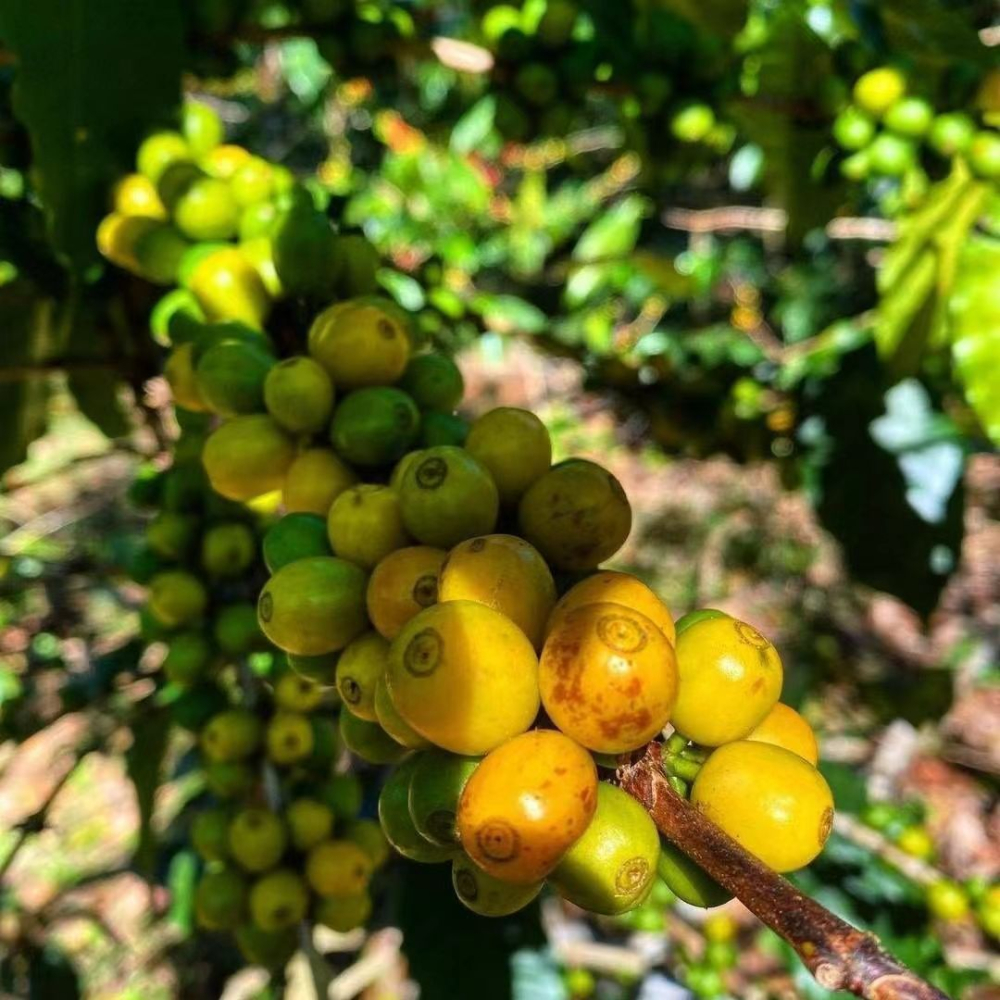
The main coffee varieties planted at Fazenda Rainha include Yellow Bourbon, Icatu, Yellow Catuai, Mundo Novo, and Acaiá, with Yellow Bourbon being the flagship variety, covering around 200 hectares. Yellow Bourbon is a Bourbon mutation unique to the state of São Paulo, Brazil, named for its orange-yellow rather than red fruit when ripe. This variety naturally offers balanced flavors, soft acidity, mild bitterness, and a clean, bright profile. When processed via natural or honey methods, the sweetness of Yellow Bourbon becomes more pronounced, accompanied by subtle tropical fruit aromas, making it highly suitable for coffee drinkers who prefer rich, low-acidity flavors.
The so-called honey process (Pulped Natural) is a method developed in Brazil’s coffee-growing regions to adapt to rainy climates while retaining some of the flavors associated with sun-drying. This method involves removing the coffee cherry’s skin and pulp but leaving the mucilage layer intact before sun-drying. Unlike traditional sun-drying, the honey process allows for more precise control over fermentation levels, reducing the risks of over-fermentation or mold. Additionally, since unripe green cherries can be sorted out during the skin and pulp removal process, the final beans have more consistent ripeness, thereby enhancing overall flavor purity and uniformity. Compared to fully sun-dried coffee, honey-processed coffee typically exhibits higher clarity and a more balanced acidity-sweetness profile.
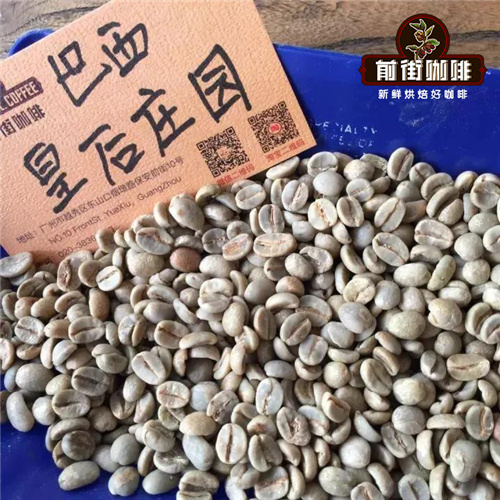
The Yellow Bourbon green coffee beans imported by a certain coffee brand feature soft bean texture, lower density, and moderate moisture content. Therefore, they are not suitable for very high roasting temperatures, as this can easily lead to burnt, bitter notes. It is recommended to use medium heat when dropping the beans in, maintaining stable firepower during the drying phase, and then fine-tuning the temperature based on bean surface changes after the first crack begins, to promote good caramelization. This bean is a medium-dark roast with a semi-washed process. It is recommended to allow about 3 minutes of development after the first crack, and to drop the beans when the temperature reaches 201°C, in order to fully showcase its rich, low-acid characteristics.
In practical roasting, if using a Yangjia 800N roaster, it is recommended to load 550 grams of beans. Preheat the machine to 200°C before dropping the beans, set initial firepower to 150 and the air damper to 3. The turning point occurs around 1 minute and 30 seconds, after which maintain the firepower. At approximately 5 minutes and 10 seconds, when the beans turn yellow and grassy notes fade, enter the drying phase. At this point, reduce the firepower to 125 and open the air damper to 3.5. Around 8 minutes and 20 seconds, when drying is complete and the bean surface shows wrinkles and dark spots, the aroma shifts to baked bread, indicating the first crack is imminent. When the temperature drops to 178°C, reduce the firepower to 80 and closely monitor the first crack, which usually begins around 9 minutes and 14 seconds. At this point, fully open the air damper to 5. Allow about 3 minutes of development after the first crack, and it is recommended to drop the beans when the temperature reaches 201°C to achieve the desired medium-dark roast flavor profile.
For this medium-dark roasted Yellow Bourbon from Fazenda Rainha, it is recommended to use slightly lower water temperature and medium-coarse grind size when pour over brewing, which helps balance extraction and avoid over-extraction that could lead to bitterness. For actual brewing, you may refer to the following parameters: use a Kono dripper, water temperature around 88°C, 15 grams of coffee, a 1:15 coffee-to-water ratio, and a medium-fine grind (approximately 70–75% passing through a Chinese standard No. 20 sieve). Specific brewing steps are suggested as follows: start with a 30-second bloom using 30 grams of water, then pour up to 125 grams, and when the water level drops halfway, add the remaining 95 grams to reach a total of 225 grams. Control the total brew time to around 2 minutes and 10 seconds to fully highlight its rich, low-acid, and sweet flavor characteristics.
The above content is compiled by CoffeeHunters, a coffee news website.


