







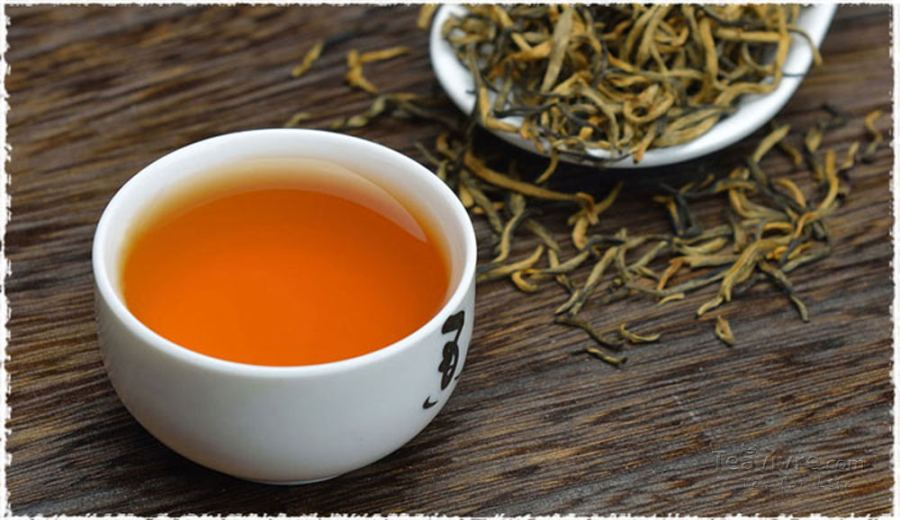
Introduction:This article takes an in-depth look at the three premium categories of Yunnan Dianhong — Golden Needle, Golden Thread, and Golden Bud — comparing their plucking standards, bud tenderness, and production processes, while also explaining the subtle differences in their aroma profiles and tea liquor flavors. Whether you’re new to black tea or a seasoned connoisseur, you’ll learn how to identify high-quality Dianhong and find the one that suits your palate best.
Dianhong Golden Needle, Golden Thread, and Golden Bud are three highly regarded premium offerings among Yunnan black teas. Not only do they each have distinct appearances, but their plucking standards, tea-making techniques, and final flavor expressions also vary significantly. This article will delve into key aspects such as tea origin, harvest season, and fresh leaf tenderness to compare the differences among them in detail. It will further explore core processing techniques like oxidation control and withering methods used in crafting Golden Bud black tea, helping tea enthusiasts master the art of appreciation.
The reason these high-grade Dianhong teas exhibit an enchanting golden hue in their dry leaf state — rather than the deep brown commonly seen in typical black teas — is largely due to their harvest timing, which is mostly concentrated in early spring when antioxidant levels in the tea buds are high and chlorophyll content is relatively low. The resulting tea liquor is not only gentle on the palate with a rich body, but also delivers a notable sweet aftertaste. Even when brewed with cold water, it emits delicate aromas reminiscent of cocoa.
For these precious "bloom-grade" tea buds to transform into high-caliber black tea, the craftsmanship required from the tea makers is exceptionally demanding. From plucking to drying, every step must be precisely controlled to preserve the natural fragrance and layered flavors of the tea buds.
These teas are all produced in Fengqing County, Lincang City, Yunnan Province, using the renowned Yunnan large-leaf tea variety as raw material. Among them, the selection of Golden Bud is particularly meticulous, utilizing only single tender buds — a rarity in black tea production. Precisely for this reason, the aroma released by Golden Bud is exceptionally intense, with a hint of cocoa-like nuance. The tea liquor is smooth on the throat, with a fine and evenly distributed sweetness, making for an overall impressive performance.
The raw materials for Golden Bud are mainly sourced from wild tea trees growing densely in the mountain forests of Fengqing and neighboring Yun County. These tea trees are mostly located in the higher-altitude Baiying Mountain area. Plucking typically takes place from late March to early April, right when the first tea buds begin to emerge. Compared to conventional black teas that often use more mature “one bud and two leaves” or “one bud and three leaves,” Golden Bud is made exclusively from the most tender bud tips. As a result, the color of the finished tea is not deep black, but rather a warm and pleasing golden hue, closely tied to the buds’ rich antioxidants and low chlorophyll content. A closer look at the bud tips reveals a fine covering of downy fuzz, reflecting the extreme gentleness in both plucking and initial processing.
Turning a single tea bud into black tea is no easy feat, especially during the crucial oxidation stage. As early as 1958, Fengqing Tea Industry pioneered the development of high-quality Dianhong Golden Bud using pure bud tips — one of the earliest attempts in Yunnan to produce black tea from extremely tender raw material. However, bud tips possess complex internal leaf layer structures and, if left to grow naturally, would eventually unfold into five to six leaves. Therefore, tea makers must exercise extreme caution in controlling the oxidation process to ensure even oxidation across each layer of the bud tip. This prevents the development of sourness or excessive tannins, resulting instead in a delicate yet elevated aroma, along with a sweet and smooth tea liquor mouthfeel.
In the initial processing stage, the tea buds are first spread out thinly and evenly on bamboo trays and left to rest for about 3 to 5 hours for preliminary respiration. They are then moved into specially made wooden or bamboo air tunnels, where airflow from below is used for withering — a process that takes approximately 5 to 6 hours. After withering, the tea makers manually stir-fry the leaves to remove about half of their moisture before proceeding to the oxidation stage.
During oxidation, the tea buds gradually transition from green to golden, with a slight reddish tint. To precisely control the level of oxidation, the buds are usually wrapped in fabric and placed inside wooden boxes, covered with thick cloth to maintain suitable temperature and humidity. Tea makers must frequently inspect the condition of the buds, turning them as needed to ensure even heat distribution, and judge whether the oxidation has reached the ideal state through tactile feel and smell. This process relies heavily on years of experience to accurately determine the stopping point, avoiding under-oxidation or over-oxidation, thereby shaping the unique aroma depth and sweet smoothness characteristic of Golden Bud black tea.
The above content is compiled by CoffeeHunters, a coffee news website.


