







Introduction:This article delves into the world’s original black tea — Zhengshan Xiaozhong, exploring everything from the unique geographical environment of Tongmuguan in Wuyi Mountain, its birthplace, to the characteristics of the native tea plant variety Wuyi Qizhong. It also examines the traditional smoked production method upheld by Master Wen for over forty years. The article provides a detailed breakdown of picking standards, production techniques, historical evolution, and shares key elements for identifying and enjoying authentic Zhengshan Xiaozhong. Whether you’re new to black tea or a tea enthusiast pursuing traditional flavors, you’ll gain in-depth and practical insights.
Known as the progenitor of world black tea, Zhengshan Xiaozhong is strictly produced within an area of about fifty square kilometers around Tongmuguan in Wuyi Mountain, Fujian Province. This region not only nurtures distinctive tea flavors but also carries a long history of tea production. This article offers a comprehensive analysis of this classic black tea with its rich pine smoke aroma and mellow taste, covering everything from the terroir, native tea plant varieties, traditional production techniques, to specific picking and processing details.
Zhengshan Xiaozhong from Tongmuguan in Wuyi Mountain is a spring tea. Taking the batch harvested on April 30, 2020 as an example, the dry tea leaves are tightly rolled and slightly curved, with a deep, dark, glossy black appearance. Its aroma distinctly carries the smoky scent of burning pine wood — rich but not overpowering. Once brewed, the tea liquor is bright and clear, presenting a warm orange-yellow hue. On the palate, the first impression is the unique aroma of pine smoke, followed by a soft and full-bodied taste, with a notable aftertaste upon swallowing. The lingering finish remains in the mouth and throat for a long time, delivering a smooth and comforting tea experience.
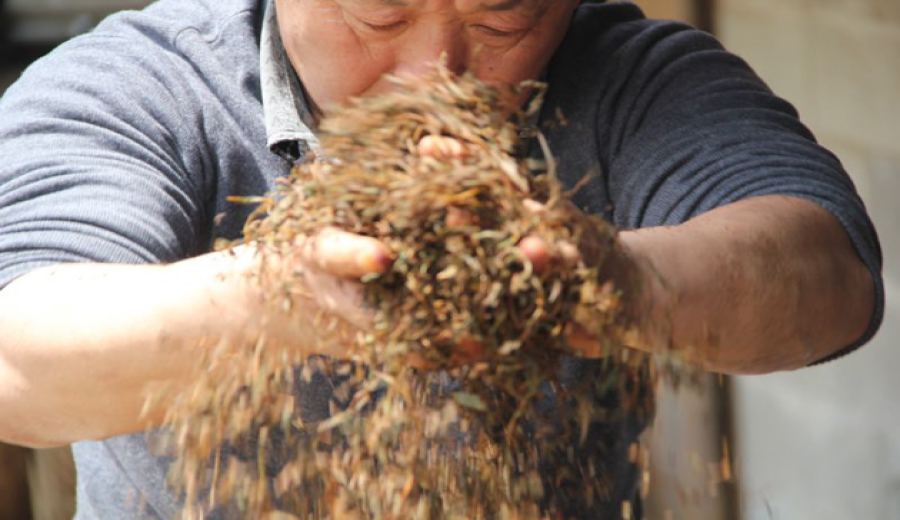
The tea variety used is Wuyi Qizhong, often referred to locally by tea farmers as “cai cha” (vegetable tea), which is a general term for various small-leaf native tea plant varieties in Wuyi Mountain. These tea plants are mostly grown in high-altitude environments without the use of chemical fertilizers or pesticides, developing naturally and carrying a unique terroir character. The picking season for Zhengshan Xiaozhong is generally from April to June each year, and the picking standard mainly consists of one bud with two to three leaves. It is estimated that producing 1 kilogram of rough tea requires about 5 kilograms of fresh leaves, yet only around 70 grams of finished dry tea can be obtained — highlighting how rare and labor-intensive this tea truly is. Master Wen continues to employ traditional handmade tea-making techniques, with each batch of tea undergoing at least twenty processing steps, including withering, rolling, fermentation, and drying, all carried out entirely within the unique “Qing Lou” structure.
“Qing Lou” is a traditional wooden building unique to the Tongmu area, typically three to four stories high, with the ground floor housing a large fireplace where pine wood is burned to create a smoking effect. During the drying process, the tea leaves absorb the pine smoke, forming the most iconic aromatic feature of Zhengshan Xiaozhong. This smoky flavor is especially prominent in the first few infusions, gradually diminishing with subsequent brews, yet always leaving a subtle presence. Additionally, there is a special step in the production process called “jie cha” (literally “cutting tea”), aimed at further infusing the tea leaves with smoke aroma to enhance the overall complexity of the fragrance and the richness of the taste.
Tongmuguan tea gardens are located in remote areas, and access usually requires guidance from local tea farmers familiar with mountain paths. This region is not only the origin of Zhengshan Xiaozhong but also one of the birthplaces of many renowned Wuyi Mountain cultivars, including Da Hong Pao, Shui Xian, and Rou Gui, all of which trace their roots back to the local “cai cha” system. According to statistics, nearly seventy tea plant varieties have been officially identified, while the unnamed ones are collectively referred to as “Qizhong,” showcasing a high level of varietal diversity. Some of the raw materials used for Zhengshan Xiaozhong also come from wild or semi-wild tea plants, which not only offer unique flavors but are also considered optimal choices for healthy beverages due to their natural growing environments.
Looking back at history, Zhengshan Xiaozhong was introduced to European and North American markets as early as the 1970s and was once favored by international tea drinkers. However, wars and industry changes led to a sharp decline in its production, nearly disappearing around 1949. It wasn’t until the 1950s that production gradually resumed, peaking at approximately twenty thousand piculs per year at its height (with each picul equaling 50 kilograms). Today, Zhengshan Xiaozhong is re-emerging in global consumer markets in a more refined and diverse form, continuing its historical legacy and cultural significance.
Master Wen, as a leading tea producer in the Tongmuguan tea gardens, served as the workshop director of Tongmuguan Tea Factory and has amassed 44 years of dedicated experience crafting Zhengshan Xiaozhong. Since he began working with tea in 1972, his commitment to traditional craftsmanship and strict quality standards have earned him high praise from both industry insiders and tea enthusiasts. Locals often say, “If it’s tea made personally by Master Wen, the quality is absolutely guaranteed.” He believes that tea making is not just a technical skill, but also a way of life — requiring a calm mindset, hard work, and consistency across every batch. No tea leaf should ever go to waste.
For tea enthusiasts, when choosing Zhengshan Xiaozhong, it’s important to not only verify that the origin is Tongmuguan in Wuyi Mountain, but also pay attention to whether the tea’s aroma is natural, if the smokiness is well-balanced, and how the body and aftertaste of the tea liquor perform. By using the correct brewing method — such as controlling the water temperature to around 90–95°C and adjusting steeping time based on personal taste — one can fully appreciate the layers and charm of Zhengshan Xiaozhong. Whether you’re a beginner just getting into black tea or a seasoned tea drinker seeking the classic smoky flavor, understanding the origin background and production process will greatly enrich and deepen your tea tasting experience.
The above content is compiled by CoffeeHunters, a coffee news website.


