







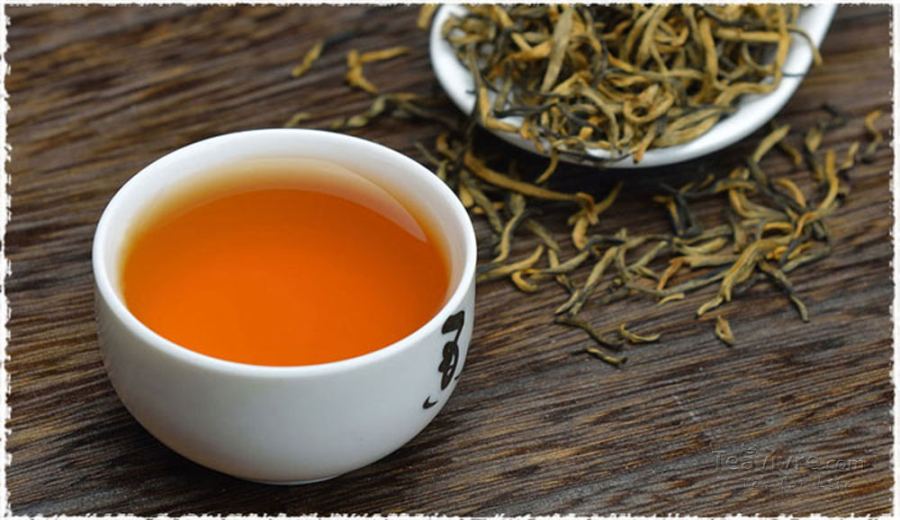
Introduction:Would you like to taste the unique flavor of Yunnan Old Tree Dian Hong? This rare black tea, sourced from ancient forest tea trees, is renowned for its wild floral aroma and sweet aftertaste. This article will delve into the origins and discovery of this rare tea variety, and explain in detail how to brew it to achieve a golden, translucent liquor with the perfect water temperature, tea quantity, and steeping time—helping you easily master the brewing secrets of this distinctive black tea.
Yunnan Old Tree Dian Hong is a rare black tea produced in Fengqing County, Lincang, Yunnan. It is made from the fresh leaves of old tea trees growing in pristine forests. These leaves are widely praised for their natural wild floral fragrance, sweet and smooth mouthfeel, and long-lasting sweet aftertaste. The tea liquor is golden and clear, smooth on the palate with no astringency at all, making it an unmissable choice for both beginners and seasoned black tea enthusiasts.
The raw material for this black tea was originally reserved for high-quality Pu-erh tea, but thanks to the ingenuity of the tea makers, it has been transformed into a uniquely flavored Dian Hong. Its most captivating aspects are the natural wild floral notes in the liquor and the mellow yet not cloying aftertaste. More importantly, it has relatively low caffeine content while being rich in various beneficial substances, making it suitable for daily enjoyment.
The tea leaves for Old Tree Dian Hong come from the primeval forests deep in the mountains of Fengqing County, Lincang City, Yunnan Province. These tea trees are ancient, naturally occurring varieties, many of which have not been artificially planted or managed, but are instead harvested by villagers during spring and autumn. Interestingly, these tea trees often grow alongside wild mushrooms and medicinal herbs in the same mountain forests, and tea pickers frequently gather these wild resources to supplement their income.
The birth of this black tea actually stems from a chance occurrence. It is said that several years ago, during spring, a few villagers who went up the mountain to pick mushrooms noticed new buds on the tea trees and casually picked them, initially just as an afterthought. A few days later, when they returned home, they were surprised to find that the leaves had naturally oxidized to a brown color. On a whim, they used the traditional local method of black tea production to fully ferment them, and unexpectedly, the resulting liquor boasted an extraordinary floral-fruity aroma and sweetness, which soon caught the attention and affection of many tea enthusiasts.
These rare tea trees mostly grow in the Baiying Mountain range of Lincang, Yunnan, an area also known as a treasure trove where wild, transitional, and cultivated tea trees coexist. According to research by tea experts, the genetic diversity of the tea trees in this region is extremely high, and it is considered one of the ancestors of modern cultivated tea trees. As early as about 1,100 years ago, Buddhist monks migrated to this area and began planting tea trees, which also closely integrated tea culture with the local religion and way of life, forming a unique culture of “Zen and tea as one.”
The Baiying Mountains are surrounded by the Lancang River (also known as the Mekong River). The rugged terrain, changeable climate, large diurnal temperature variations, along with persistent fog and abundant sunshine, contribute to the tea leaves’ rich internal components and captivating flavor layers. Although Dian Hong has been mainly exported since 1939, Old Tree Dian Hong, with its original flavor and the unique genetics of forest-grown tea trees, has become a standout star in the domestic market, which traditionally prefers green tea.
If you want to brew this black tea at home and achieve its best flavor, it is recommended to use water at about85 to 90°Cto avoid high temperatures damaging its delicate aroma.The suggested amount of tea leaves is about 5 grams, paired with150 millilitersof a gaiwan or Yixing clay teapot, which can fully showcase its aroma and taste.For the first infusion, it is recommended to pour out the liquor quickly(about 10–15 seconds), and then you can extend the steeping time according to your personal taste preference for subsequent infusions. Typically, it can be stably brewed for8 to 10 infusions, with the tea liquor still maintaining its sweetness and aroma.
While brewing, you can observe the color changes of the tea liquor from one infusion to the next, gradually shifting from golden to orange-yellow, and the aroma transitions from fresh wildflowers to a mellow sweetness. As long as you master the water temperature, tea quantity, and time, even beginners to black tea can easily brew a pot of Old Tree Dian Hong with a bright, translucent liquor, enticing aroma, and mellow taste, enjoying the pure tea essence from the forests of Yunnan.
The above content is compiled by CoffeeHunters, a coffee news website.


