








Introduction:Wondering why Geisha coffee stands out in international competitions? This article delves into the unique charm of Panama’s Deborah Estate anaerobic natural processed Geisha, exploring everything from terroir and processing methods to flavor profiles. From how high-altitude, cool environments affect fruit sugar accumulation, to the intense floral and fruity aromas brought out by 36-hour sealed fermentation, it helps you master the key brewing and tasting points of this top-tier coffee — offering practical guidance for both beginners and seasoned enthusiasts.
Since winning the Panama Cup (BOP) in 2004, Geisha coffee has become a legendary variety in the specialty coffee world. With its delicate floral notes, bright citrus tones, and a long-lasting honey-like sweetness, it has captivated coffee lovers worldwide. This article will take you through the regional environment, processing techniques, and actual flavor layers to fully analyze a high-altitude Geisha from Panama’s Volcán region — the anaerobic natural processed Geisha from Deborah Estate — and uncover the secrets behind its captivating aroma and taste.

When talking about Geisha coffee, two renowned regions in Panama must be mentioned — Boquete and Volcán. Boquete, with its fertile volcanic soil, moderate rainfall patterns, and year-round misty microclimate, provides ideal growing conditions for coffee trees, which is why many top-tier Geishas come from here, such as the famous Hacienda Esmeralda. The neighboring Volcán region has also gradually emerged in recent years, thanks to its high altitude and significant day-night temperature differences, yielding Geisha beans with rich and layered flavors.
Among them, Deborah Estate is located in the high-altitude area of the Volcán volcano and is one of the few coffee farms in Panama with an altitude exceeding 2,000 meters. It is reported that the minimum nighttime temperature at the estate can drop to 10°C. Such extreme conditions significantly slow down the ripening process of coffee cherries but also encourage the trees to accumulate more sugars and flavor compounds in the fruits, laying a solid foundation for subsequent processing and extraction. In addition, the area receives an average annual rainfall of about 2,200 mm, with stable water supply being another key factor ensuring coffee quality.
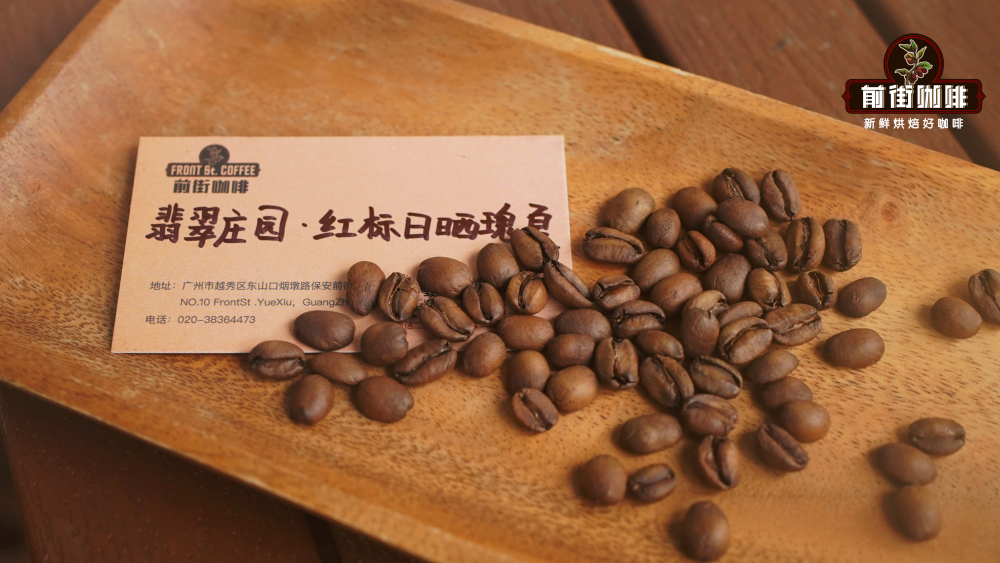
This Panama Deborah Geisha coffee is grown at altitudes between 2,000 and 2,350 meters, falling into the extremely high-altitude category, and is of the legendary Geisha variety. Its processing method employs a special anaerobic natural (sun-dried) technique, which has become a highly notable trend in specialty coffee processing in recent years.
Specifically, after harvesting ripe coffee cherries, the estate first places them in a greenhouse for initial withering, allowing the fruit moisture to gradually evaporate until they reach a concentrated state resembling raisins. Next, they are placed in a completely sealed container, with oxygen removed, for a 36-hour dry anaerobic fermentation. This step activates microbial activity within the pulp, further enhancing sweetness and complexity of aroma. After fermentation, the skin is removed but the pulp is retained, and the beans continue to undergo sun drying, allowing the sweetness and fruity notes to penetrate more deeply into the seeds (i.e., the coffee beans).
The advantage of this processing method lies in its ability to fully elicit the inherent floral and fruity characteristics of the Geisha variety, while controlling the fermentation process in an anaerobic environment to avoid excessive acidity or off-flavors. The final cup often presents extremely vivid tropical fruit aromas, such as passionfruit and mango, along with delicate white flowers and citrus notes. The sweetness is pronounced, with a long finish, often accompanied by the soft texture reminiscent of honey and black tea.
For readers trying Geisha coffee for the first time, it is recommended to use beans with a medium-light roast and brew via pour over to better highlight its layered profile. A recommended powder-to-water ratio is between 1:15 and 1:16, with a water temperature of around 90–92°C, using a medium-fine grind (similar to fine sugar grains), and employing a segmented extraction method to fully showcase its floral and fruity notes. If you prefer a richer taste, immersion brewing tools like the French press or AeroPress can also be tried, but be sure to control steeping time to avoid over-extraction leading to bitterness.
In summary, Deborah Estate’s anaerobic natural processed Geisha combines the advantages of high-altitude sugar accumulation with precise fermentation processing techniques, delivering a premium coffee experience with vivid flavors and a spectrum of aromas. Whether you’re just getting into Geisha or are already a seasoned enthusiast, you’re bound to discover unique surprises and enjoyment in this exceptional coffee.
The above content is compiled by CoffeeHunters, a coffee news website.


