







Introduction:Want to know why Panamanian Geisha has become one of the top varieties in the specialty coffee world? This article takes you on a journey from its origins in the forests of Ethiopia all the way to its legendary championship win at the BOP competition. In addition to detailing the variety’s characteristics and cultivation challenges, it also recommends entry-level and advanced Geisha options tailored to different levels of coffee enthusiasts, helping you find your own cup of “coffee art.”
When it comes to Geisha, many coffee lovers immediately think of the unforgettable floral and tea-like notes from Panama’s Hacienda Esmeralda. However, this now highly acclaimed variety actually originated in the Gesha forest of Ethiopia, Africa, where it was initially discovered as a wild variety in the local forests. From Ethiopia, it traveled through Kenya, Uganda, Tanzania, and even Costa Rica, but it wasn’t until the 1970s when it was introduced to Panama that it began to truly unleash its potential.
The reason this variety became widely known is mainly due to the 2004 Best of Panama (BOP) green bean competition, where Hacienda Esmeralda entered a Geisha variety and unexpectedly won the championship. Since then, Geisha has not only become a symbol of specialty coffee but also sparked a trend pursuing high altitude, meticulous processing, and unique flavor profiles. However, many may not know that the pronunciation of Geisha is actually close to the Japanese word for “geisha,” which is why it was referred to as “Geisha coffee” by some in the Chinese market in earlier years, before eventually being universally known as “Geisha.”
The Geisha coffee we are familiar with today actually originated from coffee tree varieties discovered in 1931 by a British man in the pristine forests around the Gesha Mountains in southwestern Ethiopia. These coffee seeds were sent to Kenya in 1932, then introduced to Uganda and Tanzania in 1936, and further brought to Costa Rica in 1953. It wasn’t until the 1970s that Mr. Francisco Serracin, the manager of Panama’s Don Pachi Estate, obtained Geisha seeds from CATIE (Centro Agronómico Tropical de Investigación y Enseñanza) in Costa Rica, allowing this variety to take root in Panama for the first time.
However, Geisha’s early development in Panama was not smooth. Due to its extremely low yield—both in terms of flowering and fruiting—it produced far less than other mainstream varieties, and many farmers were unwilling to put in extra effort to cultivate it. As a result, it was mostly planted on the edges of coffee farms, serving as windbreaks to protect other, more economically valuable coffee trees. This “supporting role” didn’t change until 2003.
It is said that one year, the son of the owner of Hacienda Esmeralda, while inspecting a batch of processed coffee beans, accidentally caught a whiff of an unusually captivating floral aroma. Upon investigation, it turned out that these beans came from the windbreak area planted with Geisha. In 2004, the estate decided to single out these Geisha beans and enter them into the BOP green bean competition—and they won the championship. From then on, Geisha was no longer just a background player in the windbreaks but the star of the specialty coffee stage.
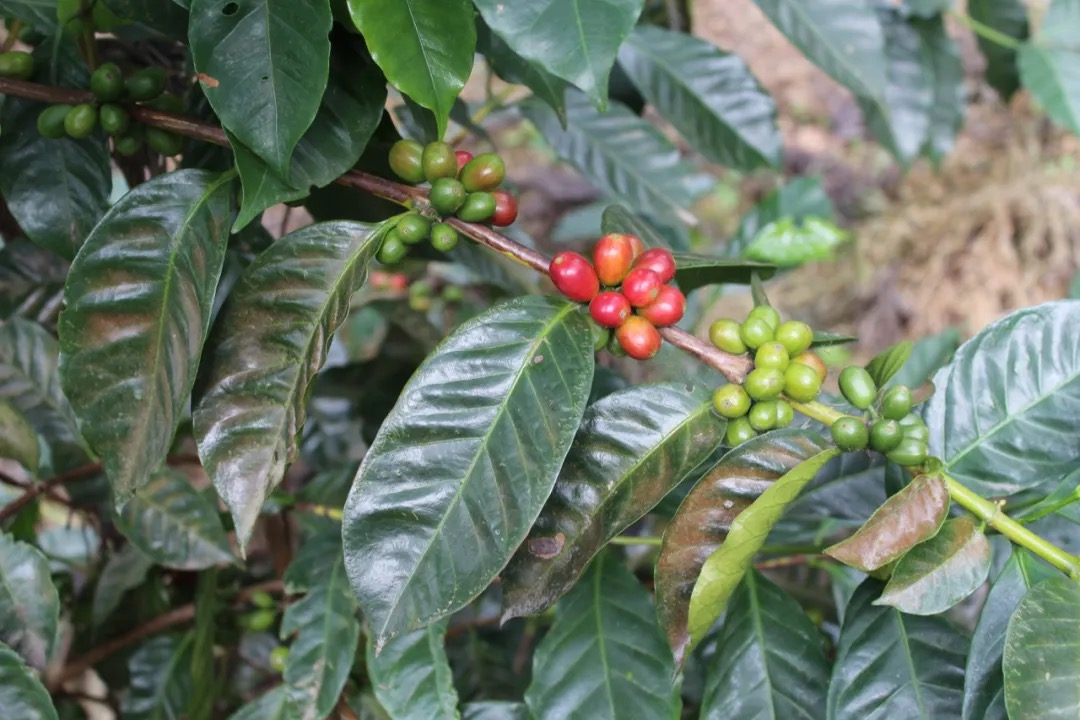
What makes Geisha so special is not only its flavor profile but also its rather “picky” growing conditions. It prefers high altitudes and requires misty shade, fertile soil, and good drainage. Additionally, Geisha has distinct growth traits—it has long internodes between branches, produces fewer flowers, and has a low fruit-setting rate, resulting in significantly lower yields per unit area compared to other commercial varieties. But precisely because of this, each Geisha coffee bean concentrates even more flavor potential.
In appearance, Geisha coffee beans are slender, with pointed ends and a plump middle, distinctly different from the commonly seen round beans. This shape is also one of the identifying features of Geisha. In terms of flavor, what makes Geisha most captivating is its delicate floral notes, bright acidity, and lingering tea-like aftertaste, often accompanied by complex layers such as lemon, jasmine, peach, and honey—making you feel as though you’re not drinking coffee but savoring an elegant fruit tea.
For beginners just getting into Geisha, it is recommended to start with high-altitude Geisha beans from Panama’s Boquete region. These beans are typically grown at elevations above 1,600 meters, using the same variety as renowned top-tier estates. They offer soft citrus and honey tones, a refreshing taste, and are perfect for experiencing the unique charm of Geisha, tasting more like fruit tea than traditional coffee.
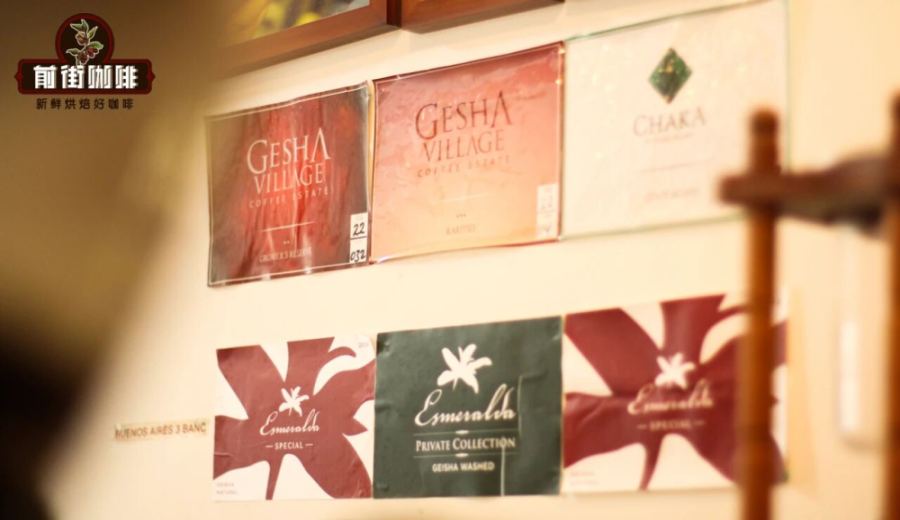
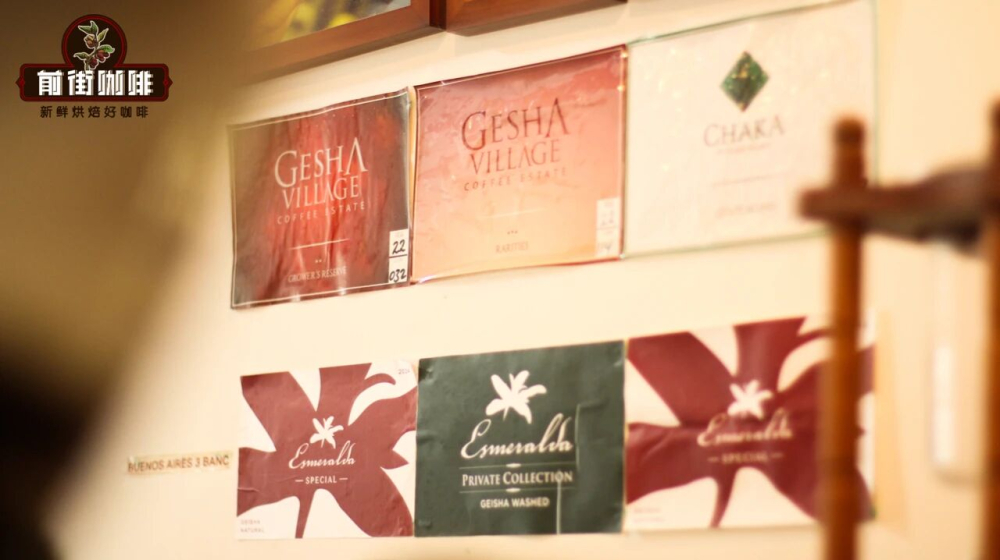
Advanced coffee enthusiasts can opt for high-quality Emerald Green Label Geisha. This bean offers great value for money, also sourced from carefully selected high-altitude areas, with a clearer flavor profile, bright and layered acidity, making it ideal for exploring the subtle nuances of Geisha. If you’re looking to give a gift or share with fellow enthusiasts, consider the Emerald Red Label Geisha—the highest-grade Geisha product, with both cultivation and post-processing under the strictest controls, fully showcasing Geisha’s richest and most complex aromatic spectrum. It’s a must-try for true coffee connoisseurs.
The above content is compiled by CoffeeHunters, a coffee news website.


