








Introduction:Although Hacienda Esmeralda is renowned for its Geisha, it actually offers several other high-quality coffees, such as Diamond Mountain and Palmyra from the Catuai variety. This article delves into the regional background, varietal characteristics, natural processing method of these two varieties, and analyzes the roasting and cupping performance of a certain coffee shop, providing practical pour over parameters to help you gain a more comprehensive understanding of Hacienda Esmeralda’s non-Geisha series and avoid the misconception of recognizing only the brand but not the variety.
Hacienda Esmeralda is practically a household name in the specialty coffee world, especially famous for its Geisha variety. However, many customers tend to equate “Hacienda Esmeralda” directly with “Geisha” when ordering, overlooking the fact that the estate also produces several other equally outstanding coffees, particularly Diamond Mountain and Palmyra from the Catuai variety.
If you’ve ever ordered “Hacienda Esmeralda” at a coffee shop and ended up with a coffee that isn’t Geisha, it might not be the barista’s mistake, but rather a lack of understanding of Hacienda Esmeralda’s full grading and varietal structure. This article will take you through a comprehensive exploration—from varietal, region, processing method, to roasting and pour over—of the curated non-Geisha selections from Hacienda Esmeralda.
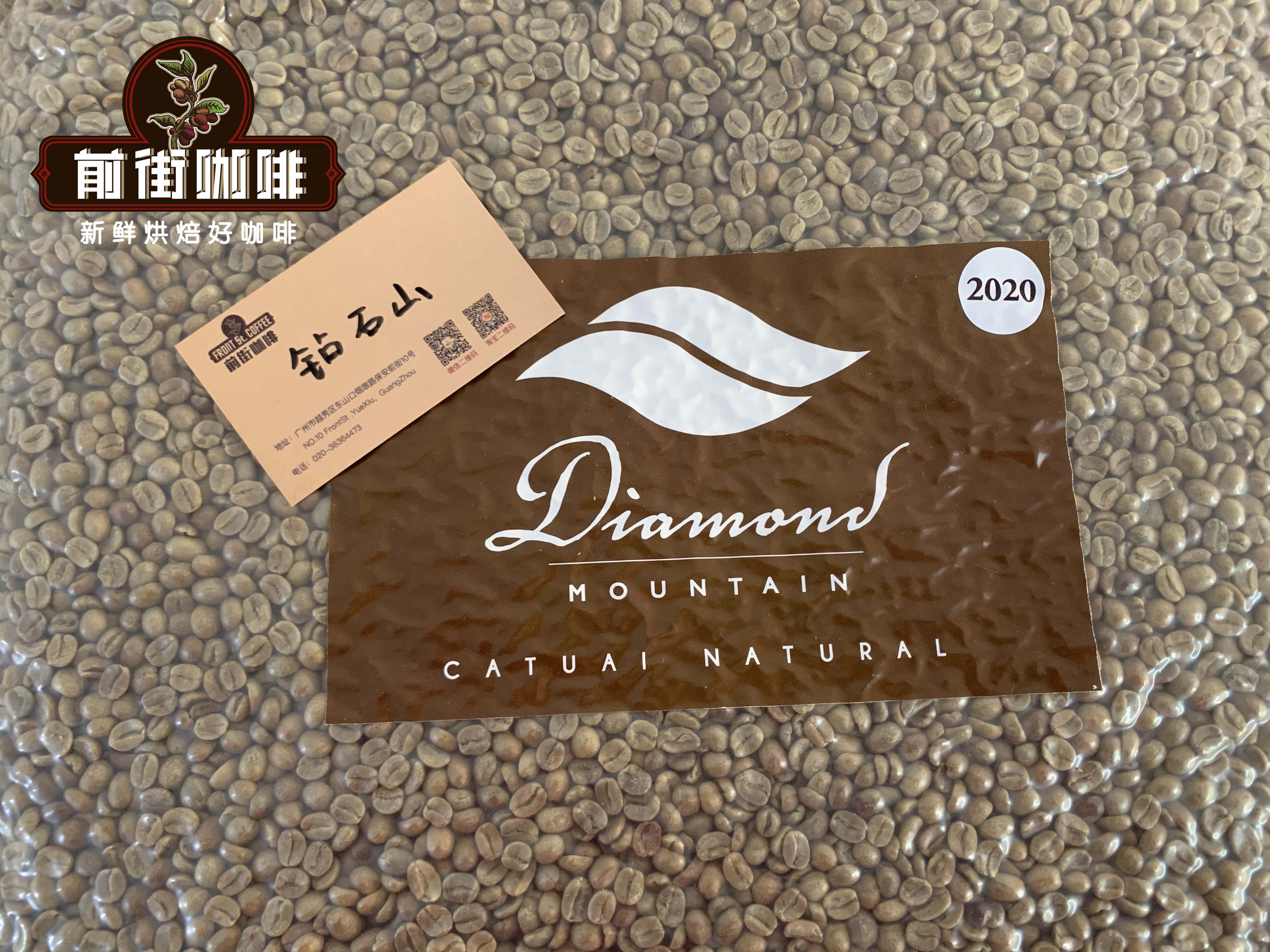

The official website of Hacienda Esmeralda clearly categorizes its coffees by variety into two main groups: the world-famous Geisha, which is further divided into Esmeralda Special, Private Collection, and Geisha 1500—commonly known as the Red Label, Green Label, and Blue Label; and the Catuai variety, which includes the sub-brands Diamond Mountain and Palmyra. The Catuai variety has a long planting history in Panama, characterized by high yield, disease resistance, clean and bright flavors, making it a key cultivar choice for many specialty farms.
This article focuses on Diamond Mountain from the Catuai variety—a premium coffee meticulously cultivated and processed by Hacienda Esmeralda in the Boquete region of Panama. Though its flavor profile may not be as bold as Geisha’s, it still delivers a high standard and is highly suitable for coffee enthusiasts looking to explore the diverse flavors of Hacienda Esmeralda.

This Hacienda Esmeralda Natural Diamond Mountain coffee is grown in the Boquete region of Panama, at an elevation between1400 and 1700 meters, and includes both Catuai and Caturra varieties. The processing method used isnatural processing, where the coffee cherries are slowly dried under the sun, allowing the beans to fully absorb the sweet and fruity essence of the pulp, resulting in a richer tropical fruit and honey-toned profile.
The Diamond Mountain coffee cherries mainly come from two representative farms within the estate: Jaramillo and Cañas Verdes. Among them, Jaramillo is known for its high altitude and cool climate, with an average elevation exceeding1650 meters, significant day-night temperature variations, and annual rainfall as high as4000 millimeters, making it an ideal environment for growing Geisha—the very location that led Hacienda Esmeralda to win the BOP championship with Geisha in 2004.
As for Cañas Verdes, originally a pasture, it was gradually developed into a coffee farm by the Peterson family of Hacienda Esmeralda. It now includes nine small plots, including Lino, all situated at elevations of1650 meters or above, with a cool climate and distinct dry seasons, and annual rainfall of about3500 millimeters, providing stable growing conditions for Catuai and Caturra.
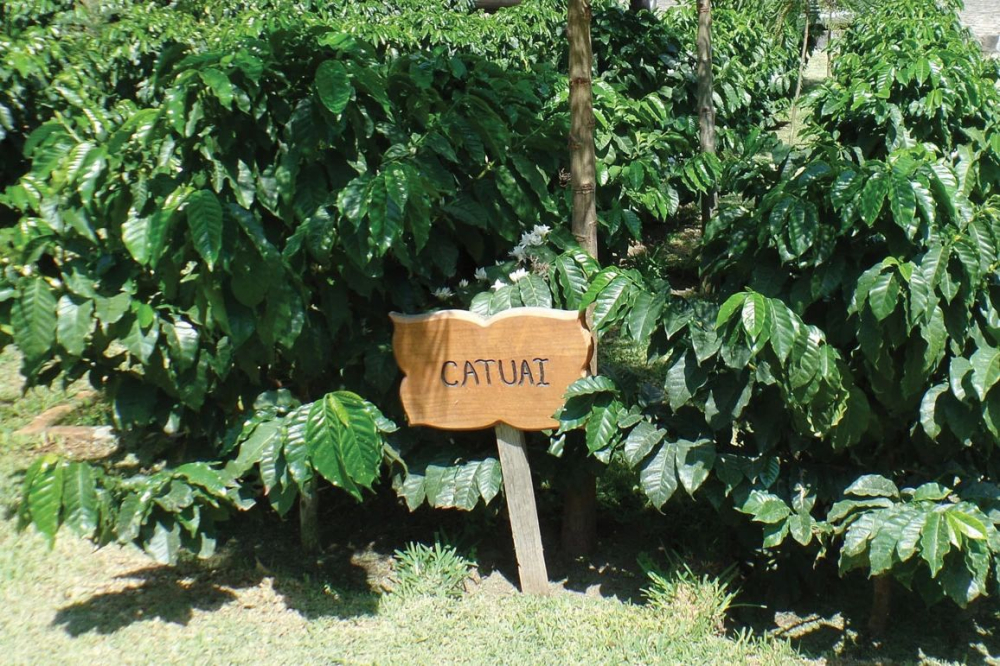
The primary variety used in this Diamond Mountain coffee is Catuai, which originated from a 1949 cross between Yellow Caturra and New World, initially labeled H-2077, meaning “very good” in Guaraní. Catuai comes in yellow and red types, generally offering high yield, strong disease resistance, and clean, bright cup profiles. Compared to Bourbon, Catuai plants are shorter, allowing for higher planting density and greater yield per unit area, making it widely favored by both commercial and specialty farms.
In terms of processing, Diamond Mountain employsthe natural method, where harvested coffee cherries are directly sun-dried on patios, allowing the sugars and aromatic compounds in the pulp to gradually seep into the beans. Depending on weather conditions, the cherries are typically sun-dried on concrete platforms for3 to 5 days, around8 hours per day, until the moisture content drops, after which they are moved into a Guardiola drier for72 hoursof rotary drying to ensure stability and prevent over-fermentation. Finally, the pulp and skin are mechanically removed to complete the refining process.
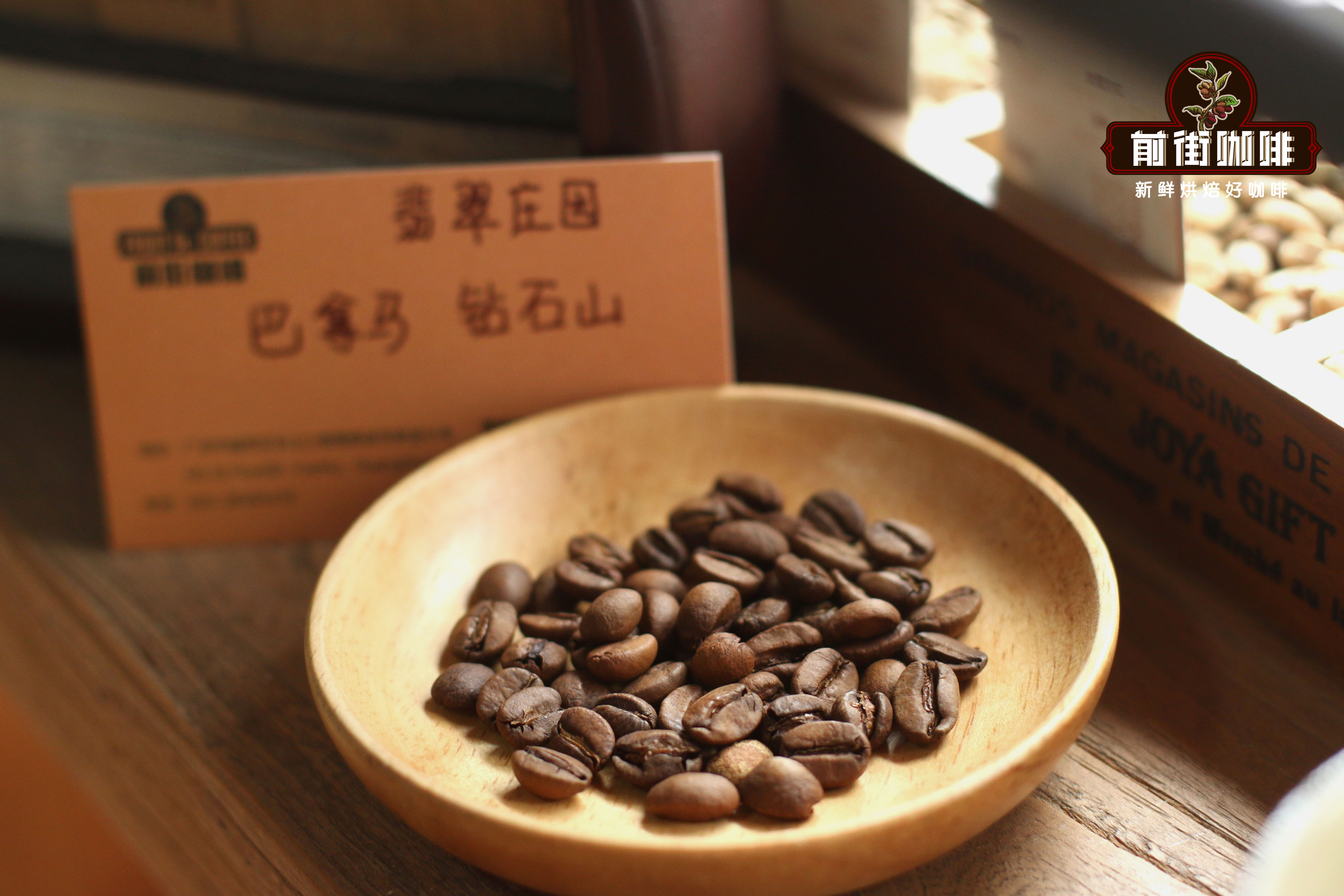
A certain coffee shop chose to roast this Diamond Mountain coffee usinga medium-light roastto preserve the inherent freshness of Catuai while highlighting the sweetness and fruitiness brought by the natural processing. The suggested roasting curve is as follows: start at165°Cwith initial flame power130and air damper3; the turning point is around97.3°C (1 minute 36 seconds), after which the air damper and flame power are gradually adjusted. Once the beans turn yellow and the grassy notes fade, it enters the drying phase; first crack begins at9 minutes 48 secondsat 184°C, reducing heat to 705and adjusting the air damper to, with first crack development lasting about1 minute 20 seconds, and finally dropping the beans at191°C
to achieve the best balance of flavor and mouthfeel.
Cupping results from a certain coffee shop show that this Diamond Mountain coffee exhibits prominent tropical fruit notes, such as mango and pineapple, along with honey-like sweetness and soft acidity, ending with a clean aftertaste and lingering sweet aroma—perfect for coffee drinkers who enjoy bright fruitiness with depth.For home pour over brewing, it is recommended to usea V60 #01 filter90-91°C, with water temperature controlled at, coffee dosage15 grams1:15, and coffee-to-water ratio. The grind size is suggested to bemedium-fine (approximately 80% passing through a Chinese standard No. 20 sieve). A three-stage pouring technique is advised: start with30 grams of water for a 30-second bloom, then pour in small circles to reach125 grams for the first pour, and pour again to225 grams before stopping, waiting for the water level to drop close to exposing the coffee bed before removing the filter. The total brew time is about1 minute 55 seconds
The above content is compiled by CoffeeHunters, a coffee news website.


