







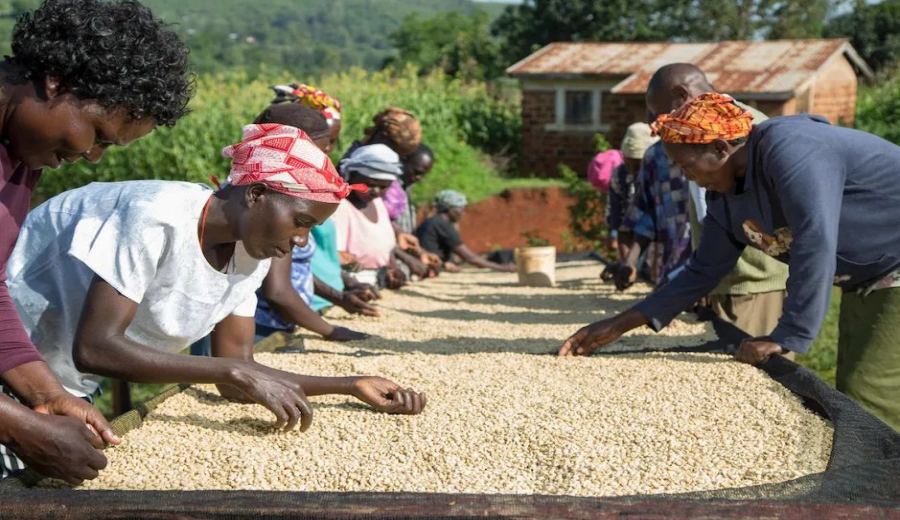
Introduction:Kenyan coffee is renowned for its bright acidity and complex flavor profile, qualities upheld by a rigorous grading system. This article delves into the AA, AB, and PB grade standards of Kenyan green beans, exploring everything from screen size to flavor scoring details to help you assess quality through grading. Using the classic Kenyan AA Thiriku as an example, we also share practical pour over parameters and flavor characteristics for light roasts, assisting you in selecting and brewing a more ideal Kenyan coffee experience.
Kenyan coffee is celebrated for its vibrant fruity acidity and solid sweetness—a unique flavor profile inseparable from its nearly century-old strict grading system. Since the 1930s, Kenya has graded coffee beans based on particle size, physical shape, and hardness, combined with cupping flavor performance to form a dual-quality assurance mechanism. What exactly do the common AA, AB, and PB grades represent? What’s special about AA+ and TOP AA? Below, we systematically break down the grading logic of Kenyan coffee along with practical references.
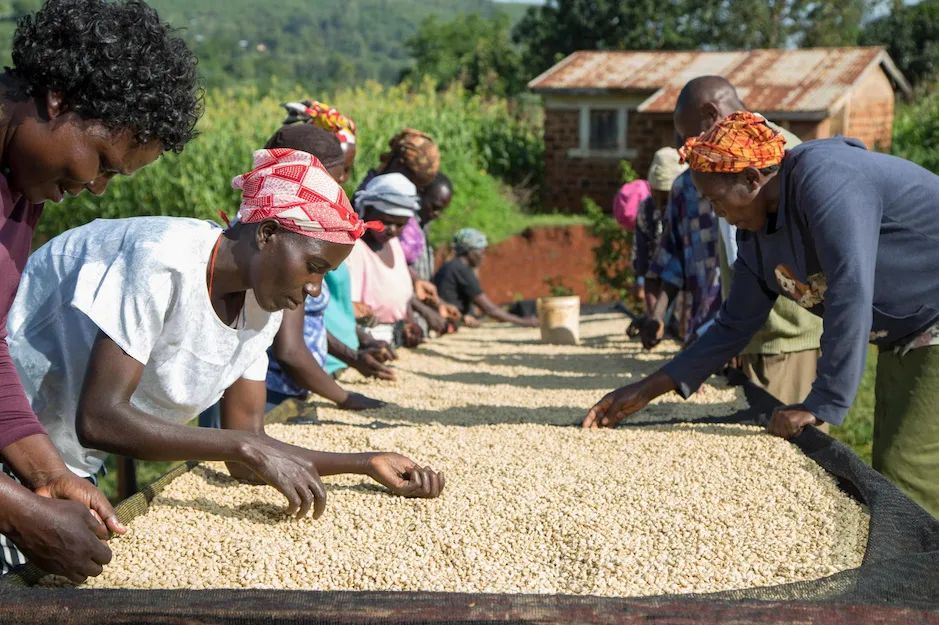
Kenya’s green bean grading system dates back to the 1930s, primarily categorizing beans by size, shape, and hardness, ranked from highest to lowest as AA or AA+, AB, PB, C, E, TT, T. This grading serves not only as a reference in trade but is also comprehensively evaluated in combination with flavor performance. The three most notable grades in the market today are AA, AB, and PB.
[Details on Coffee Bean Size Grading]
The AA grade generally refers to the particle size of green beans, falling under the high-spec category in trade. Any beans that pass through a 17-mesh sieve (approximately 6.75 mm diameter) or larger are classified as AA grade, typically ranging between 17 and 18 mesh. The AB grade corresponds to 15 and 16 mesh, and is the most commonly produced grade in the market.
In advanced classifications, AA Plus (AA+) represents batches within the AA grade that exhibit exceptionally outstanding cupping flavor and mouthfeel. C-grade beans are smaller than AB, while TT refers to lighter beans removed from AA and AB grades via air classification equipment; T-grade beans come from similarly air-classified lighter beans originating in the C grade. E-grade consists of “elephant ear beans,” which are large mutant beans formed when two beans grow fused together. UG refers to beans that do not meet any of the above criteria, while PB denotes peaberry beans, classified by shape and not directly related to flavor or weight.
[Flavor Grade Evaluation Mechanism]
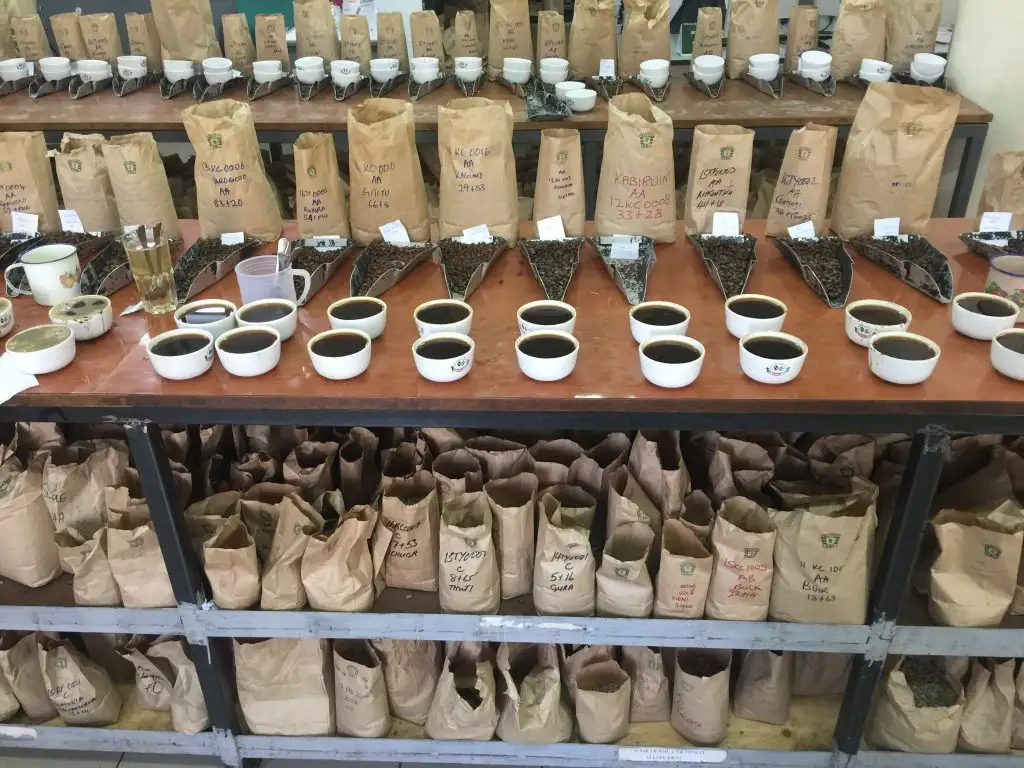
Beyond size grading, Kenya also employs a flavor grade evaluation system divided into TOP, PLUS, and FAQ tiers, used to select coffees with superior cupping performance. Evaluation factors include green bean condition (size, color, defects), roasted bean performance, and cupping quality (acidity, body, flavor characteristics, defect presence). In practice, these dimensions are simplified into three criteria: Acidity, Body, and Flavor, each scored on a scale from 1 to 3. For example, if a coffee is marked as 1-1-1, it means its acidity, body, and flavor all received the highest ratings, qualifying it as TOP AA grade.
[Practical Example: Kenyan AA Thiriku Coffee Beans]
Take the commonly available Kenyan AA Thiriku coffee beans as an example. These beans are AA grade, sourced from the Thika region, processed using Kenya’s unique 72-hour washed method, and of the SL28 and SL34 varieties—highly favored by drinkers who enjoy acidic coffees. For first-timers, it’s recommended to brew using hot pour over as black coffee to better highlight the distinct flavor characteristics of Kenyan coffee.
[Pour Over Parameters and Technique Recommendations]
Given that this bean is lightly roasted, it’s advised to use a higher water temperature and a faster-flowing filter to fully extract its bright acidity while avoiding over-extraction. Practical parameters are as follows: V60 filter, brew ratio 1:15, coffee dosage 15 grams, water temperature 91°C, grind size at 80% passing through a standard 20-mesh sieve.
For specific brewing technique, a three-stage pour (pulse extraction) is recommended: First, pour 30 grams of water and bloom for 30 seconds; second, pour in a circular motion 125 grams of water, and when the water level is about to uncover the coffee bed, continue pouring to reach a total of 225 grams. Total brew time is around 2 minutes (including bloom).
With this brewing method, the flavor profile of Kenyan AA Thiriku coffee is as follows: the entry showcases a refreshing acidity reminiscent of black plum and cherry tomato, with a strong and layered acidity; the mid-palate reveals notable sweetness, offering a juice-like smooth texture; the finish delivers berry aromas, brown sugar sweetness, and a delicate green tea note, delivering an overall balanced and distinctive cup.
The above content is compiled by CoffeeHunters, a coffee news website.


