







Introduction:The main types of coffee consumed globally fall into three major categories: Arabica (small bean), Robusta (medium bean), and Liberica (large bean). These three types differ significantly in appearance, growing regions, processing methods, flavor profiles, and commercial value. This article will provide a detailed explanation of the botanical characteristics, cultivation conditions, and market positioning of these three varieties, along with clarification on the classification of "Yunnan small-bean coffee," helping readers understand the differences and characteristics among common coffee beans at a glance.
There are many varieties of coffee plants, with over eighty officially recorded types. However, in daily consumption and commercial cultivation, the focus is primarily on three main varieties: Arabica (small bean), Robusta (medium bean), and Liberica (large bean). These three differ markedly in botanical traits, suitable growing environments, flavor performance, and even market share.
Among them, the large-bean coffee, also known as Liberica, is an evergreen tree that can grow over 10 meters tall, with thick branches and rapid corking of the bark. Its leaves are oval or nearly round, leathery and glossy, with smooth edges and no undulations. The fruit is oblong in shape, noticeably larger than typical coffee beans, with thick and hard skin and pulp, and a protruding navel. This variety has deep roots and good drought resistance, but only moderate resistance to wind and cold, and is prone to rust disease. Although individual plant yields are high, the yield per unit area is low, and post-harvest processing is relatively complex. Currently, it accounts for only about 1% of commercial cultivation, mainly concentrated in a few regions such as Malaysia.
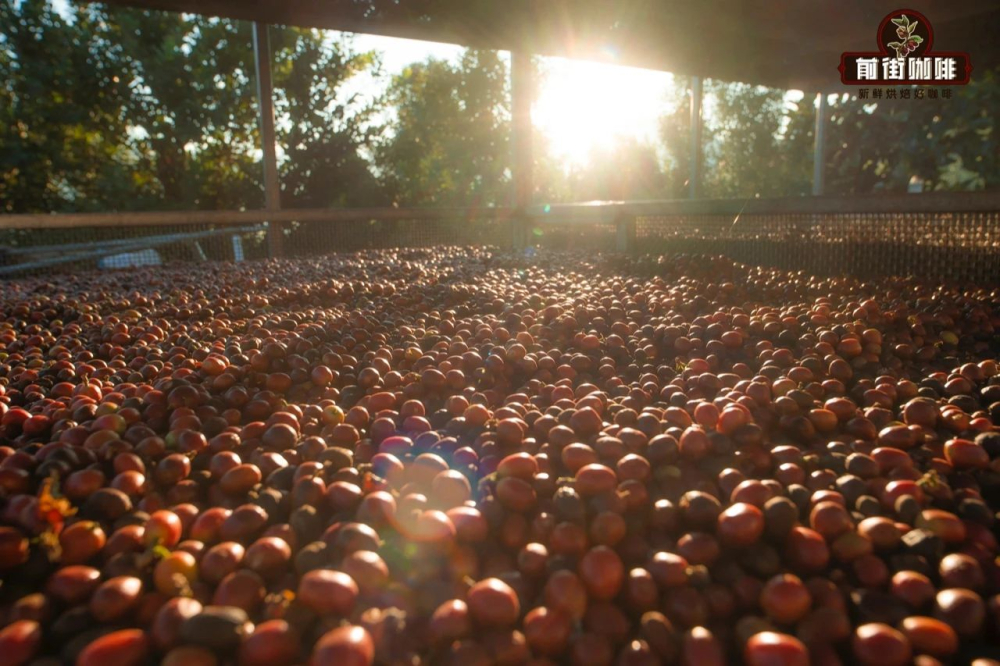
Large-bean coffee beans are visibly larger than the other two types, with an oblong fruit shape. Removing the flesh and mucilage layer during processing is more difficult, which is why it is not widely commercialized and rarely seen in consumer markets.
As for the medium-bean variety, it generally refers to Robusta (Robusta) within the Coffea canephora species, accounting for about 30% of global production. Robusta originates from the Congo region in central Africa. The plant is highly adaptable to the environment, tolerating high temperatures and humidity, as well as certain levels of cold and drought, with a high survival rate. This variety contains caffeine levels as high as 1.7% to 3.0%, nearly double that of Arabica, giving it a natural stronger resistance to pests. Robusta beans are slightly round and somewhat flat, with straight centerline grooves. In terms of flavor, they often have heavier earthy, woody, or nutty notes, but with pronounced bitterness, and are commonly used in espresso blends to enhance crema and body.
It’s worth noting that Robusta does not require high altitudes for cultivation and is mostly found in low-altitude plains. Harvesting and management costs are lower, making it relatively affordable and suitable for large-scale commercial production. Many commercial espresso blends include a certain proportion of Robusta to adjust taste and crema performance.
The small-bean coffee is the well-known Arabica, which accounts for over 70% of the global coffee market and serves as the base variety for most specialty coffees. Arabica originates from Ethiopia in Africa, and due to its relatively small bean size, it is referred to as "small-bean coffee." This variety has stringent growth requirements, with the ideal planting altitude between 800 and 2200 meters, and frost must be avoided. At high altitudes, the large diurnal temperature variation helps coffee cherries ripen slowly, accumulating richer flavor compounds, resulting in more complex and layered aromas and tastes.
However, high-altitude cultivation also means higher pest risks and lower yields per unit area. Harvesting often relies on manual selection, leading to higher overall production costs. Common specialty Arabica varieties such as Typica, Bourbon, and later-developed ones like Catimor and Timor are popular choices in the market.
So, which category does "Yunnan small-bean coffee" actually belong to? In reality, the main type cultivated in the Yunnan region is still Arabica and its derivative varieties, including Catimor and other strains adapted to the local environment. To distinguish it from the medium-bean coffee (such as Robusta) grown in places like Hainan, and because Yunnan coffee beans are naturally smaller in size, farmers and the market have conventionally referred to it as "small-bean coffee." Coupled with the regional name, it became the familiar "Yunnan small-bean coffee."
Take, for example, a washed-process coffee produced in Baoshan, Yunnan. It is grown at an altitude of about 1200 meters, with the Catimor variety. Its flavor profile often includes notes of nuts, chocolate, caramel, and herbal tones, with a soft fruity acidity in the aftertaste. It is suitable for use in pour over or everyday brewing.
Tracing back to its origins, the earliest Yunnan "small-bean" coffee mostly referred to the Typica variety originating from Ethiopia. This variety is one of the ancestors of all modern Arabica coffees, with its top leaves appearing bronze-colored, and the beans being oval or slightly elongated in shape. It offers a delicate and elegant flavor but has weak disease resistance and low yield. If you want to experience a more historical and original-flavored Yunnan small-bean coffee, you can look for coffee products made from the Typica variety and processed using the natural (sun-dried) method. For instance, some sun-dried Typica from the Lincang region feature prominent sweetness and distinct layered flavors.
In summary, the three major coffee varieties each have their own characteristics and suitable scenarios. Whether you prefer the light fruit acidity and complex aromas of Arabica, the bold richness and high caffeine of Robusta, or you’re curious about the unique flavors of the large-bean variety, you can choose the most suitable coffee variety to explore further based on your taste preferences and brewing needs.
The above content is compiled by CoffeeHunters, a coffee news website.


