







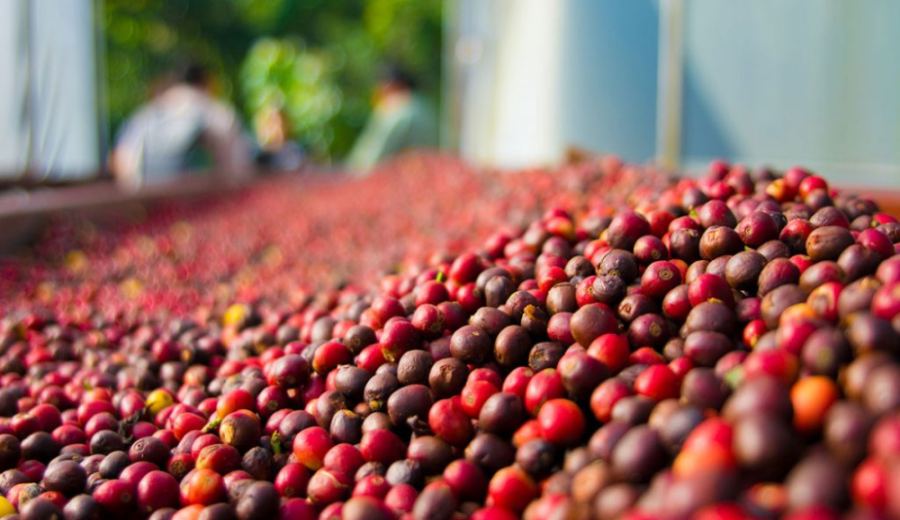
Introduction:The Red Wine Processed Catuai coffee beans from Panama's Hartmann Estate deliver a richly layered and full-bodied finish through their unique fermentation technique. This article delves into the brewing logic, varietal characteristics, and actual flavor profile of these beans, along with expert roasting profiles and V60 pour over parameters to help coffee enthusiasts fully master the brewing secrets of this premium bean.
Many beginner coffee drinkers often mistakenly believe that the "red wine process" involves soaking coffee beans in actual red wine, or even worry that the final product might contain alcohol. In reality, this processing method is inspired by the fermentation principles of winemaking—utilizing controlled anaerobic environments for coffee cherries rather than using red wine directly. Although trace amounts of alcohol may be produced during fermentation, they nearly completely evaporate during high-temperature roasting, so there's no need to worry about consumption. Below, we’ll take you on an in-depth exploration of the Red Wine Processed Catuai beans from Panama’s Volcan region Hartmann Estate, covering everything from the origin background to actual brewing performance.
Located in Panama’s Volcan region, the Hartmann Estate benefits from its high altitude (1250–1700 meters) and fertile volcanic soil, making it an important hub for specialty coffee. The area enjoys a cool and dry climate, which is particularly well-suited for coffee tree growth. The Hartmann family has been dedicated to coffee cultivation since early on and is known for its environmentally friendly practices, including bird-friendly cultivation and shaded farming, with fertilizers derived from the natural fermentation of coffee pulp and husks. Currently managed by the third generation of the family, in addition to their own estate, they also provide technical support to several renowned estates across Panama. Though low-profile in competitions, they are synonymous with quality.
The coffee variety used here is Catuai, a hybrid developed by Brazilian agronomists crossing the New World variety with Yellow Caturra. It combines high yield potential, disease resistance, and excellent cupping performance. The plant is relatively short in stature, suitable for natural drying processes, with bright acidity and a mild mouthfeel, making it a popular choice among many specialty coffee farms.
The key to the red wine process lies in simulating the fermentation environment of wine, precisely controlling fermentation conditions to enhance the coffee’s sweetness and flavor complexity. At the Hartmann Estate, after harvesting, coffee cherries are rigorously sorted—ensuring less than 2% unripe fruit, under 3% defective beans, and no more than 5% floaters. The sorted cherries are then placed in fermentation containers equipped with one-way exhaust valves, allowing carbon dioxide to escape naturally while controlling oxygen concentration to facilitate a fermentation process similar to lactic or acetic acid fermentation. This method results in a cleaner, brighter acidity and imparts wine-like aromas and a rich mouthfeel to the coffee.
For roasting, it is recommended to use a semi-direct flame roaster such as the Yangjia 800N, with a charge of around 600 grams. Set the initial drum temperature to 200°C, with the air vent open at level 3. After the turn-around point, gradually adjust the heat and airflow. During the drying phase, pay attention to changes on the bean surface, and carefully control the development time after first crack. Drop the beans at 195.5°C to achieve the optimal balance between sweetness and acidity.
Cupping results show that this coffee performs best within 8–24 hours after roasting. Use a 200ml ceramic cupping bowl, with a water temperature of 94°C, grind size at 70%–75% passing through a #20 sieve, and a brew ratio of 1:18.18. The dry aroma offers notes of orange and jasmine, while the wet aroma reveals scents of red wine and honey. The flavor profile includes tropical fruits, nuts, red wine, honey, and cane sugar, with a long and mellow finish.
For actual pour over brewing, the V60 #01 filter cone is recommended. Use a water temperature of 90°C, a brew ratio of 1:15, and a medium-coarse grind (EK43s setting 10, approximately 80% passing through a #20 sieve). Employ a three-stage extraction: the first stage involves pouring 30g of water and blooming for 30 seconds; the second stage adds 95g of water (total 125g) over approximately 1 minute and 5 seconds; the third stage adds another 100g of water (total 225g) to finish around 1 minute and 40 seconds. The total brew time is about 2 minutes and 5 seconds. These parameters highlight its vibrant acidity and red wine-like aftertaste, with sweet notes of brown sugar becoming more pronounced as it cools.
The above content is compiled by CoffeeHunters, a coffee news website.


