







Introduction:Medium-dark roasted coffee beans are often mistakenly thought to be unsuitable for pour over brewing. In fact, with the right parameters, they can still showcase rich and layered flavors. This article delves into the characteristics of medium-dark roast beans, analyzing in depth the ideal grind size, water temperature range, coffee-to-water ratio, and detailing the advantages and operational specifics of using the Kono filter. Paired with a three-stage pour over process, it teaches you how to consistently brew a great cup of coffee with both sweetness and body.
Pour over brewing is not limited to light roasted beans—medium-dark roast beans can also reveal captivating flavor profiles through appropriate parameter adjustments. Due to their longer roasting time, medium-dark roast beans have a looser internal structure and faster water absorption. Using the same brewing method as for light roasts can easily lead to over-extraction and produce unpleasant bitterness. This article starts from the essential characteristics of medium-dark roast coffee, explaining one by one the grind size, water temperature control, coffee-to-water ratio, and filter selection needed for pour over brewing, and provides a practical three-stage pour over process along with time suggestions to help you easily master the brewing essentials.
First, understanding what kind of flavor profile medium-dark roasted coffee typically presents is an important basis for adjusting brewing parameters. Compared to the pronounced fruit acidity and floral notes of light roast beans, medium-dark roast beans have a more subdued acidity, showcasing instead rich warm tones such as nuts, dark chocolate, and caramel, along with a solid body. This is also one of the reasons many coffee lovers are drawn to medium-dark roasts.
In terms of grind size selection, because the fiber structure of medium-dark roast beans is looser, water molecules can more easily penetrate the beans. Therefore, it is recommended to usea slightly coarser grind settingto reduce the risk of over-extraction. In practice, you can aim for a grind that allows about70%pass-through on a #20 sieve, equivalent to a medium-coarse grind, which can effectively extend extraction time and balance flavor expression.
Water temperature control is equally crucial.It is recommended to maintain a water temperature between 86–89°C. For medium-light to medium-dark roasts, you can opt for a temperature closer to 88–89°C, but for darker roasts, it’s advisable to lower it to 86–87°C to avoid high temperatures accelerating the release of bitter substances, which can affect the overall balance of the cup.
As for the coffee-to-water ratio,1:15 is a more universal ratio that often falls within the Golden Cup extraction range, suitable for most drinkers who prefer a balanced taste. If you prefer a richer and heavier coffee experience, you can also try reducing the ratio to 1:13, but note that the flavors may become more concentrated and slightly more bitter.
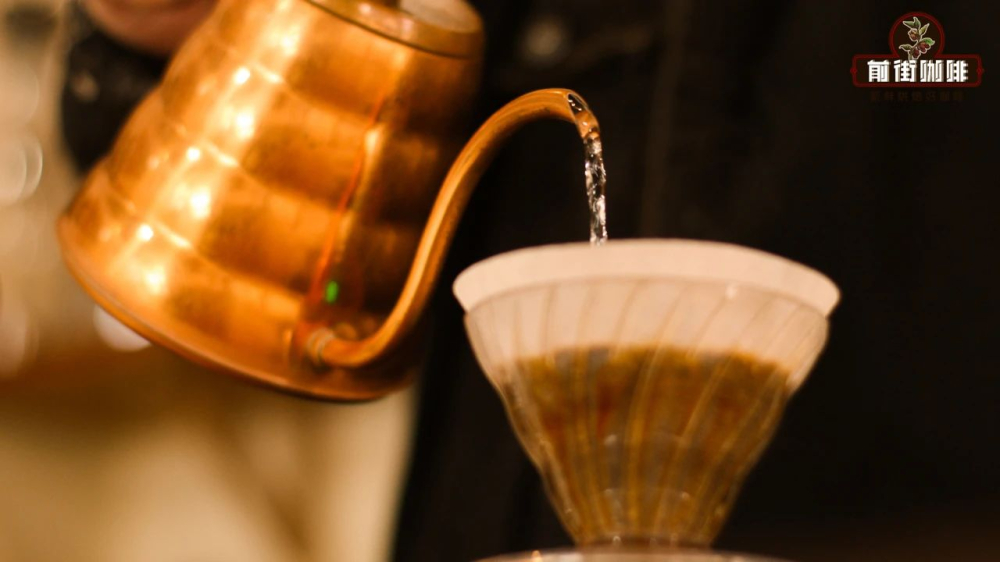
The choice of filter also significantly affects the extraction performance of medium-dark roast beans. This article recommends using the Kono filter, designed by Keisuke Kono, known for its unique structure that creates a mouthfeel reminiscent of a cloth filter, complementing the full-bodied characteristics of medium-dark roast beans.
The Kono filter has a conical shape, with ribs distributed only in the lower half. These ribs extend from the bottom up to the middle section and then stop, leaving the upper part of the filter wall almost smooth. This design allows the filter paper, even without pre-wetting, to still achieve good ventilation, resulting in a more thorough blooming stage. As the water level rises during brewing, the filter paper adheres closely to the cup walls, creating a near-vacuum sealed environment. This intensifies the interaction between water and coffee grounds, inducing a siphon-like effect that helps bring out the coffee's body and sweetness.
In practice, it is recommended to use15 grams of coffee grounds, paired witha 1:15 coffee-to-water ratio(approximately 225 milliliters of total water). First, preheat the filter. Then evenly pour the coffee grounds into the filter, being carefulnot to shake the filterto avoid disrupting the coffee bed structure. Next, begin the bloom stage: inject30 grams of waterin small circular motions starting from the center,for about 30 seconds. During this time, the coffee bed will gradually expand, forming what is called a “hamburger” shape.
For the second stage, pour100 grams of waterin a circular motion starting from the center and moving outward. Try to keep the water flow close to the coffee bed and maintain a steady motion to avoid excessive agitation that could lead to over-extraction. Finally, pour another95 grams of waterin the same manner. After completing all the pouring, wait for the coffee to fully drip through. It is recommended to keep the total extraction time between1 minute and 50 seconds to 2 minutesto achieve the best balance and flavor expression.
The above content is compiled by CoffeeHunters, a coffee news website.


