







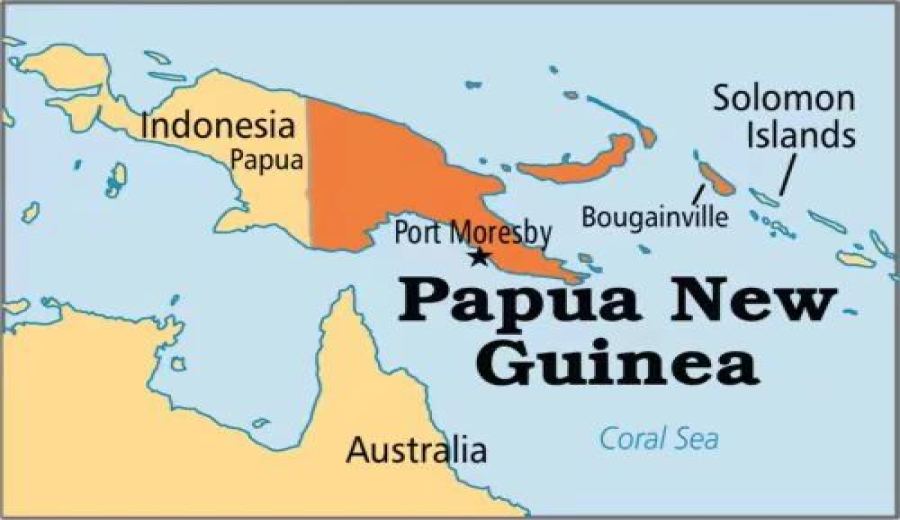
Introduction:Papua New Guinea coffee is often hailed as the "Little Blue Mountain," but where does its unique flavor come from? This article delves into the Typica beans from Paradise Bird Estate in the Western Highlands' Waghi Valley, exploring everything from regional geography and historical background to the washed processing method — dissecting the origins of its nutty, cocoa-like, and gently fruity acidity flavors. It also offers expert roasting and pour over recommendations to help you master the brewing secrets of this high-altitude specialty bean.
When it comes to Papua New Guinea coffee, many coffee enthusiasts may find it both familiar and unfamiliar. Although coffee from this island nation is occasionally referred to as the "Little Blue Mountain," few have actually had the chance to taste it. A specialty coffee vendor has specially imported Typica beans from Paradise Bird Estate in the Waghi Valley of the Western Highlands, allowing us to comprehensively understand this specialty coffee — said to possess the flavor of a "Little Blue Mountain" — by discussing everything from regional terroir and variety characteristics to brewing techniques.
Paradise Bird Estate is situated at an altitude of approximately 1,600 to 1,800 meters in the Waghi Valley, part of the Western Highlands province of Papua New Guinea. With its cool climate, fertile soil, abundant rainfall, and mineral-rich volcanic earth, the region provides an optimal environment for coffee cultivation. The estate is renowned for its washed Typica variety, and its beans are typically rated as AA grade. Cupping often reveals nutty notes, gentle cocoa aromas, bright acidity, and a long caramel aftertaste, with even a hint of subtle smokiness.
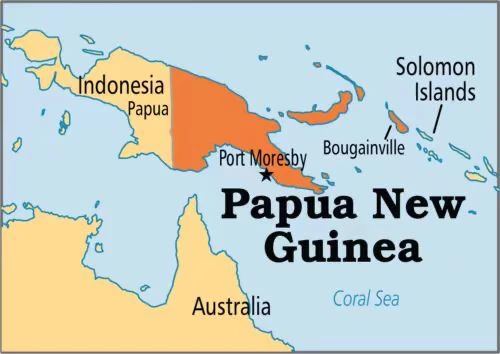
Many consumers who have tried Papua New Guinea coffee easily associate it with Jamaican Blue Mountain, hence the nickname "Little Blue Mountain." In fact, this association has historical grounding. As early as 1931, the Typica variety (the foundation of Blue Mountain coffee) was introduced to Papua New Guinea. At that time, the region was still under British colonial influence, and Jamaica had long been a British territory, making the introduction of this variety a natural progression. This continuation of coffee lineage also explains why Papua New Guinea coffee shares the rich body reminiscent of Blue Mountain, while still retaining its own bright fruity acidity.
Looking back at Papua New Guinea’s coffee planting history, in addition to the Typica introduced in 1931, Bourbon was brought in during 1950, followed by varieties such as New World and Caturra in 1962, gradually improving the overall quality of the coffee. However, despite its naturally advantageous conditions, the country’s coffee industry has faced multiple challenges, including fluctuations in the international market, aging coffee trees, and issues related to smallholder farming practices, resulting in an approximate 22% decline in production over the past decade.
Currently, over 80% of coffee in Papua New Guinea is still produced by small-scale farmers. This not only makes quality control difficult but also leads to inconsistent flavor profiles of the country’s coffee on the market. Coupled with linguistic diversity, complex tribal cultures, and land ownership disputes, many high-quality coffee farms lack stable management and technical support. However, in recent years, with the help of international funding, over seven million coffee trees have been replanted and cared for, and coffee production and quality in some regions have gradually begun to recover.
Among them, Paradise Bird Estate can be considered one of the exemplary models of the country’s coffee industry. Established in 1950, this estate boasts over sixty years of planting history and adheres to high-standard ecological management practices — avoiding the use of pesticides and insecticides to maintain soil health and surrounding ecosystems. During the harvest season from April to September each year, only fully ripe red cherries are picked, and daily cupping is used to strictly control quality. Moreover, its washed processing method is also quite distinctive, differing slightly from the common processes seen in Central and South America: coffee cherries undergo three rounds of water fermentation, each lasting about 24 hours, with fresh water changed each time to precisely control fermentation flavors. After depulping and rigorous grading, the final output ensures a high level of bean uniformity.
This meticulous processing results in Paradise Bird Estate’s Typica coffee offering a very balanced flavor profile: gentle and layered acidity upon entry, nutty and cocoa aromas in the mid-palate, and a finish marked by caramel sweetness with a slight smoky note. The overall flavor is delicate yet complex. For coffee drinkers who prefer medium body, bright acidity, and clean flavors, this high-altitude Typica coffee is definitely worth a try.
In terms of roasting recommendations, due to the relatively low density of the Typica variety, a medium roast is advised to fully showcase its bright acidity and fruity characteristics. The key lies in controlling the heat after the first crack to preserve its subtle aromas and balanced acidity-sweetness profile. If a deeper expression is preferred, one may adjust to a medium-dark roast according to personal taste, but care should be taken to avoid over-roasting, which could lead to loss of acidity.
For pour over recommendations, the Kono filter cone is suggested. Its low ridges help restrict airflow, allowing the filter paper to adhere more closely to the walls and thus extending the contact time between water and coffee grounds — beneficial for fully extracting the desirable compounds in the coffee and enhancing overall body. A water temperature of 88°C is recommended, which is slightly lower and helps suppress the release of unwanted off-flavors, especially suitable for medium-light roasted Typica beans.
Specific parameters can be referenced as follows: 15 grams of coffee, a 1:15 coffee-to-water ratio, using a grind size similar to coarse sugar with about 75% passing rate through a Chinese standard No. 20 sieve. Brewing process suggestion: start with a 30-second bloom using 30 grams of water, then pour in a slow circular motion until reaching 125 grams for the first pour. When the water level is about to expose the coffee bed, continue pouring to a total of 225 grams. The overall extraction time should be controlled between 2 minutes and 2 minutes 10 seconds. This parameter setup helps balance acidity and sweetness, improve mouthfeel smoothness, and fully present the unique flavor profile of Paradise Bird Estate’s Typica coffee.
The above content is compiled by CoffeeHunters, a coffee news website.


