







Introduction:Have you ever been confused by the term "mocha"? From Yemeni Mocha coffee beans, to the mocha beverages served in Italian cafes, to the popular moka pots used at home, these three share similar names but each comes with its own historical background and usage. This article delves into the origins, characteristics, and interconnections of these three types of "mocha", helping you understand their differences and offering suggestions on medium to dark roast beans so you can brew a flavorful cup of coffee at home.
In the world of coffee, the term "mocha" frequently appears yet often causes confusion. Mocha coffee beans, Italian mocha drinks, and the moka pots that might be found in many households all seem to share a common origin, but in fact, they emerged under different circumstances spanning centuries. Their only common thread points back to the ancient port of Mocha in Yemen — once a dominant hub in global coffee trade, the port may no longer export coffee today, but it has left an indelible historical mark on these three "mochas".
Let’s start with "Mocha coffee beans". As early as the 15th century, the port of Mocha in Yemen was an extremely important trade hub along the Red Sea, comparable in status to today’s Shanghai. Although coffee was not grown locally, beans from the high-altitude mountainous regions of central Yemen would be gathered here and exported to various parts of Europe. Since Europeans at the time only knew that this coffee came from the "port of Mocha", over time, these beans came to be collectively referred to as "Mocha coffee (beans)". Even today, "Yemeni Mocha" remains an extremely rare and highly esteemed coffee product on the market.
However, due to Yemen’s long-term political instability, coffee cultivation and exports have been severely affected, resulting in very limited quantities of Yemeni Mocha beans available on the international market. For example, the once-renowned Mokha Mattari, produced in the Banī Māṭar region, is known for its pronounced chocolate notes and bright, high acidity. Additionally, SANANI Mocha is noted for its rich and bold aroma. It’s worth mentioning that Yemeni coffee is packaged differently from the norm, often using fine-mesh woven fabric rather than the more common jute sacks.
Next, let’s look at the "mocha coffee" commonly ordered in cafes. This is actually an Italian-style coffee beverage made with espresso, hot milk, and chocolate syrup (or powder or chunks), offering a sweet, smooth taste and is very popular. However, this drink has no direct connection to the ancient port of Mocha. It is believed to have originated in Italy around the 18th century when Mocha coffee beans were becoming increasingly scarce. To recreate its signature chocolate flavor, baristas began adding chocolate elements to espresso and pairing it with steamed milk, creating a substitute with a similar flavor profile. Thus, this blend of coffee and cocoa was named "mocha coffee", preserving historical sentiment while adding a touch of elegance.
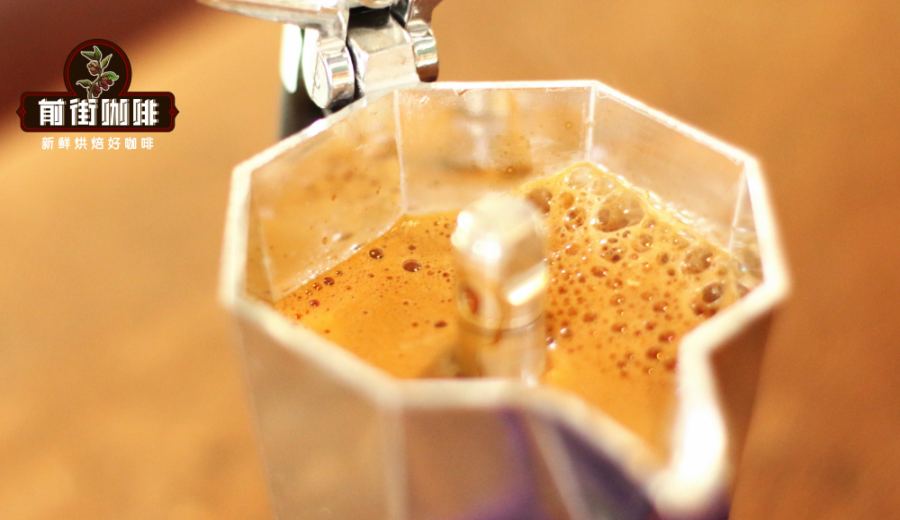
Finally, there’s the "moka pot", a staple in the homes of many coffee enthusiasts. Invented in 1933 by Alfonso Bialetti, this Italian home brewing device shares no direct connection with the other two. The moka pot consists of an upper chamber, a filter basket, and a lower base. It uses steam pressure generated by heating to push water up through the coffee grounds, which then drips down into the upper chamber to form a strong cup of coffee. Though the pressure is only about 1.5 to 2 bar — far lower than the 9 bar of professional coffee machines — it can still extract a rich coffee crema, resulting in a bold and layered flavor.
To brew a good cup of coffee with a moka pot, it is recommended to choose freshly roasted medium to dark roast beans. These beans typically offer better heat resistance and aromatic performance, complementing the high extraction temperature of the moka pot. For instance, some Italian-style blends with fine and full-bodied crema, or specialty blends featuring caramel aromas and sweet aftertastes, are great choices. In addition, attention should be paid to water temperature and grind size during moka pot extraction. Too fine a grind can lead to over-extraction, resulting in bitterness, while too coarse may cause under-extraction and a flat flavor.
As for why this device is called a "moka pot"? Its English name is Moka Pot. In northern Italy, the word "moka" has long been synonymous with coffee, so this tool that allows anyone to make a strong cup of coffee at home with simple equipment was straightforwardly named the "moka pot", meaning "the pot that brews coffee with a mocha flavor". Though it has no direct connection to the port of Mocha in Yemen, the coincidental naming has, across the currents of language and history, woven these three "mochas" together in a fascinating way.
The above content is compiled by CoffeeHunters, a coffee news website.


